Trump's Presidential Aircraft Returns to Base Following Electrical Incident
U.S. President Donald Trump's official plane, Air Force One, was compelled to return to Joint Base Andrews late Tuesday evening after experiencing what the White House described as a "minor electrical issue" shortly after departure. The aircraft had just taken off for Switzerland when the problem occurred, prompting an immediate return as a precautionary measure.
In-Flight Incident and Immediate Response
According to journalists traveling with the presidential delegation, cabin lights aboard the iconic blue and white aircraft briefly went out following takeoff. White House Press Secretary Karoline Leavitt confirmed that Air Force One returned to the Maryland air base "out of an abundance of caution" and landed safely shortly after 11:00 PM local time (0400 GMT).
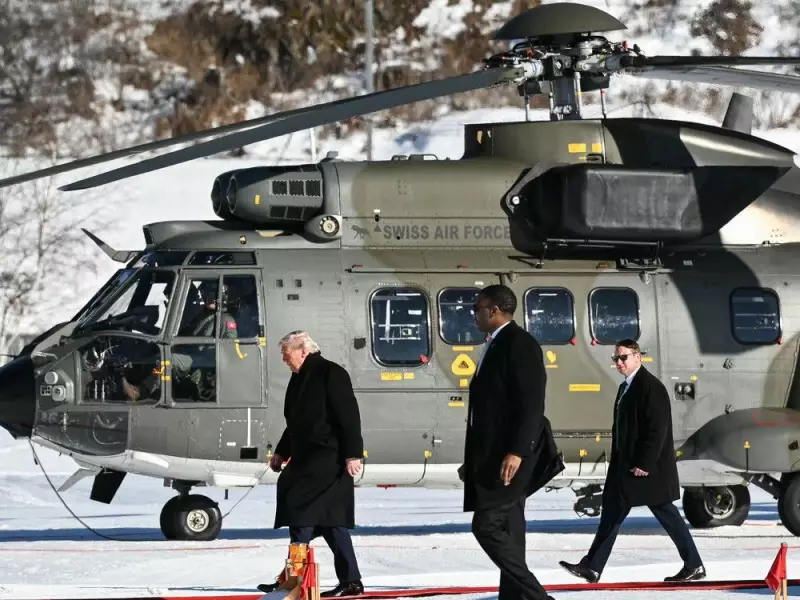
The electrical disturbance, while characterized as minor by administration officials, necessitated a change in travel plans for the president and his entourage. They subsequently transferred to another aircraft to continue their journey to Zurich, Switzerland, where Trump was scheduled to participate in the World Economic Forum in Davos.

Broader Context of Presidential Aviation
This incident occurs against a backdrop of President Trump's longstanding dissatisfaction with the current Air Force One fleet. The presidential aircraft in question represents one of two highly customized Boeing 747-200B series planes that entered service during the George H.W. Bush administration in 1990.
Trump has publicly expressed concerns about the aging fleet and last year indicated his administration was "looking at alternatives" to Boeing following delays in the delivery of two new 747-8 aircraft intended to replace the current planes.
International Implications and Security Considerations
The timing of this mechanical incident is particularly noteworthy given the diplomatic context of Trump's European visit. The president was expected to engage in discussions with European leaders regarding his controversial proposal to acquire Greenland, a topic that has generated significant international attention.
Furthermore, the incident highlights ongoing questions about presidential aviation security and procurement. In May, Pentagon chief Pete Hegseth accepted a Boeing 747 offered by Qatar for potential use as Air Force One, raising constitutional, ethical, and security concerns about utilizing an aircraft donated by a foreign government for sensitive presidential travel.
Air Force One remains one of the world's most recognizable symbols of American presidential power, with its distinctive livery and advanced communications systems designed to function as a mobile command center during international travel.