Trump's Iran Bombing Campaign Raises Civilian Casualty Concerns Amid Military Policy Shifts
As President Donald Trump intensifies military strikes against Iran, his administration is waging its first large-scale conflict since implementing policies that critics warn sharply increase the risk of the U.S. military causing massive civilian casualties and committing war crimes. The administration is framing a disdain for traditional warfare standards as a strategic advantage rather than a flaw.
Relaxed Rules of Engagement and Staff Reductions
Defense Secretary Pete Hegseth emphasized this approach on Monday, stating that the U.S. is operating with "no stupid rules of engagement," positioning it as superior to what he termed "politically correct wars." However, this rhetoric and prior policy decisions could have dire consequences, potentially harming innocent civilians, endangering American forces, and undermining the success of Trump's mission in Iran.
Since Trump returned to office in January 2025, the number of personnel dedicated to minimizing civilian harm across the Defense Department has significantly decreased, according to two sources familiar with internal military discussions. They spoke anonymously to describe sensitive dynamics. One source reported that staff in such roles has plummeted from 165 to just a handful. The Civilian Protection Center of Excellence, a Pentagon office that advises on limiting casualties and investigates military operations, has seen its staff reduced from 30-40 at the start of the administration to only seven today. Although Congress mandated its existence after an Army attempt to shutter it, the cuts reflect a broader trend.

Additionally, many officials at military commands who analyzed civilian environments in war zones and conducted "red-teaming"—a process to assess the appropriateness and legal defensibility of attacks—have been reassigned to other duties. "It's not a great time to be doing this because the institutional knowledge that was meant to be there to capture the effect on civilians is gone," the first source said, expressing extreme concern over reports that U.S.-Israeli bombings have struck Iranian schools and hospitals.
Civilian Toll and Regional Escalation
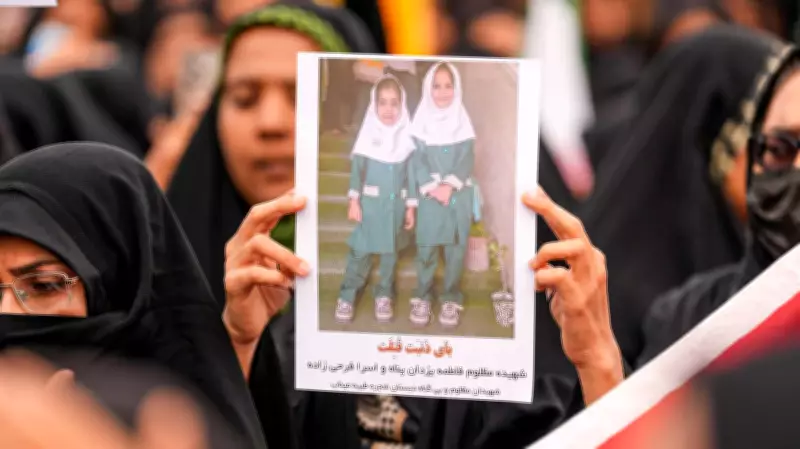
Four days into the conflict, U.S.-Israeli attacks have killed at least 742 Iranian civilians, including 176 children, and wounded 971 others, according to the Human Rights Activists News Agency (HRANA), an Iranian rights group. The initial day of bombing included a missile strike on a school that killed at least 165 people, mostly young girls, with reports indicating escalating strikes in residential areas of Tehran, home to 9 million people.
U.S. Central Command (CENTCOM), responsible for Middle East operations, still retains some personnel focused on limiting civilian harm, with one source noting it has the largest such team among combatant commands. However, doubts persist about their influence given the administration's approach. "Tools for civilian harm mitigation work if you have the time and resources to implement them. I don't understand how you do that with 1,000 strikes in a day in populated areas," the source remarked.
Iran's retaliation has targeted civilian areas in the United Arab Emirates, Kuwait, and Saudi Arabia, while in Lebanon, the pro-Iran militia Hezbollah has attacked Israel, prompting Israeli bombing and an advance into Lebanese territory. Annie Shiel, U.S. advocacy director of the Center for Civilians in Conflict (CIVIC), warned that current reports of civilian harm are "certainly just the tip of the iceberg" due to limited ground information and the high volume of strikes.
Broader Implications and Legal Concerns
The Trump administration's alignment with Israel, which faces accusations of extensive war crimes in Gaza since 2023, raises further alarms. Negar Mortazavi, a senior fellow at the Center for International Policy and an Iranian native, highlighted the fears among Iranians, many of whom resent the regime but are skeptical of U.S.-led military action given its "failed track record" in the region. She noted difficulties in communication due to internet blackouts, with families struggling to ensure safety amid bombing, electricity cuts, and water shortages.

John Ramming Chappell, CIVIC's advocacy and legal adviser, criticized the joint campaign, pointing out that the U.S. government previously acknowledged Israel likely broke international law in Gaza, yet continued military support. "Now the United States has decided that it is going to embark on a joint aerial bombing campaign with Israel. It boggles the mind that that is the lesson the U.S. has taken from Gaza," he said.
The administration has further challenged legal constraints by cutting mandatory trainings on the laws of war, replacing key military legal officers, and embracing weapons like cluster munitions and landmines that often harm civilians. Human Rights Watch condemned Hegseth's remarks, stating he has "deliberately and systematically weakened the protections meant to ensure compliance with the laws of armed conflict." Additionally, Trump's ongoing strikes against accused drug smugglers in South American waters, which have killed at least 150 people, exemplify a pattern of disregard for civilian safety.
In a concerning development, over 100 service members have filed complaints about commanders using religious ideology to justify the Iran war, referencing Biblical visions of a river of blood. As the conflict escalates, the erosion of civilian protections and international law compliance poses significant risks to regional stability and U.S. credibility.