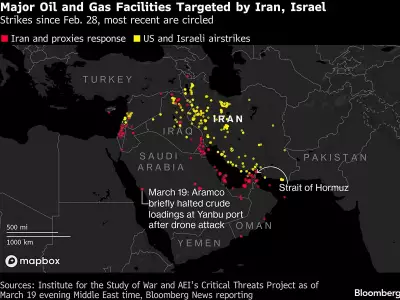
As the renewed conflict in the Middle East enters its fourth week, hopes for de-escalation have been dashed following a stark ultimatum from U.S. President Donald Trump. Late Saturday, Trump demanded that Iran reopen the Strait of Hormuz within 48 hours or face attacks on its power plants, a move that has significantly heightened tensions in the region.
Iran's Defiant Response to U.S. Threats
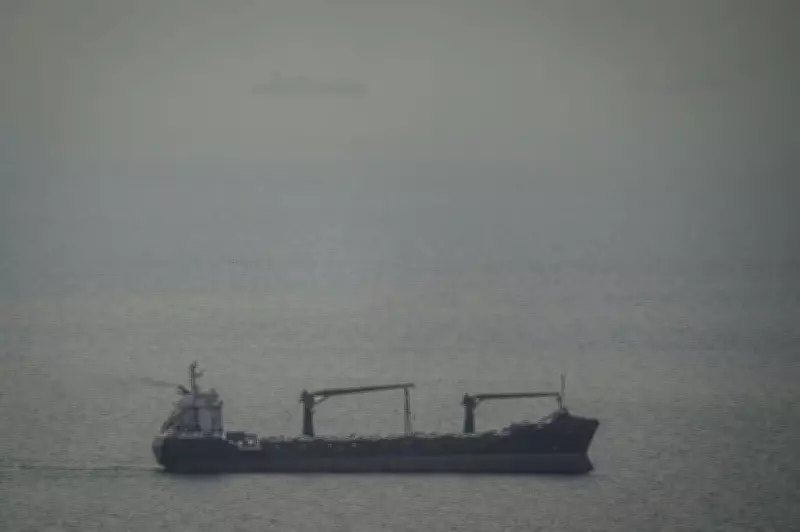
On Sunday, Iran's military issued a firm response to Trump's warning, declaring that it would completely shut off the Strait of Hormuz if the U.S. proceeds with its plan. This vital oil passageway is crucial for global energy supplies, and any closure could have far-reaching economic consequences.
Iran's Prime Minister, Masoud Pezeshkian, took to social media to address the threat, stating, "Threats and terror only strengthen our unity. The Strait of Hormuz is open to all except those who violate our soil. We firmly confront delirious threats on the battlefield." This statement underscores Iran's resolve in the face of escalating pressure from the United States.

Military Actions and Casualties Mount
Meanwhile, the Israeli military reported that Iranian missiles struck two southern cities near its main nuclear research centre late Saturday. The ongoing hostilities have resulted in a tragic human toll, with over 1,500 fatalities in Iran, more than 1,000 in Lebanon, 15 in Israel, and 13 U.S. military members, along with numerous civilians in the Gulf region. Millions of people in Lebanon and Iran have been displaced, highlighting the severe humanitarian impact of the war.
U.S. Strategy: Escalation to Achieve De-escalation
U.S. Treasury Secretary Scott Bessent appeared on NBC's Meet the Press on Sunday, explaining the administration's approach. He argued that Trump is using "the only language the Iranians understand" by threatening to destroy Iran's power plants. Bessent suggested that sometimes, "you have to escalate to de-escalate," indicating a strategic move to intensify pressure in hopes of ending the conflict.
When asked about potential military wind-downs, Bessent clarified that escalation and de-escalation are not mutually exclusive, emphasizing the president's willingness to take whatever steps necessary to achieve U.S. objectives in the war.
International Concerns Over Nuclear Facilities
The conflict has reached a critical juncture with attacks near nuclear sites. The World Health Organization's Director-General, Tedros Adhanom Ghebreyesus, warned that the war is at a "perilous stage" following strikes on Iran's Natanz nuclear facility and Israeli cities near nuclear research centres. He urged all parties to exercise maximum restraint to avoid triggering nuclear incidents, which could pose grave risks to public health and environmental safety.
In Israel, Iranian missile strikes wounded at least 180 people in southern cities, overwhelming medical facilities. Dr. Roy Kessous, deputy director of Soroka Medical Center, reported treating 150 patients for injuries ranging from shrapnel wounds to severe trauma, underscoring the direct impact on civilian populations.
Voices from the Iranian Diaspora and Israeli Leadership
Exiled Crown Prince Reza Pahlavi, son of Iran's last shah, called on the U.S. and Israel to spare civilian infrastructure while targeting the regime. He emphasized that "Iran's civilian infrastructure belongs to the Iranian people and to the future of a free Iran," advocating for a focus on rebuilding efforts post-conflict.
Israeli Prime Minister Benjamin Netanyahu remained evasive when questioned about Trump's threats and potential Israeli involvement, stating, "I think President Trump knows exactly what he's doing. And whatever we do we do together and as far as possible in confidence." This noncommittal stance reflects the complex dynamics of the U.S.-Israel alliance in this volatile situation.
As the conflict continues to unfold, the international community watches closely, with the Strait of Hormuz serving as a flashpoint that could determine the course of the war and its global repercussions.