U.S. President Donald Trump has forcefully reignited his controversial campaign for American control of Greenland, dramatically escalating geopolitical tensions on the eve of critical diplomatic negotiations in Washington.
High-Stakes Meeting at the White House
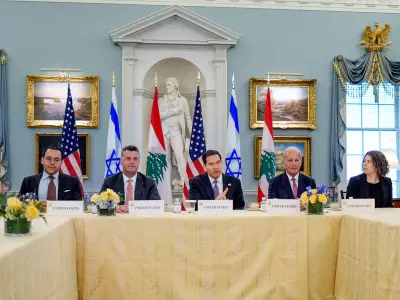
The renewed push comes just hours before a pivotal meeting scheduled for Wednesday, January 14, 2026. Danish Foreign Minister Lars Lokke Rasmussen and Greenland's Foreign Minister Vivian Motzfeldt are set to sit down with U.S. Vice President JD Vance and Secretary of State Marco Rubio at the White House.
Their mission, as reported, is to discern the true intentions of the American administration and to argue that a takeover of the autonomous Danish territory is unnecessary. This follows a clear statement from Greenland's Prime Minister, who asserted that if forced to choose, the island would remain with Denmark.

Trump's Security Rationale and NATO Claims
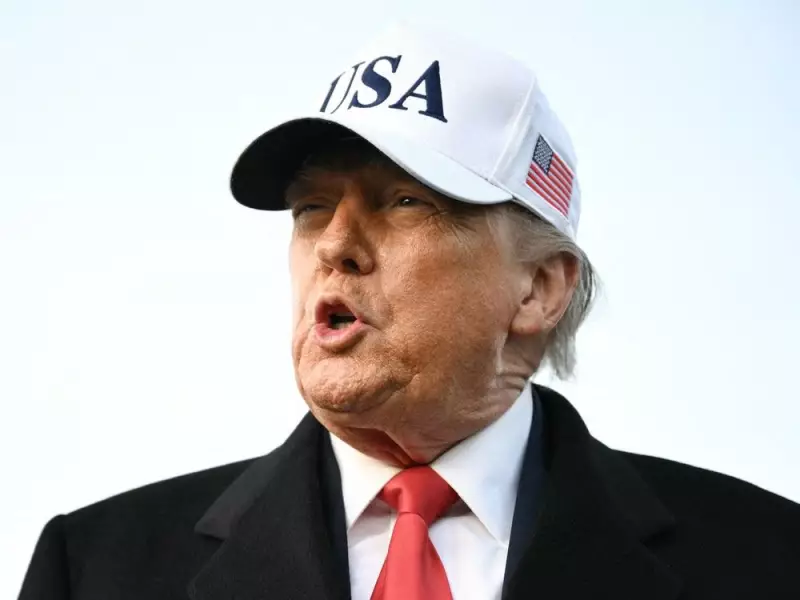
In a post on his Truth Social platform on Wednesday, Trump framed the acquisition of Greenland as a vital enhancement for the NATO alliance. "NATO becomes far more formidable and effective with Greenland in the hands of the UNITED STATES," he declared.
He further argued that the vast military power of the United States is what makes NATO a credible deterrent, a power he claims to have built and expanded. Trump explicitly linked control of the world's largest island to his "Golden Dome" missile defence plan, stating it is vital for the system's success.
While Secretary Rubio has attempted to frame the goal as a potential purchase, President Trump has notably refused to rule out the use of military force to secure Greenland for U.S. national defence. Both Danish and Greenlandic officials have rejected the premise of a sale outright, with Greenlanders stating no amount of money could buy their "national soul."
Potential Pathways and Scenarios
The diplomatic standoff presents several potential outcomes. Danish officials point to a comprehensive defence agreement from 1951 that already grants the U.S. significant military access, rendering a takeover redundant. Copenhagen could respond by boosting its own military investment on the island and deepening coordination with Washington.
One potential compromise, labelled an "off-ramp option," would be a Ukraine-style minerals deal. This would grant the U.S. access to Greenland's coveted rare earth deposits in exchange for security guarantees, allowing Trump to claim a commercial and strategic victory without annexation.
If the U.S. decides it must have control, analysts suggest two primary methods. The first would involve deploying additional troops under the existing 1951 pact, which imposes few constraints, and then gradually shifting their purpose to assume control of government functions—a de facto occupation with less drama than an invasion.
The second, and widely considered least likely scenario, is a direct military seizure. Trump has demonstrated a willingness to use force abroad, having previously authorized actions in Nigeria and Venezuela. While U.S. military superiority would likely prevail, Danish forces would be legally obligated to resist, risking casualties and severe political fallout.
The involvement of Vice President Vance alongside Rubio adds a layer of uncertainty for European observers. The two are known for differing diplomatic styles: Rubio combines Trump's aggressive rhetoric with backchannel dealings, while Vance is seen as more unpredictable and disruptive in his approach to dealmaking.
As the high-stakes meeting convenes, the future of Greenland—and the stability of U.S. relations with a key NATO ally—hangs in the balance.