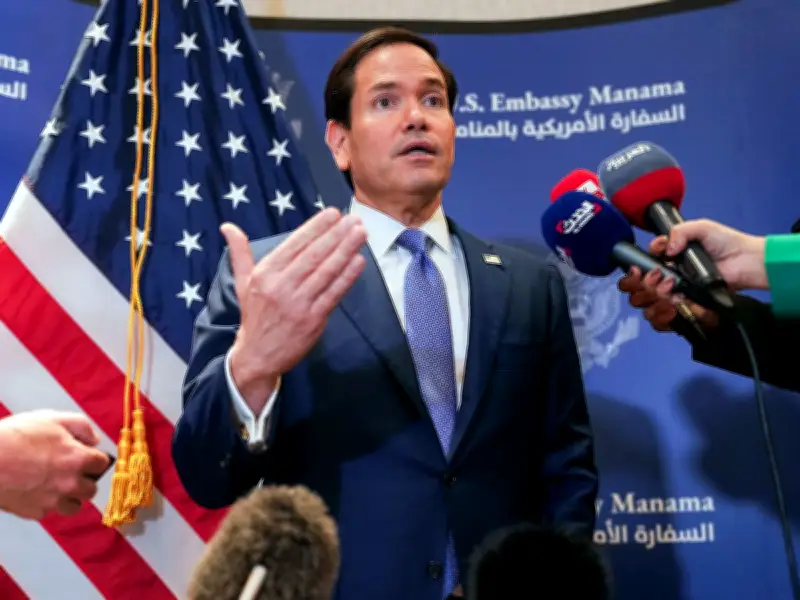
U.S. Secretary of State Marco Rubio warned on Thursday that allowing Iran to charge fees in the Strait of Hormuz would lead to 'total chaos,' as he concluded a regional tour aimed at reassuring Gulf partners affected by the recent Middle East war.
Rubio's warning on Hormuz fees
'International waterways do not belong to any nation state. This is a foundational principle in the world today, without which the world would be in total chaos,' Rubio told reporters in Manama, Bahrain. He reiterated Washington's stance that the strait is an international waterway and should remain toll-free.
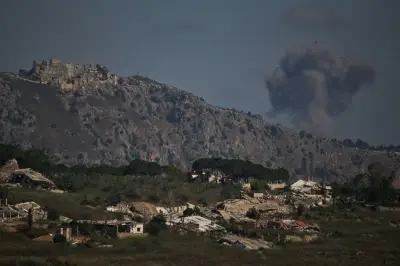
Rubio's comments came after Iran's Revolutionary Guards warned that any unauthorized crossings would be 'dealt with,' following Tehran's announcement that it plans to introduce maritime service fees. Iran imposed a blockade of the strait during the war, which began on February 28 with a massive U.S.-Israeli campaign of strikes against the Islamic republic, sparking a global economic shock.

Gulf states demand free navigation
Following Rubio's meeting with Gulf Cooperation Council (GCC) foreign ministers, the group issued a joint statement insisting that 'free, unconditional and unrestricted navigation' of the strait is essential to the region. The ministers also emphasized that 'lasting regional peace and security requires addressing the full spectrum of Iran's threats, including its ballistic missiles, drones and support of proxies.'
Oman's top diplomat, Badr Albusaidi, clarified that plans for Hormuz 'do not entail the imposition of any transit fees,' despite his government and Iran saying Tuesday they were studying costs for services provided in the strait.
U.S. seeks deal but not 'at any price'
Rubio acknowledged that while the U.S. wants 'a deal, we don't want a deal at any price.' He added, 'We want to ensure... that there is no part of this deal that's undertaken that in any way undermines the security, the stability or the prosperity of any of our partners in the Gulf region.'
The United States and Iran have signed a preliminary deal to end the conflict, with negotiations expected to cover Tehran's nuclear program, sanctions relief, and global energy flows through the Strait of Hormuz. However, it remains unclear whether talks will address Iran's missile program and support for regional proxies, which remain key concerns for Gulf states and Israel.