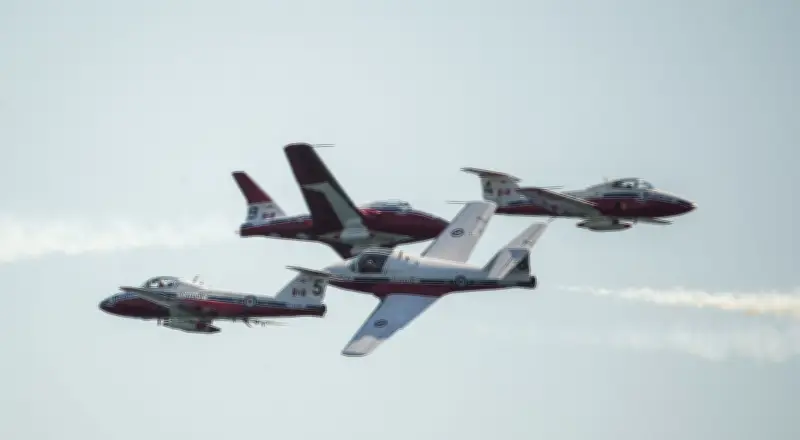
The Royal Canadian Air Force (RCAF) is moving forward with its decision to ground the Snowbirds aerobatic team at the end of the 2026 season, despite calls from alumni and supporters to keep the program flying.
RCAF Cites Unsustainable Challenges
Major Chelsea Dubeau, an RCAF spokesperson, stated that the engineering and technical support required to continue operating the CT-114 Tutor trainer jets has become increasingly unsustainable. “The challenges of operating a 60-year-old aircraft in an air demonstration role continue to mount as the fleet faces multiple issues related to parts availability, obsolescence, and difficulties with making necessary upgrades for airworthiness reasons,” Dubeau said in an email to the Toronto Sun.
The decision comes after the Department of National Defence announced last month that the Snowbirds would be temporarily grounded after this season, despite spending $31.2 million to refurbish 20 Tutors with new cockpits and aeronautics by May 2027. Thirteen of those refurbished aircraft have been received, but the remaining will not be delivered, according to CBC News.

Alumni Efforts to Keep the Snowbirds Flying
Since the grounding announcement, the Snowbirds Alumni Association has urged the RCAF to consider alternatives, such as reducing the formation size from nine to seven planes, following the example of Britain’s Red Arrows. Retired General Rick Hillier, speaking at the launch of the “No Pause: Keep the Snowbirds Flying” campaign on May 29, described the Snowbirds as “one of very few Canadian symbols” needed more than ever during turbulent times.
However, the RCAF maintains that the cumulative airworthiness risks related to the age of the airframes, engines, and escape systems justify the grounding. Dubeau emphasized that the Tutor is “no longer representative of a modern RCAF, Canadian Armed Forces or Canadian aerospace industry.”
Future Plans with CT-157 Siskin II
The federal government plans to replace the Tutors with CT-157 Siskin II turboprops, a decision that has drawn criticism from Conservative MP Fraser Tolmie, who questioned using turboprops for a premier air demonstration team. Dubeau noted that the RCAF will consult with current and retired Snowbirds members and seek advice from partner nations like Australia when the CT-157 is eventually operationalized for air demonstration roles. “As the CT-157 Siskin II (PC-21) aircraft will be the future RCAF advanced flying training aircraft, many pilots will be familiar with it, enhancing the Air Force’s ability to staff an air demonstration team,” she said.
Risks of a Long Pause
Former Snowbirds pilot Maryse Carmichael warned that a prolonged pause could increase risks and costs. She told the Toronto Sun that even as a former RCAF flight instructor, she needed six months of intense training with experienced Snowbirds to prepare for a season. “In three, four, five, six years from now, you can’t just go and say, ‘Oh, OK, we’ll pick it up and we’re going to go and fly an airshow,’” said the retired lieutenant-colonel.
The Snowbirds are scheduled to perform at the Canadian International Air Show later this year, offering one of the last chances to see the team in action before the grounding takes effect.