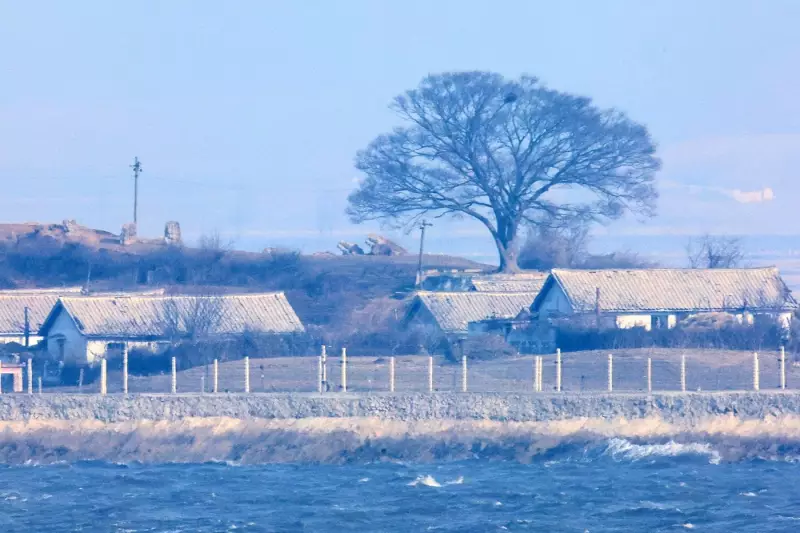
Tensions on the Korean Peninsula have escalated sharply after North Korea accused South Korea of flying drones across their heavily fortified border. The North has vowed to take decisive action in response to what it labels a serious provocation.
Allegations and Immediate Fallout
The accusations were made public on Saturday, January 10, 2026. North Korean state media released a statement claiming that South Korean military drones had violated its airspace. While specific details about the number of drones or the exact location were not immediately provided by Pyongyang, the language used was notably aggressive, promising a "resolute and overwhelming response" to the alleged incursions.
South Korean officials have not yet issued an official public comment on the specific allegations for this reported incident. However, the South's military maintains a high state of alert along the Demilitarized Zone (DMZ), a legacy of the 1950-53 Korean War that ended in an armistice, not a peace treaty. The border remains one of the most militarized frontiers in the world.

A History of Aerial Incursions
This latest incident is not an isolated event in the complex security dynamics of the peninsula. Both Koreas have a history of accusing each other of aerial espionage and border violations. In recent years, North Korea has frequently launched its own drones into South Korean territory, some of which have been recovered and analyzed by Seoul's military.
The use of drones has become a significant point of military contention. They are employed for surveillance, psychological operations, and testing the adversary's defensive capabilities. Any perceived breach of airspace is treated with extreme seriousness due to the constant risk of miscalculation leading to a broader conflict.
Regional and Global Implications
The new allegations come at a time of heightened global instability and put a renewed spotlight on the persistent security threat posed by the North Korean regime. Pyongyang has continued to advance its ballistic missile and nuclear weapons programs despite international sanctions, raising the stakes for any military confrontation.
For Canada and its allies, stability on the Korean Peninsula is a key foreign policy concern. Canada has historically supported diplomatic efforts to denuclearize North Korea and enforce United Nations Security Council resolutions. A sudden flare-up of tensions directly impacts regional security in Northeast Asia, which is vital to global trade and geopolitical balance.
Analysts warn that North Korea often uses accusations against the South as a pretext to justify its own military actions or to gain leverage in dormant diplomatic channels. The vow of a response leaves open a range of possibilities, from further drone or missile tests to aggressive rhetoric or even a limited tactical provocation along the border.
The international community will be watching closely for South Korea's official response and for any concrete actions from the North in the coming days. The incident underscores the fragile and volatile nature of peace on the Korean Peninsula, where a single incident can rapidly escalate.