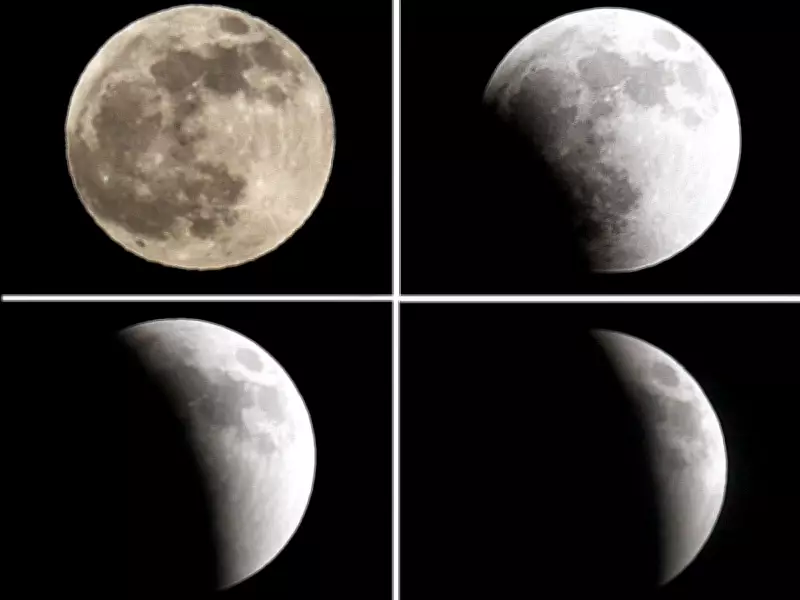
Stargazers in Montreal are in for a celestial treat as a total lunar eclipse will be visible during the early morning hours of March 3, 2026. This astronomical phenomenon, where the moon passes completely into Earth's shadow, offers a rare opportunity for local observers to witness the moon's dramatic transformation into a reddish-orange hue.
Optimal Viewing Conditions and Timing
While conditions won't be perfect, the event remains significant. Totality—the period when the moon is entirely within Earth's shadow—will commence around 6:04 a.m., coinciding with moonset and sunrise. The partial eclipse begins earlier at 4:50 a.m., with totality technically lasting until 7:02 a.m. However, for Montreal viewers, the moon will dip below the horizon at approximately 6:30 a.m., making the early morning hours crucial for observation.
"We're fortunate to experience a total eclipse," emphasized Olivier Hernandez, an astrophysicist and director of the Montreal Planetarium. "That's why it's still worthwhile to witness it, even under less-than-ideal conditions."

Expert Recommendations for Best Viewing
Given that totality occurs as the moon sets, Hernandez stresses the importance of securing an unobstructed view of the western horizon. For Montreal residents, he suggests the Outremont Summit of Mount Royal as an ideal location. "The western horizon is very clear there," he noted. "If I had the motivation to wake up early, that's likely where I would head."
For those outside the city, Hernandez recommends elevated spots such as Mont St-Hilaire, Mont St-Bruno, or Mont St-Grégoire. "Any location where you can gain some height and have a clear horizon will enhance the viewing experience," he advised.
The Science Behind the Spectacle
The moon's orange-red coloration during a total lunar eclipse, often called a Blood Moon, results from sunlight being filtered and bent through Earth's atmosphere into the planet's shadow. Unlike solar eclipses, which require protective eyewear, lunar eclipses are safe to view with the naked eye.
Gary Boyle, known as The Backyard Astronomer, highlights the unique appeal of witnessing this event firsthand. "You can examine eclipse photos in books or watch documentaries on television," Boyle said, "but until you've actually seen the moon turn orange in the sky, it's an entirely different experience. You're observing the beautiful dance between celestial bodies."
Rarity of Total Lunar Eclipses
Eclipses occur when the sun, Earth, and moon align precisely. The moon's orbit is tilted about five degrees relative to Earth's orbit around the sun, making such alignments relatively infrequent. Typically, two to three times per year, these bodies line up in a manner that allows for eclipses over a span of 30 to 47 days.
"This explains why we can have roughly two to seven eclipses annually, whether solar or lunar," Hernandez explained. "When a solar eclipse happens, a lunar eclipse often occurs either 15 days before or after, and sometimes both."
Total lunar eclipses are less common than partial ones because they require the moon to pass fully into Earth's central shadow. The next total lunar eclipse visible from Montreal won't occur until overnight between June 25 and June 26, 2029, making the March 3 event a noteworthy occasion for astronomy enthusiasts.
Planning Your Eclipse Experience
With the next total lunar eclipse in Montreal three years away, early risers are encouraged to seize this opportunity. Setting alarms for before dawn and heading to elevated locations with clear western vistas will maximize the chance of catching this celestial display. As the moon sets and the sun rises, observers may witness a fleeting but memorable intersection of day and night skies.