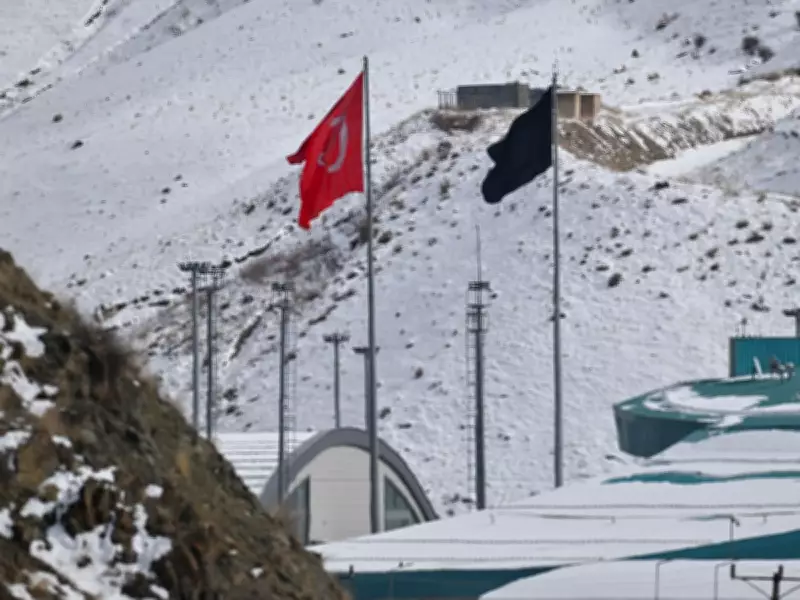
NATO Forces Intercept Iranian Ballistic Missile Targeting Turkish Territory
In a significant escalation of regional tensions, the North Atlantic Treaty Organization successfully intercepted and destroyed a ballistic missile launched from Iran that was headed toward Turkish airspace on Wednesday. This marks the first instance where NATO has been directly involved in defending a member state from a projectile originating from Tehran since the United States and Israel initiated military operations against the Islamic Republic last week.
Official Condemnation from NATO Leadership
NATO spokesperson Allison Hart issued a firm statement condemning the Iranian action, declaring, "We condemn Iran's targeting of Türkiye. NATO stands firmly with all allies, including Türkiye, as Iran continues its indiscriminate attacks across the region." The statement underscores the alliance's commitment to collective defense amid growing instability.
According to Turkey's Ministry of Defense, the ballistic munition traveled through Iraqi and Syrian airspace before being neutralized by NATO air defense systems stationed in the eastern Mediterranean region. Debris from the intercepted missile fell in the southern Turkish province of Hatay, though fortunately no casualties were reported according to the presidency's communications director.

Turkey's Strategic Position in the Conflict
This incident represents the first direct involvement of Turkey in the ongoing conflict, now entering its fifth day. While Turkey maintains its status as a NATO member, it has not participated in the war against Iran and has refused to allow its airspace to be used for attacks on Iranian territory.
Turkey hosts critical NATO defense infrastructure, including an early-warning radar system at Kurecik located approximately 435 miles west of the Iranian border. This installation forms a vital component of NATO's ballistic missile defense network. The debris from Wednesday's interception fell about 60 miles east of Turkey's Incirlik Air Base, where the United States has historically maintained military assets.
Regional Diplomatic Responses and Economic Impact
Following the incident, Turkish Foreign Minister Hakan Fidan engaged in diplomatic discussions with his Iranian counterpart Abbas Araghchi, cautioning against actions that could further escalate regional conflicts. The Turkish defense ministry issued a stern warning, stating, "We remind all parties that we reserve the right to respond to any hostile actions against our country. We warn all parties to refrain from actions that would lead to further escalation of conflicts in the region."
The economic repercussions were immediately felt in Turkish markets, with the Borsa Istanbul 100 Index paring earlier gains of up to 1.2 percent and settling at just 0.2 percent higher by late afternoon trading in Istanbul.
International Reactions and Defense Considerations
United States Defense Secretary Pete Hegseth confirmed American awareness of the interception while indicating that details were still being investigated. Notably, Hegseth ruled out invoking NATO's Article 5, which stipulates that an attack on one member constitutes an attack on all alliance nations.
The incident occurs against a backdrop of widespread regional unrest, with violent demonstrations reported across Pakistan following U.S.-Israeli strikes on Iran. Meanwhile, in Tehran, recovery efforts continue at police facilities damaged during the ongoing military campaign.
This missile interception represents a critical moment in NATO's defensive operations, highlighting the alliance's readiness to protect member states while navigating complex geopolitical tensions in the Middle East. The event underscores Turkey's precarious position as both a NATO ally and regional power seeking to avoid direct conflict escalation.