Montreal's Aerospace Leadership Could Make It Canada's Defence Capital
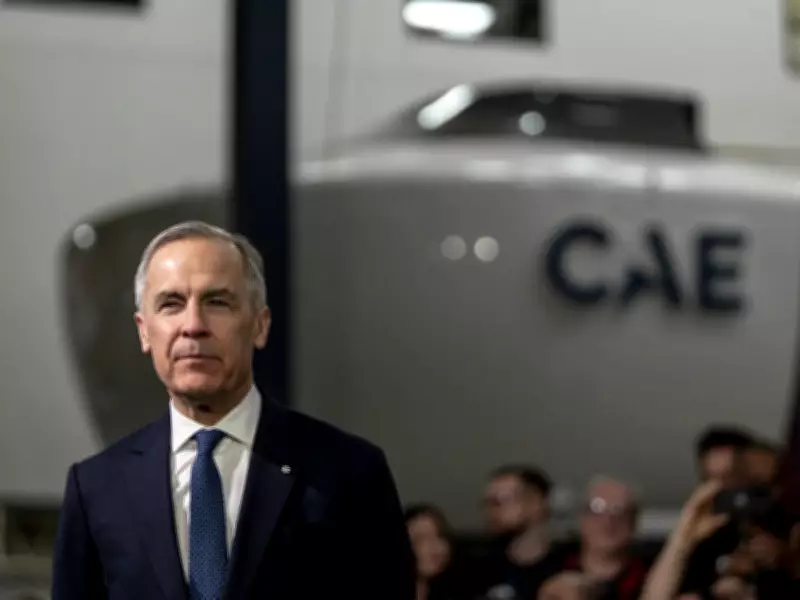
Is Montreal on the verge of becoming Canada's premier defence industry hub? The question gains urgency following Prime Minister Mark Carney's recent unveiling of the Liberal government's "defence industrial strategy" at CAE headquarters in Montreal on February 17, 2026. This strategic announcement, described by experts as a "generational shift," aims to redirect half a trillion dollars in investments toward domestic defence production over the next decade while creating approximately 125,000 jobs.
A Strategic Location for Sovereign Capabilities
The new policy represents a deliberate move away from dependence on United States suppliers, focusing instead on "sovereign capabilities" where Canadian firms already demonstrate excellence. Montreal's aerospace cluster, recognized as the world's third-largest with over 60,000 employees, accounts for more than half of Canada's entire aerospace industry. This established infrastructure positions the city advantageously for defence contracts.
"This is happening at a time of very chaotic geopolitics, this is happening at a time of a trade war, and we need to be able to protect jobs in the steel sector, in the aluminum sector, in the auto sector … and at the same time we need to create new jobs," Federal Industry Minister Mélanie Joly emphasized in a recent CBC interview.

Montreal's credentials extend beyond aerospace. The city's artificial intelligence expertise was cited just weeks ago as a key reason it should host a proposed international defence bank supporting NATO military growth. The broader Quebec defence ecosystem includes approximately 470 companies active in defence or related supply chains, according to Investissement Québec.
Immediate Investments and Broader Competition
The federal government demonstrated its commitment days after Carney's announcement with $33 million in investments for Quebec defence-sector firms. These ranged from $10 million for landing-gear manufacturer Héroux-Devtek in Longueuil to $250,000 for Ferreol, a Rimouski-based company producing military skis for Arctic operations.
While Montreal appears well-positioned, it's not alone in this emerging landscape. Other Canadian cities with significant defence capabilities include:
- Vancouver and Halifax, home to Seaspan and Irving shipyards building military vessels
- Ottawa, a centre for drone manufacturing
- Toronto, producing armoured vehicles
- Sherbrooke, developing quantum technology innovation zones
"There's something happening in Montreal," observed former Parti Québécois MNA Jonathan Valois following the federal announcement. "There is a mobilization; there are many actors in Montreal that are involved."
Challenges in Transition and Implementation
Despite Montreal's advantages, significant challenges remain. Most local aerospace companies focus primarily on civilian products, with none working exclusively on defence. Shifting from civilian to military production requires substantial time and investment—developing advanced drones could take 10 to 15 years, according to Justin Massie, head of the political science department at Université du Québec à Montréal.
"The biggest challenge in the Montreal area is to convert what they're doing in the civilian industry, the aerospace industry, to defence," Massie explained. "We could create a consortium, perhaps in Montreal, producing drones for military purposes … so we're not relying on foreign suppliers for the future technologies that are necessary to maintain surveillance over our territory, and also defend our airspace and sovereignty."
Manufacturers have long criticized Canada's procurement processes, noting it's often easier to sell to foreign governments than to domestic agencies. This reality prompted Bombardier to establish its defence sector in Wichita, Kansas in 2022, anticipating more reliable contracts in the United States.
A Fundamental Shift with Strategic Implications
Vincent Rigby, a McGill University professor and former national security adviser, described Carney's announcement as "a fundamental shift in the way Canada has done business for a long time." The choice of CAE for the announcement was deliberate, he noted, given the company's global leadership in simulation equipment.

"This is about the Canadian defence industry stepping up across the country, and really it's a major, major pivot where in the past we relied on foreign suppliers, particularly the United States, to equip the Canadian Armed Forces," Rigby stated. "Now we're looking to domestic industry. So I think Montreal is going to be at the top of that list."
However, Rigby cautioned that the strategy currently emphasizes economic policy over defence planning. "The government has kind of done it backwards," he observed. "We live in a very unpredictable and dangerous world with the return of geostrategic rivalry with countries like Russia and China. Then Trump came along and ramped it up."
With growing concerns about regional conflicts, Rigby emphasized the strategic necessity: "There's a great fear in the world right now that we may be back into a period where Canada getting drawn into a regional war is not out of the realm of possibility. You do not want the Canadian Armed Forces going into battle and we have no domestic defence industry and we're running out of munitions within weeks, we can't replace equipment that's destroyed in battle. We need to be ready."
As Canada implements this defence industrial strategy, Montreal's established aerospace infrastructure, combined with emerging technologies and federal investment, positions the city as a potential cornerstone of the nation's renewed defence capabilities—provided challenges in transition and procurement can be effectively addressed.