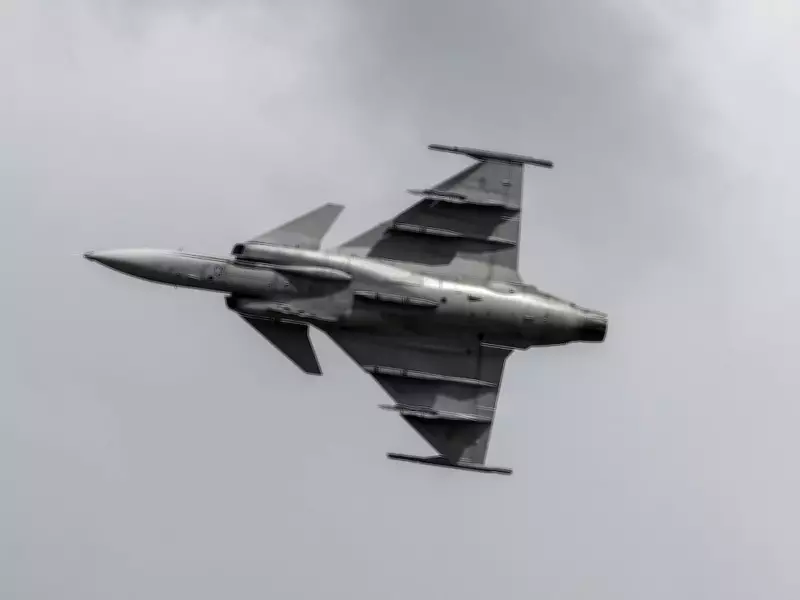
Mixed F-35/Gripen Fighter Fleet Would Fail Canada on All Fronts: Analysis
Canada's long-running CF-18 replacement program, now in its 16th year and undergoing its fifth evaluation, appears poised to recommend continuing with the purchase of F-35 fighter jets. However, recent reports suggest the government is considering a mixed fleet approach, splitting procurement between F-35s and Saab Gripens. Defence analyst Richard Shimooka argues this compromise would be disastrous for Canadian security.
The Flawed Logic of a Mixed Fleet
Despite the F-35's proven technical capabilities, confirmed by a leaked 2021 Department of National Defence evaluation, some critics oppose a full F-35 purchase due to concerns about U.S. reliability under President Donald Trump's administration. They argue that deteriorating Canada-U.S. relations make sole reliance on American aircraft untenable.
However, Shimooka contends this perspective ignores broader political realities. While Trump's foreign policy represents a radical departure from traditional American positions on free trade and alliances, this approach has proven deeply unpopular even among Republicans. Future U.S. administrations will likely return to cooperative relationships with allies, particularly given America's diminished international standing and growing global threats.

Capability and Cost Concerns
The proposed mixed fleet presents serious operational and financial challenges:
- Reduced Capability: The Saab Gripen is significantly less capable than the F-35, particularly against modern threats like cruise missiles, hypersonic weapons, and advanced Russian and Chinese bombers.
- Higher Costs: Operating two different aircraft types increases maintenance, training, and logistical expenses substantially.
- Continued Dependence: Even Swedish-made Gripens rely on American components and production, meaning Canada wouldn't achieve true supply chain independence.
American Perspectives on Canadian Defence
While Canadians criticize U.S. reliability, American officials have long expressed concerns about Canada's inadequate defence spending. U.S. Ambassador to Canada Pete Hoekstra recently warned that if Canada doesn't proceed with a full F-35 fleet, the United States would need to "fill in the gaps" in North American defence.
This isn't merely a future concern. Canada's current CF-18 fleet, despite modernization with advanced radar and avionics shared with U.S. Navy Super Hornets, remains 40 years old and increasingly inadequate against contemporary threats. A mixed fleet would institutionalize these capability gaps for decades.
The Strategic Imperative
As international tensions rise and the global security environment deteriorates, Canada faces a critical decision. The mixed fleet option represents a compromise that satisfies political concerns but fails strategic requirements. With the CF-18 replacement program already spanning 16 years and multiple evaluations, further delays or suboptimal solutions could leave Canada vulnerable at a time when reliable defence capabilities are more essential than ever.
The choice between capability and perceived political safety has never been starker for Canadian defence planners.