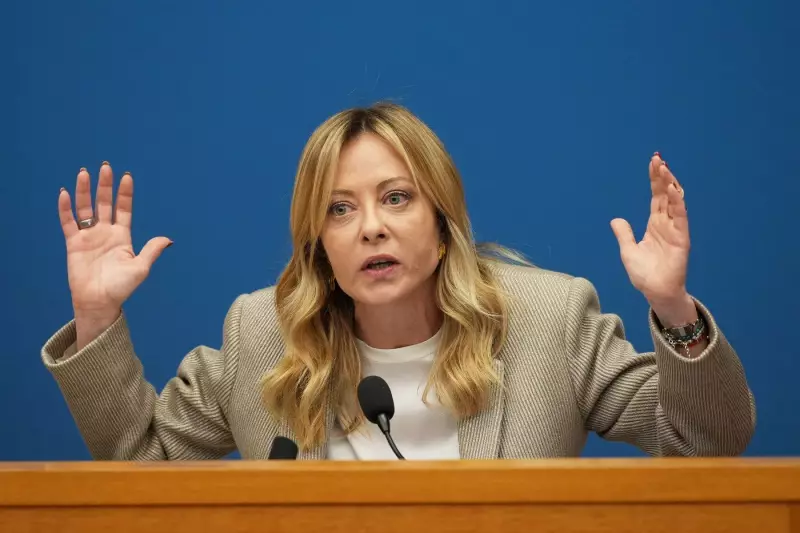
Italian Prime Minister Giorgia Meloni has publicly dismissed the possibility of a United States military move on Greenland, using a major press conference to instead advocate for a more robust NATO role in the strategically vital Arctic region.
Annual Press Conference Addresses Global Security
The comments were made during Meloni's annual start-of-the-year press conference in Rome on Friday, January 9, 2026. Speaking in the press room at the Lower Chamber, the Prime Minister addressed a range of international issues, with the geopolitics of the far north taking a prominent position.
While the exact context of the speculated U.S. military action on Greenland was not detailed in her remarks, Meloni's statement served as a clear rejection of unilateral moves. She positioned the transatlantic military alliance, NATO, as the appropriate vehicle for engagement in the Arctic, an area of growing competition due to climate change and resource access.

Arctic Becomes a Strategic Flashpoint
The Arctic has seen increased international attention as melting ice opens new shipping lanes and access to untapped natural resources. This has led to heightened military and economic activity from Arctic and non-Arctic states alike, raising concerns about regional stability.
By urging a stronger NATO role, Meloni is aligning Italy with a multilateral approach to security in the High North. This stance emphasizes coordination among allies over individual national actions, which could be perceived as escalatory. Her position underscores the broader European interest in ensuring the Arctic remains a zone of cooperation, not conflict.
Implications for Transatlantic Relations
Meloni's direct ruling out of a U.S. military move on Greenland is a notable foreign policy declaration. It signals a willingness to articulate independent positions on sensitive security matters within the Atlantic alliance. The call for NATO to take the lead reflects a desire for a collective strategy that considers the interests of all member states, particularly those in Europe who view the Arctic's future as directly linked to their own environmental and economic security.
The Prime Minister's annual address, a key event on Italy's political calendar, has therefore placed Arctic security firmly on the agenda for 2026. Her comments will likely fuel further discussion among NATO members about the alliance's formal strategy and presence in the rapidly changing polar region.