In a significant escalation ahead of high-stakes diplomatic talks, Russian forces launched a massive aerial assault on Ukraine's capital, Kyiv, on Saturday, December 27, 2025. The attack, involving drones and missiles, resulted in civilian casualties and widespread power outages as Ukrainian President Volodymyr Zelenskyy prepared to meet with U.S. leader Donald Trump.
A Ten-Hour Barrage on the Capital
The assault lasted for approximately ten hours, with Ukrainian authorities reporting that the capital and its surrounding region were targeted by around 500 drones and 40 missiles. According to President Zelenskyy, the attack served as a grim reminder that Russia has no intention of ending its invasion, which began in February 2022 and has claimed tens of thousands of lives.
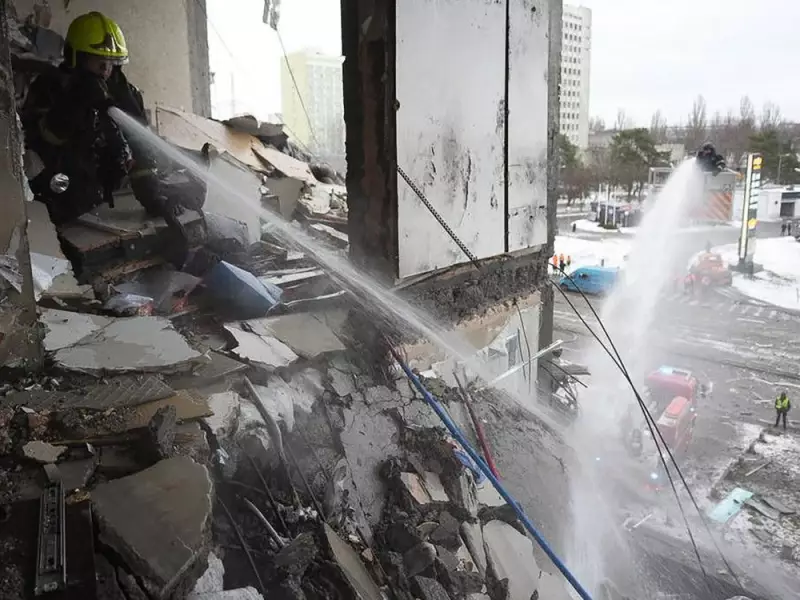
Ukrainian emergency services confirmed that the bombardment killed one woman and wounded dozens of other people. The strikes damaged residential buildings, a university dormitory, and a petrol station, among other structures. Prime Minister Yulia Svyrydenko stated the attack left roughly 600,000 consumers without electrical power, with heating also cut off during freezing winter temperatures.

Regional Security Implications
The attack had immediate repercussions beyond Ukraine's borders. Neighbouring Poland, a NATO member, responded by scrambling fighter jets and placing its air defence systems on high alert as the Russian assault unfolded. Polish authorities also temporarily suspended air traffic at two airports located near the Ukrainian border as a precautionary measure, though operations later resumed.
On the ground in Kyiv, AFP correspondents reported hearing powerful explosions throughout the extended attack, with some blasts lighting up the night sky with bright orange flashes. The Russian military claimed it used hypersonic missiles and drones to target what it described as infrastructure and energy facilities supporting Ukraine's armed forces, as well as military sites.
Diplomatic Timing and Accusations
The timing of the assault was highly conspicuous, occurring just as President Zelenskyy departed for the United States to meet with Donald Trump in Florida on Sunday, December 28. The leaders were scheduled to discuss a new 20-point U.S.-brokered plan aimed at halting Europe's most devastating conflict since World War Two. Details of the plan, revealed by Zelenskyy earlier in the week, suggest it could freeze fighting along current front lines but may require Ukrainian troop withdrawals to create demilitarized buffer zones in the east.
In a statement, Zelenskyy condemned the attack, asserting, "Russian representatives engage in lengthy talks, but in reality, Kinzhals (missiles) and Shaheds (drones) speak for them." He added that the strike demonstrated Moscow's desire to "increase their pressure on others around the world" and cause greater suffering in Ukraine.
Meanwhile, Russian officials preemptively accused Kyiv and its European Union supporters of attempting to "torpedo" the American peace initiative. The attack and the ensuing diplomatic manoeuvres underscore the profound challenges facing any negotiated settlement to the prolonged and brutal war.