The Israeli defense minister confirmed on Tuesday that the Israeli military conducted an overnight operation resulting in the death of top Iranian security official Ali Larijani. Israel Katz made the announcement, marking another significant blow to Iran's leadership structure.
Dual Elimination of Iranian Commanders
In addition to Larijani, who served as Secretary of the Supreme National Security Council, the Israeli military also reported killing Gholam Reza Soleimani, the commander of the Revolutionary Guard's Basij paramilitary force. These strikes represent a continued campaign targeting Iran's leadership following the February 28 operation that eliminated 86-year-old Supreme Leader Ayatollah Ali Khamenei.
The Israeli military described the Basij forces as "part of the armed apparatus of the Iranian terror regime" and noted that under Soleimani's command, these units had led repression operations during internal protests in Iran, employing severe violence and widespread arrests against civilian demonstrators.

Regional Escalation and Gulf Attacks
As Israel conducted these targeted killings, Gulf Arab nations faced renewed missile and drone attacks from Iran. Dubai, a major international transit hub, briefly closed its airspace as military forces responded to incoming threats around the city. In Abu Dhabi, one man was killed by debris from an intercepted missile, bringing the total fatalities in the UAE since the conflict began to eight.
The Israeli military announced it had initiated "wide-scale wave of strikes" across Tehran while intensifying attacks on Iran-backed Hezbollah militants in Lebanon. Israel also reported receiving two incoming salvos from Iran targeting Tel Aviv and other areas, with Hezbollah simultaneously targeting Israel's northern regions.
Impact on Iranian Command Structure
The elimination of Soleimani is expected to significantly strain the command and control of the Basij forces, which play a crucial role in suppressing potential uprisings against the Iranian theocracy. Both American and Israeli forces have consistently targeted these internal security apparatuses throughout the conflict.
Gholam Reza Soleimani, born in 1965 according to U.S. Treasury records, had faced sanctions from the United States, European Union, and other nations for his role in suppressing dissent through the Basij organization over many years.
Energy Infrastructure Under Fire
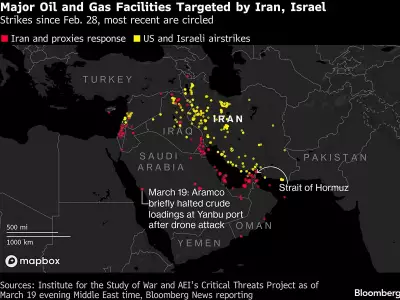
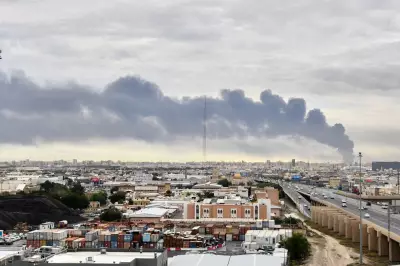
Iran maintained pressure on Gulf Arab neighbors' energy infrastructure, striking an oil facility in Fujairah, a UAE emirate on the country's east coast that has been repeatedly targeted. State-run WAM news reported no injuries from the drone strike that caused the explosion.
Early Tuesday morning, a tanker anchored off the coast of Fujairah sustained minor damage from a projectile attack, according to the United Kingdom Maritime Trade Operations center. This incident adds to approximately twenty vessels hit since the conflict began on February 28.
Strait of Hormuz Tensions
Iran's continued attacks on Gulf nations and its control over the Strait of Hormuz, through which approximately one-fifth of global oil passes, has raised increasing concerns about a potential worldwide energy crisis. Iranian parliamentary speaker Mohammad Bagher Qalibaf defended his country's actions, stating Iran had "no choice but to keep up its pressure on shipping traffic in the strait."
The virtual shutdown of this crucial waterway has created economic instability, driving up energy prices and threatening food shortages in vulnerable nations. Brent crude oil prices remained above $100 per barrel, representing an increase of more than 40% since the conflict began.
International Response and Diplomatic Efforts
U.S. President Donald Trump reportedly demanded that several countries deploy warships to help keep the Strait of Hormuz open, though these appeals brought no immediate commitments. Many nations expressed hesitation about involvement in a conflict with undefined exit strategies and questioned whether they could contribute beyond existing U.S. naval capabilities.
Iraq announced it was engaged in discussions with Iran regarding permission for its ships to pass through the strait, highlighting the complex diplomatic negotiations occurring amid military hostilities.

Regional Airspace Disruptions
The United Arab Emirates' decision to temporarily close its airspace demonstrated the challenging balance Emirati authorities must maintain between security concerns and keeping their major airlines, Emirates and Etihad, operational during continued Iranian attacks.
Saudi Arabia's Defense Ministry reported intercepting approximately twelve drones over the country's Eastern Province, home to significant oil infrastructure. In Qatar, defense systems successfully thwarted a missile attack on the capital, though a downed projectile caused a fire in an industrial area.
Expanding Conflict Zones
Attacks from Iran-linked proxy forces continued in Iraq, where the U.S. Embassy in Baghdad sustained shrapnel damage from intercepted drones. Embassy air defenses reportedly shot down all four drones targeting the facility, according to Iraqi security officials speaking anonymously about intelligence matters.
A separate strike targeted a house within Baghdad's heavily fortified Presidential Compound in the al-Jadriya area. While responsibility remained unclear, Iran-allied militias have regularly attacked American targets in Iraq since the conflict's inception.
Humanitarian Consequences
The Iranian Red Crescent reported more than 1,300 fatalities in Iran since the conflict began, while the Lebanese government stated approximately 850 people have been killed in their country, with more than 1 million Lebanese displaced—representing roughly 20% of the population.
In Israel, twelve people have been killed by Iranian missile fire, with at least thirteen U.S. military members also losing their lives in the conflict.
The Israeli military's chief of staff, Lieutenant General Eyal Zamir, emphasized during a visit to the northern border that Israel's army remains "determined to deepen the operation until all of our objectives are achieved," noting that additional soldiers were reinforcing the Northern Command.