Israel Intensifies Military Operations in Lebanon with Bridge Destruction
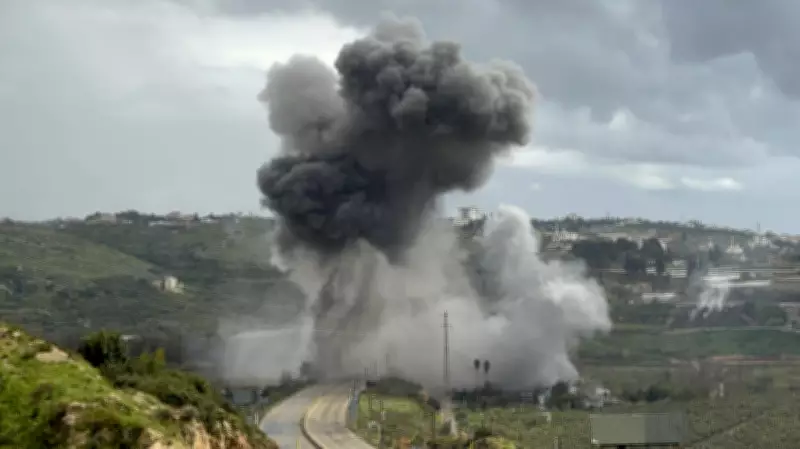
Israeli forces struck a crucial bridge connecting Lebanon's southern region to the rest of the country on Sunday, marking a significant escalation in their military campaign. The attack followed orders to destroy all crossings over the Litani River and accelerate the demolition of homes near the southern border.
Strategic Infrastructure Targeted
The Sunday strike damaged a crossing on Lebanon's coastal highway that runs through farmland, serving as one of the primary routes linking southern and central Lebanon. An Israeli military spokesperson had announced earlier that day that the army would target the bridge. According to Lebanese state media, a second Israeli strike hit the same bridge on Sunday evening.
Lama al-Fares, who lives on farmland adjacent to the crossing, described the harrowing experience of fleeing with her family. "Our house is right next to the bridge. It was destroyed in the last war and we had rebuilt a basic structure to live in - I hope it's still standing," she told Reuters. Her family packed what they could into their car when they saw the warning and drove north to wait on a hilltop overlooking the highway.

Military Justification and International Criticism
Israeli Defence Minister Israel Katz stated that the military had been ordered to destroy all bridges over the Litani used for "terrorist activity," aiming to prevent Hezbollah militants and weapons from moving south. Katz also confirmed orders to accelerate the demolition of Lebanese homes in "frontline villages" to neutralize threats to Israeli communities, describing the approach as similar to models used in Gaza's Beit Hanoun and Rafah.
However, international law generally prohibits militaries from attacking civilian infrastructure, and the United Nations human rights chief has criticized Israel's actions in Lebanon. Lebanese President Joseph Aoun condemned the strikes as a "prelude to a ground invasion" and "policy of collective punishment against civilians." He warned that the destruction would impede humanitarian aid delivery and could be part of "suspicious schemes" to expand Israel's presence in Lebanese territory.
Humanitarian Catastrophe Feared
Ramzi Kaiss, Lebanon researcher at Human Rights Watch, expressed grave concerns about the civilian impact. "If all these bridges are struck, and the region that is south of the Litani becomes isolated from the rest of the country, then the civilian harm is going to be so immense that you have a humanitarian catastrophe," Kaiss warned. He emphasized that people still living in the south would be unable to access food, medicine, and other basic needs.
Kaiss added that destroying homes in southern Lebanon wholesale would amount to wanton destruction, which constitutes a war crime under international law. The Israeli military campaign has already displaced more than a million people through widespread evacuation orders.
Casualties and Regional Context
According to Lebanon's health ministry, Israeli strikes have killed more than 1,000 people in Lebanon, including nearly 120 children, 80 women, and 40 medical personnel. Lebanese authorities do not distinguish between civilians and militants in their casualty reports.
On Sunday, an Israeli civilian was killed in his car near the border after what the military described as a "launch" from Lebanese territory. Ten hours after Israel's ambulance service reported the man's death, the military announced it was investigating whether he had been killed by Israeli fire. Two Israeli soldiers have also been killed in fighting in Lebanon.
The conflict escalated on March 2 when Hezbollah fired into Israeli territory, pulling Lebanon into the regional war. The Israeli military says its troops are conducting ground maneuvers and targeted raids on Hezbollah militants and weapons stores in southern Lebanon, while Israeli officials maintain that air and ground campaigns aim to protect residents in northern Israel from Hezbollah attacks.
The Lebanese government has outlawed Hezbollah military activity and expressed willingness to engage in direct talks with Israel, even as military actions intensify and infrastructure destruction creates mounting humanitarian concerns.