In a significant development for Iraqi security, the country's chief judicial authority has announced that various armed factions operating within its borders have agreed to a new level of cooperation regarding weapons.
Judicial Announcement Follows Regional Tensions
The statement was made by Faiq Zidan, the head of Iraq's Supreme Judicial Council. While specific details of the cooperation framework were not fully disclosed, the announcement points toward an effort to establish greater oversight and coordination over the arsenals held by numerous paramilitary groups. This move occurs against a backdrop of persistent regional instability and internal security challenges.
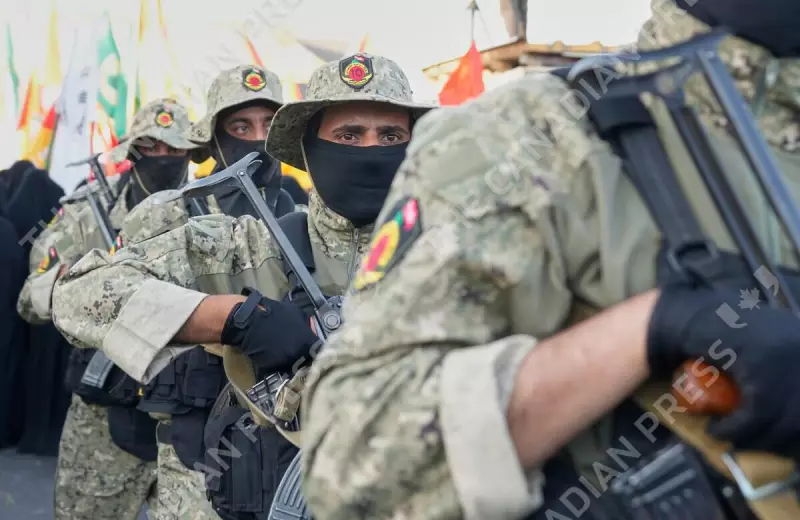
The context for this judicial pronouncement is underscored by recent violent events. In June 2025, a funeral was held in Baghdad for commander Haider al-Moussawi of the Kataeb Sayyed Al-Shuhada faction, part of the Popular Mobilization Forces (PMF). Al-Moussawi was killed alongside Hussein Khalil, a former aide to Hezbollah's late leader Hassan Nasrallah, in an Israeli airstrike inside Iran.

The Role of the Popular Mobilization Forces
The Popular Mobilization Forces (PMF) are a coalition of predominantly Iran-backed Iraqi militias that were formally integrated into the state's security apparatus after playing a major role in the fight against the Islamic State. However, many of its constituent factions maintain significant autonomy and influence. The Kataeb Sayyed Al-Shuhada is one such group within this broader network.
The killing of these figures in a strike on foreign soil highlights the complex, cross-border nature of militia activities and alliances in the region. It also illustrates the ongoing tensions that Iraqi authorities must navigate, balancing internal sovereignty with the influence of external actors and their allied local groups.
Implications for Iraqi Sovereignty and Security
The call for armed factions to cooperate on weapons matters, coming from the head of the judiciary, represents an attempt to reinforce state authority. The Iraqi government has long grappled with the challenge of fully controlling the multitude of armed groups that emerged during the wars against insurgency and terrorism.
Effective weapons management and coordination are seen as critical steps toward consolidating the state's monopoly on the use of force. This initiative, if successfully implemented, could potentially reduce unauthorized military actions and help de-escalate regional confrontations that originate from Iraqi territory.
The announcement by Judge Zidan signals a continued, high-level effort to bring these powerful non-state actors into a more regulated and transparent framework, a process essential for Iraq's long-term stability and security.