Iran's Approved Coastal Route Emerges as Key Passage Through Strait of Hormuz
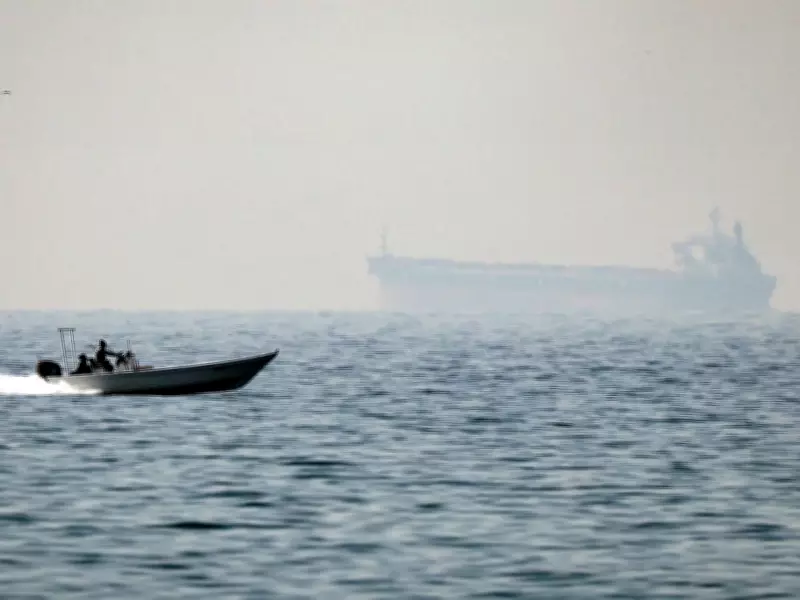
A Pakistani tanker's recent voyage through the Strait of Hormuz has revealed a significant development in maritime navigation through one of the world's most critical energy chokepoints. The vessel, identified as the Karachi, sailed through a narrow passage between Iran's Larak and Qeshm islands before tracking along the Iranian coastline into the Gulf of Oman, according to vessel-tracking data compiled by Bloomberg.
Strategic Navigation Shift Signals Tehran's Growing Influence
The emergence of this coastal route suggests Iran is tightening its control over the narrow waterway that carries approximately one-fifth of the world's oil supply. This development comes as the United States continues efforts to assert its own authority over the strategic passage, creating a complex geopolitical dynamic that affects global energy markets.
"The use of this route so far appears to be tied to Iran's apparent approval of specific ships transiting the strait," said Harrison Prétat, deputy director and fellow with the Asia Maritime Transparency Initiative at the Center for Strategic and International Studies. "This area would be easier for Iranian authorities to control, potentially indicating the establishment of a traffic control system imposed by Tehran."

Multiple Vessels Follow the Pattern
Following the Pakistani tanker's passage, two bulk carriers that had previously called at Iranian ports took the identical route on Monday morning. These vessels openly broadcast their positions, contrasting with other ships that typically disable transponders for security reasons when navigating the region.
Additional vessels have been observed using similar pathways:
- Two India-flagged liquefied petroleum gas tankers exited the strait early Saturday
- A Gambia-flagged general cargo ship departed Hormuz on Tuesday
- Sporadic signals placed these vessels near Larak Island, though electronic interference in the region made complete tracking difficult
Geopolitical Implications and Market Response
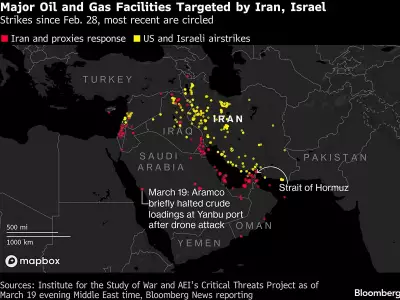
The strategic shift has significant implications for global energy security and trade. Since U.S. and Israeli attacks began approximately two weeks ago, Iran has targeted several ships in and around the strait, effectively closing the waterway to most traffic. This unprecedented disruption has created energy shortages and price spikes across Asia and beyond.
"This creates a system in which the Strait is not formally closed, yet transit increasingly depends on political understandings with Tehran," noted JPMorgan Chase & Co. analysts including Natasha Kaneva in a recent market assessment.
Diplomatic Efforts for Safe Passage
The continued upheaval has prompted several nations to seek diplomatic solutions with Tehran to secure at least limited cargo movement. Indian and Turkish officials have reported receiving approval for specific vessels to transit the strait, while Pakistan has remained silent regarding the circumstances surrounding its ship's journey.
India is currently attempting to secure safe passage for six additional tankers currently trapped inside the Persian Gulf, though their intended exit routes remain uncertain.
Security Concerns and Alternative Routes
Under normal circumstances, vessels typically avoid sailing close to the Iranian coast due to security risks. Standard navigational protocols in the region direct ships exiting the strait toward the opposite side of the waterway. However, at least one vessel following this traditional route came under attack last week, highlighting the changing security landscape.
Martin Kelly, head of advisory at EOS Risk Group, suggested: "We could be seeing the start of a verification process by Iran, whereby ships must be approved to transit via the Strait of Hormuz by calling between Larak and Qeshm."

Insurance and Financial Implications
The proximity of this new route to Iranian territory continues to pose significant challenges for insurers and financial institutions that support global commodities trading. While the limited transits have provided some encouragement to oil traders, the underlying security concerns remain substantial for the banks that finance energy shipments through this volatile region.
The evolving situation in the Strait of Hormuz represents a critical development in global energy security, with Iran potentially establishing a de facto control system over one of the world's most important maritime passages. As vessels increasingly navigate according to Tehran's terms, the geopolitical and economic implications continue to unfold across international markets and diplomatic channels.