Iran's Foreign Minister Declares Military Readiness Amid Escalating Conflict
Iran's foreign minister has issued a definitive statement confirming that the country's military forces remain fully operational and in position despite recent joint attacks by the United States and Israel. This declaration comes during a period of heightened regional instability following military operations that resulted in the death of Iran's Supreme Leader Ayatollah Ali Khamenei after his 36-year rule.
Military Operations and Regional Fallout
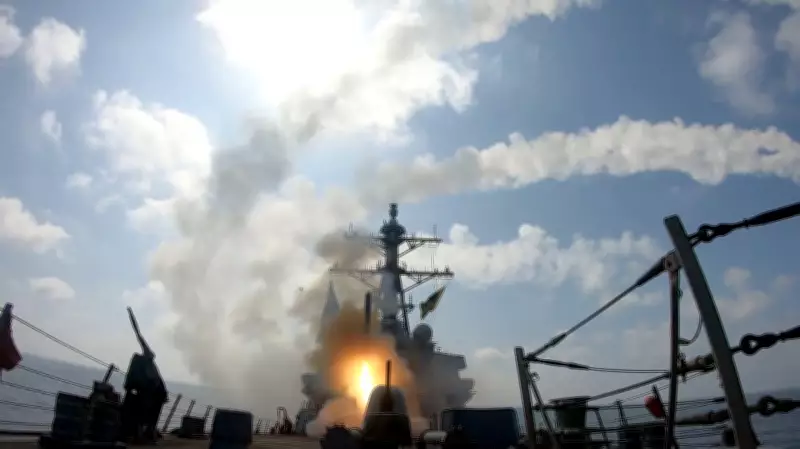
The foreign minister's announcement follows what former U.S. President Donald Trump described as 'major combat operations in Iran' conducted through a coordinated U.S.-Israel military initiative. According to military analysts, these operations represent a significant escalation in targeting strategy compared to previous engagements in the region.
Three U.S. service members were killed and five others wounded during the Iranian operation, with live updates continuing to document the unfolding situation. The attacks have prompted international concern, with world leaders urging a return to diplomatic talks following the strikes that eliminated Iran's long-standing leader.

International Reactions and Canadian Involvement
Canadian political figures have responded to the developing crisis, with former Prime Minister Paul Martin's support for the Iran attack being characterized as a 'pretty explicit expression of support.' Meanwhile, retired General David Fraser noted that Canada is expected to play only a limited role in the Middle East conflict following the Iranian attack.
The situation has sparked reactions within Canada's Iranian communities, with Winnipeg's Iranian population expressing that they've 'been waiting for this for a long time' in response to the strikes in Iran. In Regina, Iranian residents expressed hope for their country's future just hours after the supreme leader's death.
Broader Regional Implications
The conflict has already demonstrated ripple effects beyond Iran's borders, with at least nine people killed when protesters stormed the U.S. Consulate in Pakistan following the killing of Iran's supreme leader. The U.S. State Department has characterized Iran as 'the principal source of instability and terror throughout the Middle East,' justifying the military action.
Defense analysts have noted that the current conflict represents a 'war of choice' rather than necessity, with targeting parameters showing 'a vast difference in the targeting than in the past.' The situation continues to evolve as Iran maintains its military posture while navigating leadership transition and regional hostility.
Economic and Diplomatic Consequences
The military escalation has already impacted global markets, with oil prices expected to experience significant volatility as U.S.-Israel strikes raise concerns about supply uncertainty. Meanwhile, Canadian Defense Minister Anita Anand has expressed support for Qatar and the United Arab Emirates against potential Iranian attacks.
As the situation develops, Iran's foreign ministry continues to emphasize military readiness while the international community watches for further escalation in one of the world's most volatile regions.