The Dual Wars in Iran: Serving Whose National Interest Amid Global Fallout?
Whose national interest is truly being served by the ongoing war in Iran? This conflict threatens to wreck the world economy for at least a year, destabilize the Middle East for an entire generation, place entire populations at grave risk, and kill huge numbers of innocent civilians. Surely, there must be some tangible benefit for a nation or its people to justify such catastrophic consequences. Yet, as the Pentagon reportedly requested more than US$200 billion this week to continue the battle after two weeks of strikes yielded minimal results, the question becomes increasingly urgent.
Immediate Suffering and Regional Attacks
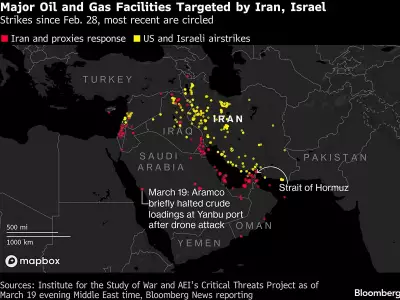
Israeli citizens are enduring some of the worst bombardments and drone strikes from Iran in recent history, while residents of eight other countries have found themselves under direct attack. Heavy strikes have targeted the United Arab Emirates, Saudi Arabia, and Qatar, among others. On the surface, one might assume these actions aim to deliver long-term gains to these affected populations. However, a deeper examination reveals a starkly different reality.
It is not easy to identify any legitimate interests being served here. When you analyze the specific type of warfare being employed, it becomes painfully apparent that the interests at stake are not those of the ordinary people caught in the crossfire. According to British professor of military strategy Lawrence Freedman, there are effectively two distinct wars being fought simultaneously in Iran—a phenomenon he terms a "split-screen war."

The First Screen: Decapitation Strikes and Mosaic Defense
On one screen, there is an apparent effort to cause the collapse of the Islamic regime by eliminating its senior leadership, governance infrastructure, and military crown jewels. This strategy, known as a decapitation strike, involves a short, intense campaign to remove a country's leadership so that a successor regime can be installed—similar to what the United States attempted in Iraq after 2003—or to incite a popular uprising.
Unfortunately, decapitation strikes that do not involve large, long-term commitments of ground troops have a notoriously poor track record. Iran's clerical regime, having closely observed the Iraq war, was well aware it might be next. In response, it developed a long-term strategy called "mosaic defence," where power, authority, and weapons are widely dispersed both geographically and institutionally.
This mosaic defence was no secret; Iranian leaders openly boasted about it for over two decades. It would have been a top priority in any intelligence briefings provided to former President Donald Trump, had he chosen to heed them. Those briefings would have accurately predicted the outcome following the air strikes that began on February 28: the mosaic was successfully implemented, and the assassination of top leaders led to their replacement by a government largely controlled by the Islamic Revolutionary Guard Corps (IRGC).
The IRGC is a vast, dispersed organization that is more extreme and less reachable, significantly reducing the likelihood of Iranians overthrowing their regime while increasing the potential for mass slaughter. Additionally, those same briefings would have emphasized the well-documented fact—reiterated in Congressional hearings this week—that Iran had no active nuclear-weapons program and was years away from developing a weapon. The air strikes have merely diminished the future possibility of controlling such arms.
The Second Screen: Economic-Infrastructure Warfare
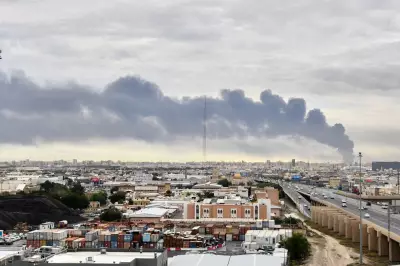
On the second screen, simultaneous with the decapitation strikes, is what Dr. Freedman describes as the "Gotterdammerung" of economic-infrastructure warfare. The mosaic defence included ruthless attacks on the petroleum infrastructure of Gulf states and the blockade of the Strait of Hormuz. The United States and Israel have taken this bait, launching strikes on critical targets such as the South Pars gas field and Tehran oil facilities, which could take years or even decades to rebuild.

Although Mr. Trump ordered Israel to halt these attacks this week, Israeli officials confirmed they were conducted in close coordination with the President. This form of warfare is fundamentally inconsistent with any genuine national interest—it serves only to ensure that any future Iran will be poorer, weaker, and more unstable. At best, it transforms a country that poses a regional threat into a dangerous victim requiring expensive international assistance.
Political Goals Over People's Interests
The objective of creating a weaker, hobbled Iran that further impoverishes the region—while eliminating competition with Saudi Arabia, Qatar, Turkey, or Israel for regional dominance—is a goal that appeals not to ordinary people but to political leaders. This is particularly true for Benjamin Netanyahu, who has employed similar strategies to divide and weaken Gaza, the West Bank, and Lebanon for his own political benefit. However, this approach significantly harms the interests of his own citizens.
In the short term, the conflict has made Iran a more dangerous regional power than it was before the war, as residents of Riyadh or Dubai can attest. Eventually, the IRGC may deplete its armaments, at which point it will primarily pose a threat to its own people and immediate neighbours by creating massive refugee crises.
The lasting lesson of this war may be that the pursuit of political security by national leaders has all but guaranteed greater insecurity for their citizens. As the world watches the dual wars unfold, the question remains: whose national interest is truly being served, and at what cost to global stability and human lives?