Iran has issued a direct warning to the United States against launching military strikes, as the domestic situation within the country remains volatile. This development coincides with new reports from activist groups indicating the human cost of the ongoing civil unrest has escalated significantly.
Escalating Tensions and a Rising Death Toll
According to information gathered by activists and circulated on Friday, January 9, 2026, the number of people killed during widespread protests in Iran has now reached 203. The protests, which have continued despite an intensifying government crackdown, have seen the Islamic Republic largely cut off from global communication networks in an attempt to control the narrative.
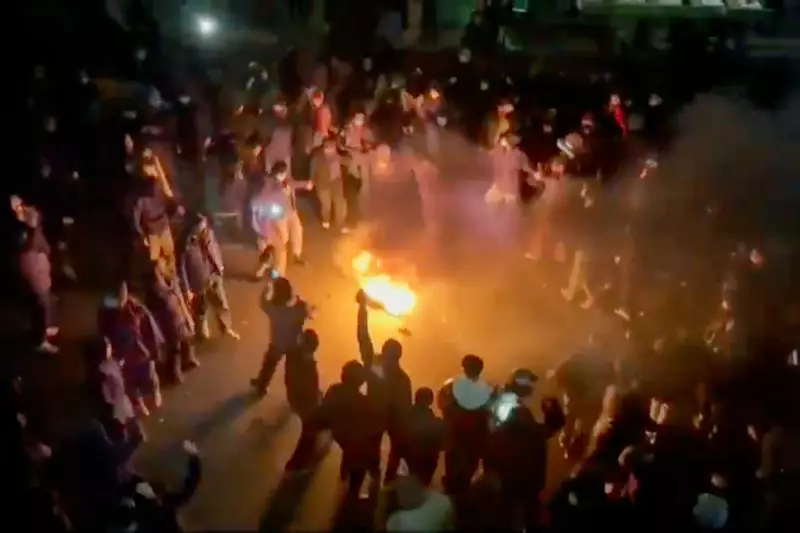
Visual evidence of the persistent defiance emerged from the capital, Tehran, on that Friday. Footage verified and shared via social media depicted a scene of protesters dancing and cheering around a large bonfire in the streets, a stark contrast to the severe security measures being enforced.

A Stark Warning on the International Stage
Amid this internal turmoil, Iranian officials have turned their attention outward, delivering a firm caution to the United States. The warning explicitly advises against any form of U.S. military action targeting Iranian territory or interests. This statement raises the specter of further international confrontation at a time when the Iranian government is preoccupied with suppressing domestic dissent.
The dual crises—internal civil unrest and external geopolitical posturing—paint a picture of a nation under significant pressure. The activist-reported death toll of 203, if confirmed, represents a severe escalation in the human rights situation linked to the protest movement.
An Information Blackout and Global Scrutiny
The Iranian government's strategy has involved restricting internet access and controlling information flow from within the country. This makes independent verification of events, including the exact casualty figures reported by activists, challenging. However, the circulated video from Tehran on January 9 provides a window into the continued public demonstrations.
The international community, including nations like Canada which closely monitor global human rights and security issues, is now faced with a complex situation. Analysts are watching to see how the interplay between domestic crackdowns and international warnings will influence regional stability and foreign policy responses from Western nations.
The coming days will be critical in determining whether the protest movement can sustain its momentum against the state's security apparatus and how Iran's warnings to the U.S. will affect an already tense geopolitical landscape in the Middle East.