Iran has issued a direct and severe warning to the United States, stating it will target American military forces and Israel if Washington authorizes strikes against the Islamic Republic. This threat comes amid a backdrop of intensifying internal protests within Iran and a deepening geopolitical standoff.
The Context: Protests and International Isolation
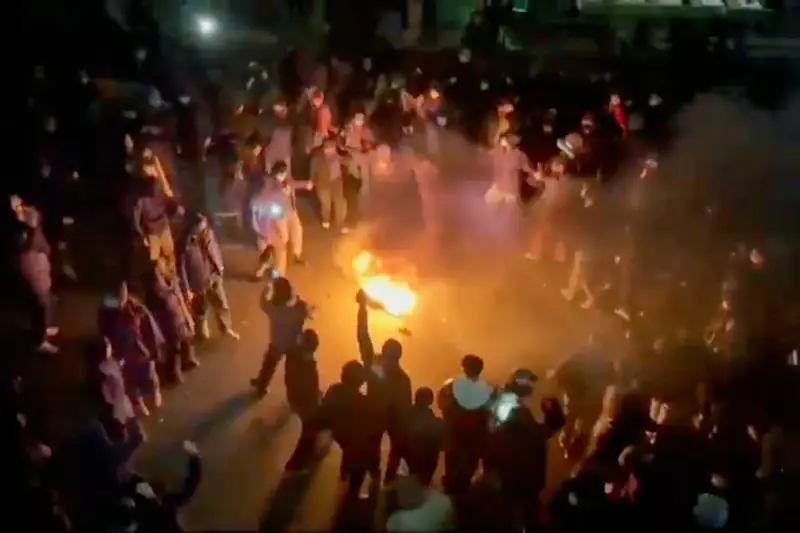
The warning was delivered as the Iranian government continues to face significant domestic unrest. On Friday, January 9, 2026, social media footage circulated showing protesters in Tehran dancing and cheering around bonfires, demonstrating continued defiance despite a severe government crackdown. The nation remains largely cut off from global communications networks, complicating the flow of information from inside the country.
This internal turmoil forms the immediate context for Iran's external threats. The statement suggests Tehran believes the United States could be considering military action, potentially in solidarity with the protest movement or to curb the regime's response. By explicitly naming U.S. troops and Israel, Iran is signaling a readiness to escalate conflicts on multiple fronts.

Details of the Iranian Warning
While the exact channel of the warning was not detailed in the initial report, its message was unequivocal. Iranian officials have declared that any U.S. military strike on Iranian territory will be met with retaliatory actions against American personnel stationed in the region. Furthermore, Israel is named as a secondary target, reflecting the long-standing adversarial relationship and Iran's frequent pledges to challenge the Israeli state.
This escalation in rhetoric raises the stakes significantly in an already volatile region. U.S. forces are deployed across several countries in the Middle East, potentially putting thousands of service members in the crosshairs of Iranian-backed militias or direct military action.
Potential Consequences and Regional Implications
The threat marks a dangerous new phase in tensions between Iran and the West. It effectively ties the internal issue of civil protest to the external arena of international military confrontation. Analysts fear such warnings could lead to miscalculation, where a minor incident spirals into a broader conflict.
For the United States and its allies, including Canada which often coordinates foreign policy with Washington, the statement presents a complex challenge. It forces a calculation between demonstrating support for protestors' rights and avoiding a major regional war. The warning also places immediate pressure on security protocols for U.S. bases and diplomatic installations throughout the Middle East.
As of January 11, 2026, there has been no official U.S. military response to the Iranian threat. However, the global community is watching closely, aware that the situation in Tehran's streets could now have direct and violent repercussions far beyond Iran's borders.