Iran War Shakes Region as Trump Vows 'Whatever It Takes'
U.S. Defense Secretary Pete Hegseth rejected the idea of an 'endless' war with Iran on Monday, even as President Donald Trump vowed the United States would do "whatever it takes" in a conflict that has now entered its fourth day of regional reverberations.
Regional Escalation and Economic Impact
The US-Israeli military campaign against Iran continues to send shockwaves across the Middle East, with oil and gas prices surging dramatically as the world adjusts to a conflict that President Trump insists has no fixed timeline. Global benchmark Brent crude spiked to $85 per barrel for the first time since July 2024, representing a significant 7% increase from Monday's trading. European natural gas prices experienced an even more dramatic surge, climbing as much as 32% on Tuesday morning.
Iran launched a fresh wave of missile attacks targeting countries including Qatar, Bahrain, and Oman—all nations that host critical U.S. military bases. Doha officials confirmed that these strikes weren't limited to military interests, with the main airport also coming under fire. Meanwhile, Israel reported striking the leadership compound in Tehran as part of an ongoing bombardment of the Iranian capital and deployed soldiers into southern Lebanon, where the Iran-aligned Hezbollah militia maintains its stronghold.

Critical Infrastructure Under Fire
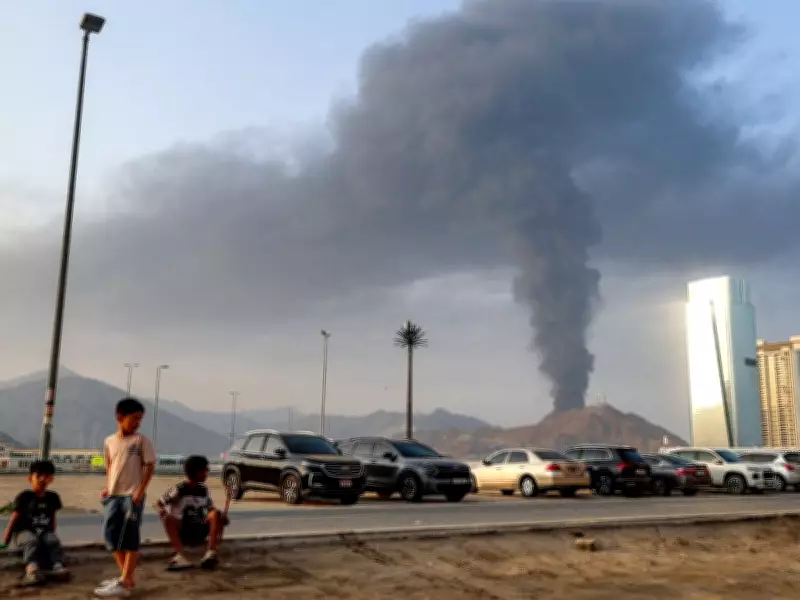
The conflict has severely disrupted energy infrastructure throughout the Gulf region. QatarEnergy was forced to halt production of some chemicals and metals after Iranian attacks compelled the shutdown of its major liquefied natural gas plant. In the United Arab Emirates, falling debris from an intercepted drone caused a major fire at the crucial oil-trading hub of Fujairah, while the UAE was compelled to shut its airspace entirely—blindsiding travelers who had considered the region one of the world's safest holiday destinations.
An adviser to Iran's Islamic Revolutionary Guard Corps commander delivered a stark warning through state television, declaring that forces "will set fire to any ship attempting to pass through" the strategically vital Strait of Hormuz. This threat has effectively halted maritime traffic through the crucial shipping lane, prompting China—which purchases most of Iran's oil exports—to urge "all sides" to ensure safe passage for commercial vessels.
Military Developments and Diplomatic Maneuvers
The United States military announced via social media that it had successfully destroyed "Islamic Revolutionary Guard Corps command and control facilities, Iranian air defense capabilities, missile and drone launch sites, and military airfields." Iran subsequently acknowledged that its sensitive Natanz nuclear facilities had come under attack during the ongoing hostilities.
Despite Defense Secretary Hegseth's rejection of an "endless" conflict, President Trump later suggested the campaign could continue "far longer" than initial projections of four to five weeks. Both American leaders refused to rule out deploying ground troops, though Trump expressed doubt that such measures would prove necessary. The United Arab Emirates and Qatar have reportedly begun privately lobbying allies to help persuade the Trump administration to pursue diplomatic off-ramps that could contain the conflict's duration.
Human Cost and Regional Fallout
The human toll continues to mount, with Iran's Red Crescent reporting 787 fatalities within the Islamic Republic since hostilities began. American forces have suffered six casualties, while approximately a dozen people have been killed in Israel. Two drones struck near the U.S. embassy in Riyadh overnight, causing limited damage but highlighting the expanding geographical reach of the conflict.
The Israel Defense Forces confirmed conducting additional airstrikes in Tehran, specifically targeting command centers of Iran's Interior Security and Ministry of Intelligence agencies. Israeli officials blamed these institutions for "suppressing protests against the regime through violent measures," suggesting broader strategic objectives beyond immediate military targets.

As the conflict enters its most critical phase, regional stability hangs in the balance with energy markets in turmoil, critical infrastructure under threat, and diplomatic channels working overtime to prevent further escalation in one of the world's most volatile regions.