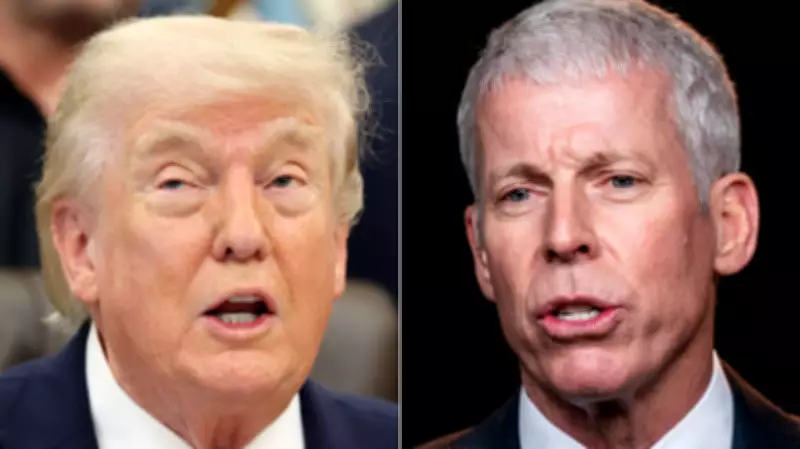
President Donald Trump has openly challenged his own Energy Secretary's recent statements regarding the trajectory of gasoline prices across the United States. In a direct rebuttal, Trump dismissed projections that Americans might face elevated costs at the pump for years to come.
A Public Disagreement on Energy Outlook
During a brief telephone interview with The Hill reporter Julia Manchester on Monday, President Trump took issue with Energy Secretary Chris Wright's headline-making remarks. Wright had suggested over the weekend that the national average price for a gallon of gasoline could potentially remain above three dollars through the year 2027.
"No, I think he's wrong on that. Totally wrong," the president stated emphatically, according to Manchester's report on the social media platform X.

Linking Prices to Geopolitical Conflict
When pressed for a timeline regarding when consumers might finally see some financial relief, President Trump pointed to the ongoing military engagement. "As soon as this ends," he remarked, clearly alluding to the war involving Iran. This connection underscores the administration's view that geopolitical instability is a primary driver of current energy market pressures.
The Energy Secretary's Cautious Assessment
Secretary Wright had appeared on CNN's "State of the Union" program on Sunday, offering a nuanced perspective. While he indicated that gas prices had likely reached their peak across the country, he also cautioned that a significant decline might not be immediate.
"I don't know, that could happen later this year, that might not happen until next year," Wright explained during the broadcast. He concurred with the president on one key point, noting that "certainly with a resolution of this conflict, energy prices will go down."
Current Market Realities and Historical Context
Data from AAA reveals the stark reality facing American drivers. The current national average price for a gallon of regular gasoline stands at $4.04. This represents a substantial increase from just a few months prior; in February, the average was approximately $2.90 per gallon according to GasBuddy.
The timing of this surge is particularly notable. Prices began their sharp ascent around February 28th, coinciding with the launch of a joint U.S. and Israeli military operation in Iran. Since the conflict erupted, Iran has significantly restricted foreign commercial traffic through the critical Strait of Hormuz, a vital maritime chokepoint for global oil shipments.
Political Fallout and Declining Poll Numbers
The twin issues of soaring gas prices and the protracted Iran war are increasingly cited as major factors eroding President Trump's political standing. Recent polling data indicates a notable decline in public support, even among some segments of his traditional MAGA base.
An NBC News Decision Desk poll released on Sunday placed the president's approval rating at just 32%, marking a new low for his second term in office. In characteristic fashion, Trump dismissed these findings in a Monday post on his Truth Social platform.
"I watch and read the FAKE NEWS Pundits and Polls in total disbelief," he wrote. "90% of what they say are lies and made up stories, and the polls are rigged, much as the 2020 Presidential Election was rigged."
This public disagreement between the president and a key cabinet member highlights the significant economic and political pressures created by persistent energy inflation and ongoing international conflict, with American consumers caught squarely in the middle.