The fragile ceasefire in the Iran war faced renewed strain on Friday as the United Arab Emirates reported a drone and missile attack, hours after the United States claimed it thwarted assaults on three Navy ships in the Strait of Hormuz and retaliated against Iranian military installations.
UAE Attack and US Response
There were no immediate reports of damage in the UAE following the strike. The incident comes after the US said it intercepted attacks on its naval vessels and conducted retaliatory strikes on Iranian military targets. US President Donald Trump downplayed the exchange, calling the retaliatory strikes “just a love tap” in a phone call with ABC. He insisted the ceasefire remains intact and a deal could be reached “any day,” but reiterated threats of bombing if Tehran does not agree to terms that allow the resumption of oil and natural gas shipments disrupted by the conflict.
Negotiations and Mediation
Iran and the US are trading blows while negotiators seek an end to the fighting, though they have so far avoided a return to all-out war. It remains unclear how close the two sides are to a deal on key issues such as Iran's nuclear program, which the US and Israel vowed to halt when they launched the war on February 28, and the Strait of Hormuz, a vital waterway that Iran has nearly closed to pressure the global economy. On Thursday, Tehran stated it was examining the latest US proposals delivered via Pakistan, which is serving as a mediator. Iranian foreign ministry spokesman Esmaeil Baqaei said Tehran would communicate its position to Pakistan after finalizing its views.

Iran Denies Strike on Oil Terminal
Iran denied carrying out a strike on Monday on the major UAE oil terminal in Fujairah, though Iranian analysts have been allowed on state media to suggest Emiratis were involved in recent attacks on Iran. Trump has fueled hopes of a deal this week, saying an agreement could be near even as he threatened to resume bombing if Tehran refuses to back down. He doubled down after Thursday's clash, posting on Truth Social: “We’ll knock them out a lot harder, and a lot more violently, in the future, if they don’t get their Deal signed, FAST!”
Lebanon Talks
Any agreement between Washington and Tehran could also help lower tensions in Lebanon, where a separate truce was under renewed strain after an Israeli strike on southern Beirut killed a Hezbollah commander on Wednesday. A US State Department official confirmed that new Israel-Lebanon talks would take place on May 14 and 15, marking the third meeting in recent months between the two countries, which have technically been at war for decades and have no diplomatic relations. US Secretary of State Marco Rubio said Tuesday that a peace deal was “eminently achievable,” insisting Hezbollah was the sticking point. Both Israel and Iran-backed Hezbollah have kept up attacks despite the ceasefire.
Oil Tanker Reaches South Korea
An oil tanker that passed through the Strait of Hormuz arrived in South Korea on Friday, the first such vessel to reach the Asian nation by that route since Iran declared the waterway closed. The Malta-flagged Odessa, carrying one million barrels of crude oil, was spotted near a mooring facility off the coast of Seosan. Its arrival is expected to help stabilize supply, securing crude equivalent to nearly half of South Korea’s daily oil consumption. The Odessa passed through the strait on April 17 during a brief reprieve in the blockade.
Iran Creates Agency for Strait Control
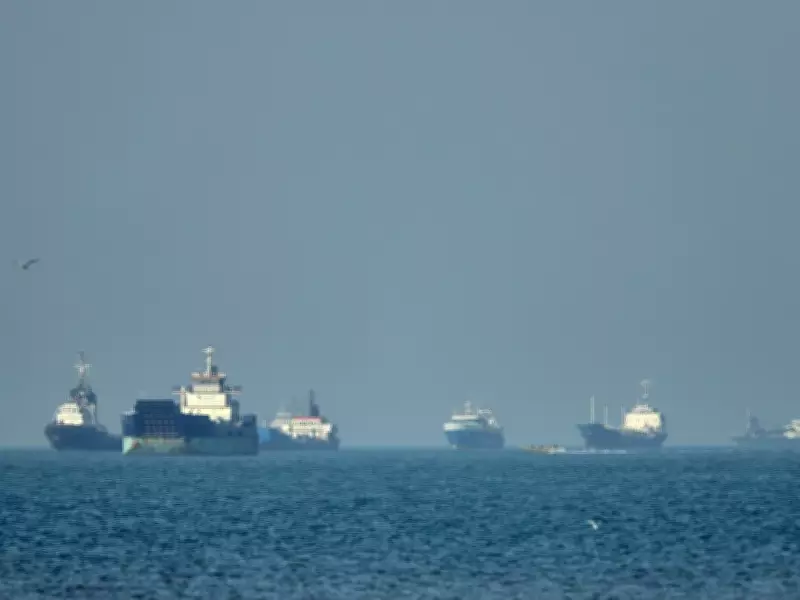
Earlier on Thursday, shipping data company Lloyd's List Intelligence reported that Iran has created a new government agency to vet and tax vessels seeking passage through the Strait of Hormuz. The agency, called the Persian Gulf Strait Authority, is positioning itself as the only valid authority to grant permission for transit, raising concerns over freedom of navigation. The effort to formalize control over the channel has raised new concerns about international shipping, with hundreds of commercial vessels bottled up in the Persian Gulf. Still, hope that the two-month conflict could soon be over buoyed international markets.