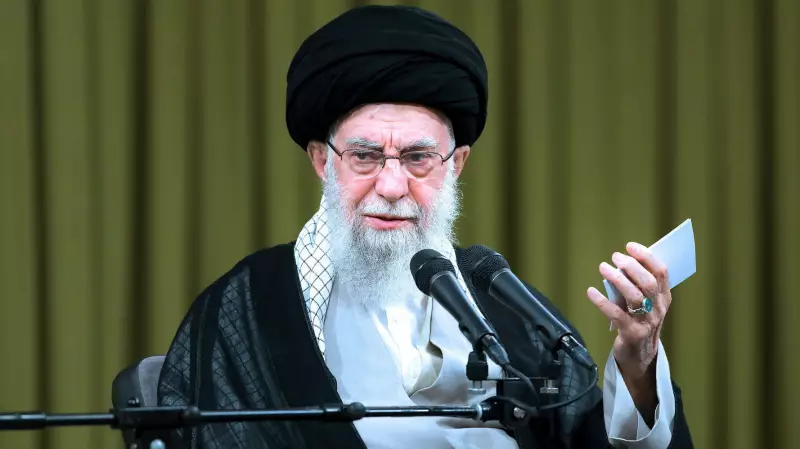
Tehran has issued a stark warning to American allies across the Middle East, declaring that U.S. military bases on their soil will be targeted if Washington launches an attack on Iran. This threat, delivered by a senior Iranian official to Reuters on Wednesday, January 14, escalates an already volatile situation fueled by widespread domestic protests and direct warnings from U.S. President Donald Trump.
Mounting Tensions and a Dire Warning
The Iranian official, speaking anonymously, stated that Tehran has explicitly asked regional powers, including Saudi Arabia, the United Arab Emirates, and Turkey, to deter the United States from military action. The message was clear: failure to do so would result in retaliatory strikes against American installations in those countries. This warning follows President Trump's public vows to take "very strong action" if Iran proceeds with executing protesters, and his encouragement for Iranians to continue demonstrations.
Reflecting the heightened state of alert, direct diplomatic contacts between Iranian Foreign Minister Abbas Araqchi and U.S. Special Envoy Steve Witkoff have been suspended. The United States maintains significant military assets throughout the region, including the headquarters of the U.S. Navy's Fifth Fleet in Bahrain and the critical Al Udeid Air Base in Qatar, which was targeted by Iranian missiles last year.

Internal Unrest and International Reaction
The external threats coincide with one of the most significant internal challenges to Iran's clerical leadership since the 1979 Revolution. According to the U.S.-based HRANA rights group, the death toll from the nationwide protests has climbed to nearly 2,600, including 2,403 protesters and 147 government-affiliated individuals. Iranian authorities have acknowledged approximately 2,000 deaths, blaming the violence on "terrorists" and accusing the U.S. and Israel of instigating the unrest.
In response, Iran's Chief Justice has urged swift judgment and punishment for those arrested, visiting a Tehran prison holding protesters. HRANA reports over 18,000 arrests to date. Despite a severe internet blackout hampering information flow, reports indicate a 26-year-old man arrested in Karaj was scheduled for execution on Wednesday, though confirmation was impossible due to communications shutdowns.
President Trump, after returning from an event in Detroit, stated the "killing looks like it's significant" and confirmed military action is among the options being considered. He also announced 25% import tariffs on products from any country doing business with Iran, further squeezing its economy. The U.S. State Department has urgently advised American citizens to leave Iran immediately.
Regional Calculations and an Uncertain Future
Regional actors are closely monitoring the crisis. Israeli officials reported that Prime Minister Benjamin Netanyahu's security cabinet was briefed on the potential for U.S. intervention or regime collapse in Iran, a nation Israel fought a 12-day war with last year. An Israeli assessment suggested Trump has decided to intervene, but the scope and timing remain unclear.
Meanwhile, Iranian state media reported security officials held calls with counterparts in Qatar, the UAE, and Turkey—all U.S. allies—claiming "calm has prevailed" and emphasizing Iran's determination to defend its sovereignty. The nation faces this turmoil while still recovering from last year's conflict and with its regional influence weakened by recent blows to allied groups like Lebanon's Hezbollah.
The convergence of severe domestic dissent, explicit American threats, and now direct warnings to neighboring states creates a tinderbox scenario. With diplomatic channels frozen, military assets on high alert, and a rising human cost, the path toward de-escalation appears increasingly narrow, posing profound risks for regional and global security.