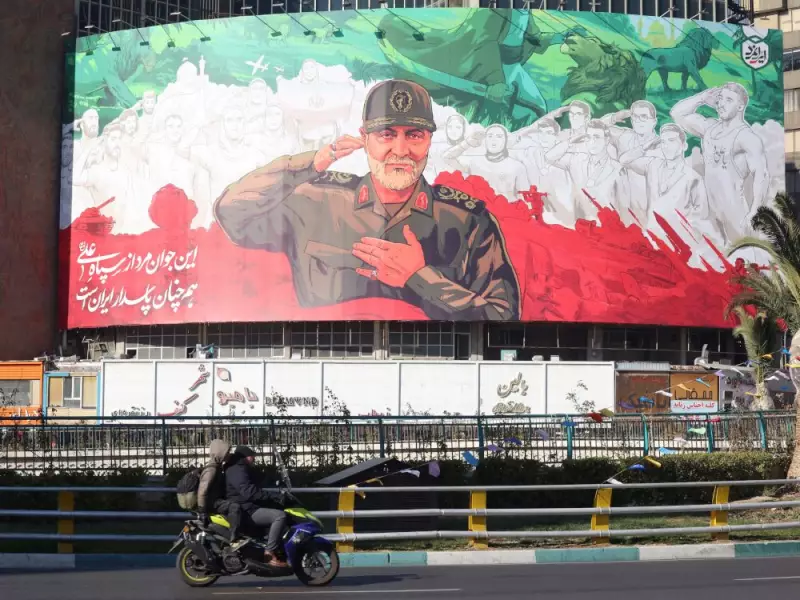
As Iran continues to be rocked by widespread protests that have reportedly resulted in over 500 fatalities, neighbouring nations are observing the turmoil with growing apprehension. A critical question now occupies the strategic calculations of regional and global powers, including Pakistan, the United States, Israel, and Turkey: what would follow the potential collapse of Iran's decades-long theocratic system?
The Power Struggle and the IRGC Question
The ongoing chaos underscores a significant internal power struggle between Iran's conventional military and the Islamic Revolutionary Guard Corps (IRGC), which has consolidated immense political and economic control over many years. A swift, complete transformation of Iran's governing structure is unlikely immediately after any regime change. Should the Iranian military manage to successfully overthrow the IRGC—and in the improbable scenario that the IRGC surrenders peacefully—it would be welcomed internationally. However, the more concerning prospect is that IRGC loyalists might choose to dig in and resist.
This possibility is a primary source of anxiety for Pakistan and other states in the region. Pakistan, in particular, is navigating a complex landscape. The country recently faced tensions with India, is managing instability on its western border with Afghanistan, and is grappling with severe economic challenges. The potential for spillover from an Iranian collapse adds another layer of crisis.

Balochistan: A Potential Insurgency Hotbed
If factions linked to the IRGC decide to mount a resistance against a new government in Tehran, analysts point to Pakistan's Balochistan province as a likely sanctuary. The region's geography—rugged, vast, isolated, and sparsely populated—coupled with an existing ecosystem of militant groups, makes it a conducive environment for launching an insurgency.
For nearly two decades, the Pakistani military has engaged in a costly counter-insurgency campaign in Balochistan, suffering significant casualties. If IRGC elements were to find refuge there and initiate a campaign against a post-theocracy Iran, the consequences could be dire for Pakistan's stability. Such a development risks transforming Pakistan into a new focal point of regional instability, mirroring the prolonged conflict in Afghanistan. A terrorism hotspot bordering both Afghanistan and a destabilized Iran could send shockwaves across the entire Middle East.
Pakistan's Precarious Position and Regional Alignments
The Pakistani government is currently striving to stabilize its domestic situation, aiming to bolster its economy by enhancing security cooperation and arms sales with Middle Eastern partners. Over the past year, following military engagements with India and operations against terror networks in Afghanistan and Balochistan, Pakistan has sought to project itself as a reliable partner for Western interests seeking regional stability.
This strategic positioning appears to involve closer ties with Turkey, which is reportedly seeking to join the existing Saudi-Pakistani defence pact. Such a move could significantly alter the security architecture of the Middle East. In a scenario where IRGC factions wage war against a Western-backed government in Iran, Pakistan would likely bear the brunt of the fallout, serving as the frontline state.
Conversely, if regime loyalists were to disband or fail to secure support after losing power, a new era of stability in Iran could present a strategic opportunity. Pakistan could then forge a robust economic and security partnership stretching from Istanbul to the Indian Ocean, potentially anchoring the broader Middle Eastern region.
The analysis, originally presented by writer and former journalist Mohammed Rizwan in January 2026, remains a stark examination of the precarious domino effect that internal Iranian strife could trigger, with profound implications for global security dynamics.