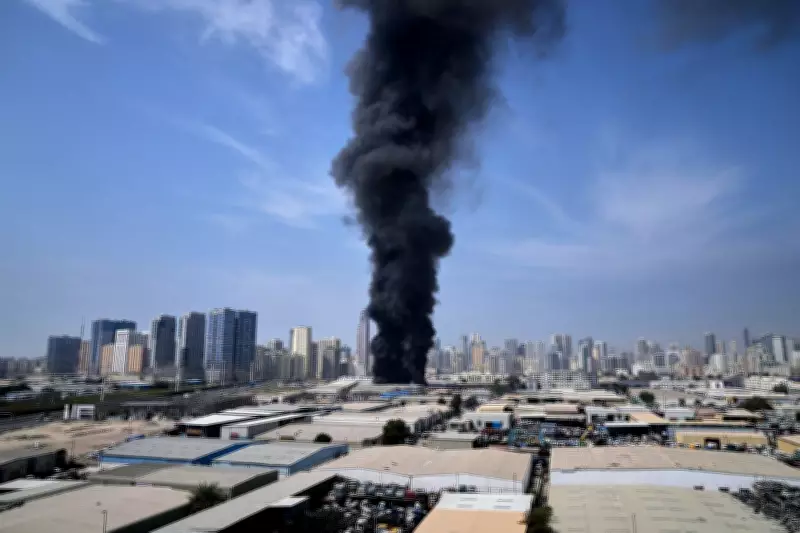
The intensifying military confrontation between Iran and Israel, which has now expanded to include Iranian-backed militia groups, is raising critical questions about the sustainability of United States missile defense capabilities. As American and Israeli aircraft conduct sustained strikes against Iranian targets, analysts warn that the high-volume exchange of missiles could rapidly drain U.S. interceptor stockpiles, potentially compromising defensive readiness.
Conflict Escalation and Military Dynamics
Recent days have witnessed a significant escalation in hostilities. Iranian missile strikes have targeted locations in the United Arab Emirates, including Dubai, with imagery showing substantial damage in Sharjah City. In a widening of the conflict, Iranian-backed militias have now been drawn into the fighting alongside direct engagements between Israeli and Iranian forces. This expansion has led to a rising death toll among U.S. military personnel stationed in the region, underscoring the direct impact on American forces.
Strain on Defense Infrastructure
The core concern for military strategists revolves around the sheer volume of missile launches. U.S. defense systems, such as the Aegis Ballistic Missile Defense and Terminal High Altitude Area Defense (THAAD), rely on a finite inventory of interceptors. A protracted conflict featuring frequent barrages from Iran's substantial missile arsenal could exhaust these stocks faster than they can be replenished by manufacturing, which is often a slow and costly process. This scenario presents a severe strategic vulnerability.

Global Repercussions and Regional Responses
The conflict's ripple effects are being felt worldwide. Global energy markets are experiencing significant turbulence, with crude oil and fuel prices surging due to tanker route disruptions and facility shutdowns in the volatile Middle East. This price shock threatens broader economic stability.
In Canada, the crisis has ignited a domestic policy debate. Alberta Premier Danielle Smith has pointed to the instability as underscoring the need for new Canadian energy pipeline projects to enhance North American energy security. Concurrently, the Canadian government is urging a diplomatic resolution to the crisis while advising citizens against all travel to several Middle Eastern countries embroiled in the spreading conflict.
Cybersecurity and Broader Security Concerns
The warfare has also extended into the digital domain. Following the U.S.-Israeli strikes, hackers have targeted Iranian applications and websites, highlighting the modern, multi-domain nature of the confrontation. This cyber dimension adds another layer of complexity to an already volatile geopolitical situation.
The ongoing Iran-Israel conflict, therefore, represents more than a regional clash. It is a stress test for advanced military defense systems, a trigger for global economic disruption, and a catalyst for international diplomatic and security policy reassessments. The question of whether U.S. interceptor stocks can withstand the pressure remains a pivotal and unresolved issue for global security analysts.