Iran Asserts Dominance Over Critical Waterway as Regional Conflict Intensifies
Iran's Revolutionary Guards declared on Wednesday that they have achieved complete control over the Strait of Hormuz, a strategically vital waterway responsible for a significant portion of global energy transit. This announcement comes as Israel launched a new wave of strikes targeting the Iranian capital, Tehran, escalating an already volatile situation in the Middle East.
Evacuations and Economic Fallout
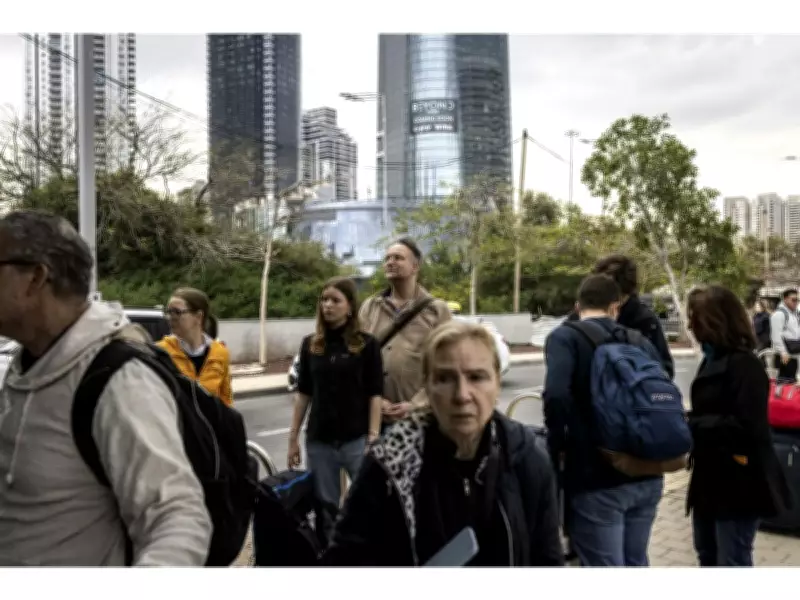
Governments across the Western world are scrambling to evacuate citizens stranded by the rapidly expanding conflict, now in its fifth day. The war has triggered a sharp decline in global share markets, with energy prices experiencing dramatic spikes. Major shipping firms have already suspended transit through the Strait of Hormuz, following warnings from the Revolutionary Guards and reports from maritime agencies of several ships being attacked.
"We apologize, but this video has failed to load," was a common message as media outlets struggled to keep up with the fast-paced developments.

Military Claims and Counter-Claims
In response to the Iranian assertion over the strait, former U.S. President Donald Trump stated that the U.S. Navy stood ready to escort oil tankers through the crucial Gulf shipping route. Trump further claimed that the United States had "knocked out" Iran's navy, along with its air force and radar systems. The U.S. military reported hitting nearly 2,000 targets since initiating strikes the previous Saturday.
However, Trump later walked back a statement from Secretary of State Marco Rubio, who had suggested the timing of the U.S. attack was coordinated with Israel's plans. "If anything, I might have forced Israel's hand," Trump remarked during a meeting with German Chancellor Friedrich Merz at the White House.
Expanding Regional Violence
The conflict has drawn in neighboring states, with Lebanon experiencing expanded Israeli air strikes. Targets included areas around the presidential palace and Hezbollah's stronghold in south Beirut, resulting in 11 fatalities according to Lebanese authorities. In Iran, state media prepared for the state funeral of Supreme Leader Ayatollah Ali Khamenei, who was killed on the first day of U.S.-Israeli strikes. Israel's Defence Minister, Israel Katz, vowed that any successor to Khamenei would be targeted, "no matter his name or where he hides."
Missile Attacks and Casualties
The regional barrage continued with Saudi Arabia intercepting two cruise missiles, while drone strikes hit near the U.S. consulate in Dubai—starting a fire—and targeted the U.S. military base at Al-Udeid in Qatar. Kuwait also suffered attacks, with its health ministry announcing the death of an 11-year-old girl killed by falling shrapnel. The Pentagon identified four of the six U.S. troops killed in the conflict so far, attributing their deaths to a drone attack in Kuwait.
International Response and Travel Disruptions
The United States has urged all American citizens to leave the region if commercial flights are available, though air travel has been severely disrupted. Governments including Britain and France have dispatched chartered flights to evacuate their nationals. The assault follows weeks after Iranian authorities cracked down on mass protests, resulting in thousands of deaths. Despite calls from Trump and Israeli Prime Minister Benjamin Netanyahu for Iranians to rise up, the U.S. leader clarified that regime change was not the explicit goal of the military actions.