Defense Secretary Hegseth Accuses Iran of Starting Middle East War, Faces Swift Backlash
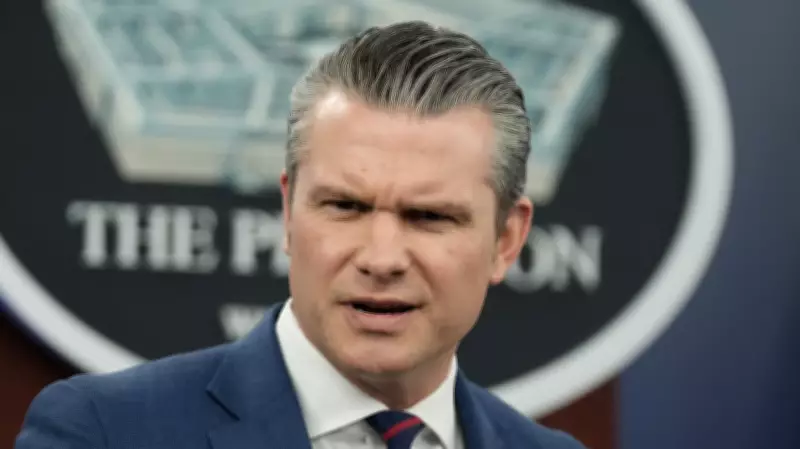
U.S. Defense Secretary Pete Hegseth engaged in what critics described as schoolyard-like rhetoric during a Monday press conference, attempting to shift blame for the escalating Middle East war onto Iran rather than the United States. In an early morning briefing, Hegseth asserted that Iran has “waged a savage, one-sided war” for “47 long years,” even if its leadership never formally declared it. He emphasized, “We didn’t start this war, but under President Trump, we are finishing it.”
Vague Claims Versus Military Reality
While Hegseth broadly framed the conflict by citing vague examples such as anti-American chants and attacks outside Iran, the factual trigger for the recent deadly events was a joint U.S.-Israeli military offensive targeting Iran. This operation directly led to the violence that has erupted across the region over the past few days, contradicting the secretary's narrative of American innocence.
Elsewhere in the press conference, Hegseth echoed President Trump's hands-off approach to potential regime changes in Iran, following a U.S. attack that killed Supreme Leader Ayatollah Ali Khamenei. He stated, “This is not a so-called regime change war, but the regime sure did change, and the world is better off for it.” Hegseth also insisted the conflict would not devolve into a “forever war” akin to the Iraq conflict, aiming to reassure the public about its duration and scope.

Social Media Erupts with Criticism and Mockery
Critics on social media platforms swiftly ridiculed Hegseth over what they labeled a “whopper of a lie” regarding Iran's role in the war. Christian author John Pavlovitz responded sharply on X, writing, “Actually, ya’ll totally started it @SecWar, you unqualified piece of trash.” Other users joined in, with one asking, “Explain it to me like I’m 5 how we didn’t start that war,” and another noting, “He's not even good at lying.”
The backlash extended to comparisons with authoritarian regimes, with comments describing Hegseth's rhetoric as “Kremlin-esque” and “going full Russian.” Journalist Ghida Fakhry criticized the lack of clear objectives, stating, “The US Secretary of War scrambling to defend the war Washington started — still unable to clearly state the objective.” She added that launching a war of aggression tells a different story from claims of non-involvement.
Further critiques highlighted political divisions, with one user remarking, “That’s Republican-speak for ‘We started this war and Democrats will eventually have to clean up after us.’” Another mocked the administration's composition, saying, “America is literally ruled by a bunch of bad TV personalities, lol.” These responses underscore widespread skepticism and anger over the official narrative being presented by the Defense Department.
The controversy reflects deepening tensions over U.S. foreign policy in the Middle East, as Hegseth's attempts to deflect blame have instead fueled accusations of dishonesty and incompetence. As the conflict continues to unfold, the disconnect between governmental statements and public perception remains a significant point of contention, with many calling for greater transparency and accountability in military actions.