France Announces Strategic Nuclear Expansion Under Macron's Leadership
In a significant shift in defense policy, French President Emmanuel Macron has declared that France will increase its stockpile of nuclear warheads for the first time in decades. This announcement marks a pivotal moment in the nation's military strategy, reflecting a response to evolving global security challenges.
Macron's Speech at Ile Longue Naval Base
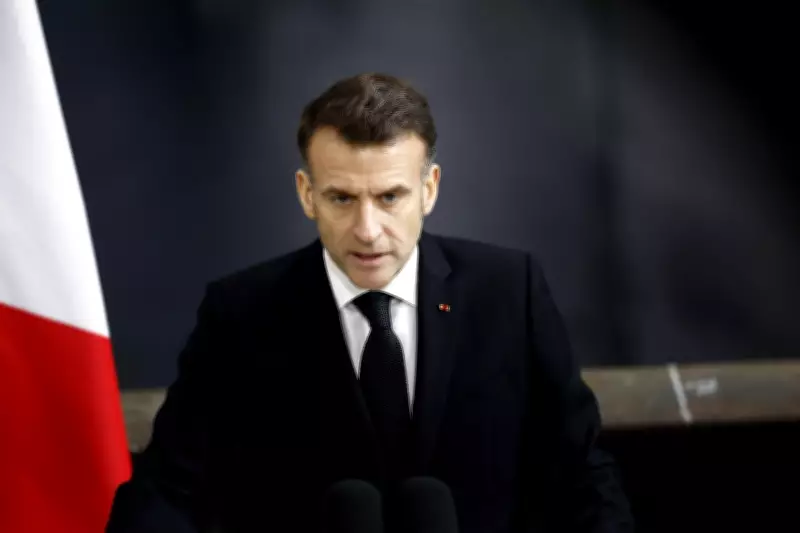
President Macron delivered this landmark statement on Monday, March 2, 2026, during a speech at the Nuclear submarines Navy base of Ile Longue in Crozon, France. Standing next to the submarine 'Le Temeraire' (The Temerarious), Macron emphasized the necessity of bolstering France's nuclear deterrent capabilities in an increasingly unstable international environment.
The decision reverses a long-standing trend of nuclear disarmament or maintenance at current levels, signaling a new era in French defense priorities. Macron highlighted that this move is not merely symbolic but a concrete step to ensure national sovereignty and security amid rising geopolitical tensions.

Context and Implications of the Nuclear Buildup
This planned increase in nuclear warheads represents the first such expansion in France since the late 20th century, breaking with decades of relative restraint. Analysts suggest that this policy shift is driven by several factors:
- Growing threats from state and non-state actors in regions such as the Middle East and Eastern Europe.
- The need to modernize aging nuclear arsenals to maintain credible deterrence.
- Macron's vision of reinforcing France's role as a leading military power within Europe and globally.
While specific numbers regarding the scale of the increase were not disclosed in the initial announcement, experts anticipate a modest but strategic augmentation of warheads, potentially aligning with advancements in delivery systems like submarines and missiles.
Global Reactions and Future Outlook
The announcement is likely to spark debates within international diplomatic circles, particularly among NATO allies and non-proliferation advocates. France, as one of the world's recognized nuclear powers, has historically balanced its arsenal with commitments to arms control treaties.
Macron's move may influence other nuclear-armed nations to reassess their own postures, potentially leading to a ripple effect in global defense dynamics. Critics argue that this escalation could undermine efforts toward nuclear disarmament, while supporters contend it is a prudent measure in an era of renewed great-power competition.
As France prepares to implement this policy, further details on timelines, budgetary allocations, and technological upgrades are expected to emerge in the coming months. This development underscores Macron's assertive approach to national security, positioning France at the forefront of contemporary strategic debates.