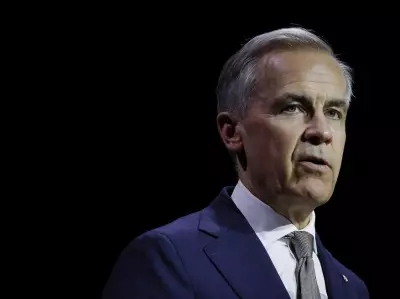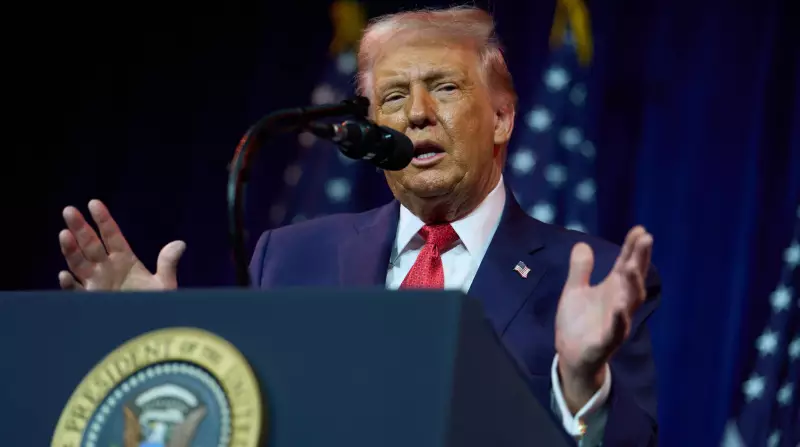
European powers, with support from Canada, are urgently formulating a joint strategy to counter the United States' renewed threat to acquire Greenland, a move that risks shattering NATO unity and deepening transatlantic divisions. The coordinated effort comes after U.S. President Donald Trump reiterated his ambition to gain control of the strategically vital Arctic island.
Allied Coordination in Response to U.S. Threats
France and Germany are at the forefront of diplomatic efforts, working closely to craft a unified European position. French Foreign Minister Jean-Noel Barrot confirmed the issue would be a top priority during a meeting with his German and Polish counterparts. "We want to take action, but we want to do so together with our European partners," Barrot stated publicly, emphasizing collective resolve.
A German government source separately revealed that Berlin is "closely working together with other European countries and Denmark on the next steps regarding Greenland." However, a senior European official noted a key hurdle: while Denmark must lead the coordinated response, the Danes have not yet communicated to allies what specific support they require.

Leaders from major European nations and Canada have this week publicly affirmed that Greenland belongs to its people, directly challenging Trump's assertions. The situation has grown so concerning that Johannes Koskinen, chair of the Finnish parliament's Foreign Affairs Committee, has called for NATO to formally address the issue. He urged allies to determine "whether the United States should be brought into line" to prevent it from disregarding joint agreements for its own ambitions.
Trump Revives Takeover Push, Military Options Discussed
President Trump has in recent days revived his 2019 ambition to control Greenland, arguing it is crucial for U.S. military strategy and accusing Denmark of insufficiently protecting it. The White House confirmed on Tuesday, January 6, 2026, that Trump is discussing various acquisition options, including the potential use of the U.S. military, despite strong European objections.
This threat was amplified by a recent U.S. military operation in Venezuela, which seized that country's leader and stoked fears of a similar scenario unfolding in Greenland. However, French Minister Barrot offered a slight diplomatic reprieve, noting that U.S. Secretary of State Marco Rubio had personally ruled out an invasion during a phone call.
Denmark and Greenland have remained steadfast. Both governments have declared the island is not for sale. Danish Foreign Minister Lars Lokke Rasmussen and Greenlandic counterpart Vivian Motzfeldt have requested an urgent meeting with Secretary Rubio, seeking to replace the "shouting match with a more sensible dialogue."
Denmark Counters U.S. Claims of Foreign Presence
At the heart of Trump's justification are claims that Russian and Chinese vessels are actively operating in Greenlandic waters, a narrative Denmark firmly disputes as incorrect. "The image that’s being painted of Russian and Chinese ships right inside the Nuuk fjord and massive Chinese investments being made is not correct," Rasmussen told reporters.
Independent vessel tracking data from MarineTraffic and LSEG appears to support the Danish position, showing no presence of Chinese or Russian ships near Greenland. The island, while an autonomous Danish territory, is covered by NATO's collective defence through Denmark's membership. Its location makes it a critical node for U.S. ballistic missile defence, and its vast mineral resources align with Western goals to reduce reliance on China.
As the next North Atlantic Council meeting approaches on Thursday, January 8, the alliance faces one of its most significant internal crises. The outcome will test whether European solidarity, backed by Canada, can deter unilateral action by a key member state and preserve the foundational principles of the transatlantic partnership.