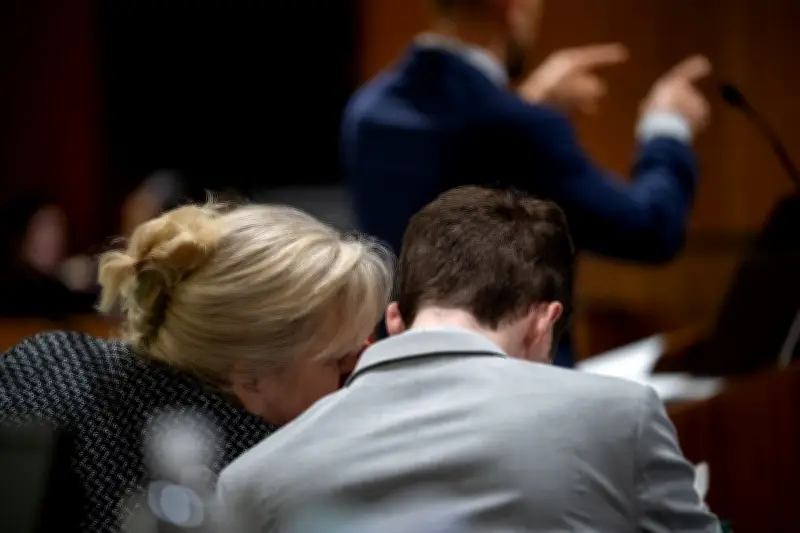
Defense lawyers for the man accused of fatally shooting conservative activist Charlie Kirk are disputing the DNA evidence presented by prosecutors, arguing that the forensic analysis is flawed and unreliable. During a preliminary hearing held Tuesday in Fourth District Court in Provo, Utah, defense attorney Kathryn Nester questioned the methodology used to link Tyler Robinson to the crime scene.
Preliminary Hearing Details
The hearing, which lasted several hours, included testimony from forensic experts who analyzed DNA samples collected from the scene. Prosecutors claim that DNA matching Robinson's profile was found on a shell casing recovered near Kirk's body. However, Nester argued that the sample was degraded and could have been contaminated during collection or processing. “The integrity of this evidence is highly questionable,” Nester told the court. “We cannot rely on results that may have been compromised.”
Robinson, 34, was arrested in May 2026 and charged with first-degree murder in connection with Kirk’s death on April 15, 2026. Kirk, a prominent conservative commentator and founder of Turning Point USA, was shot outside a hotel in Provo where he was scheduled to speak at a student conference.

Prosecution’s Case
Prosecutors have built their case largely on forensic evidence, including DNA and ballistic analysis. During the hearing, a crime lab analyst testified that the DNA profile from the shell casing matched Robinson’s with a probability of one in 7.8 billion. The analyst also stated that the firearm used in the shooting was traced to a weapon purchased by Robinson in 2023.
“The evidence clearly points to Mr. Robinson as the perpetrator,” said Deputy District Attorney Sarah Mitchell. “We are confident that the DNA and ballistic evidence will withstand scrutiny.”
Defense Challenges
Nester countered that the DNA sample was too small for reliable analysis and that the lab failed to follow standard protocols. She also noted that Robinson had no known motive and that his alibi placed him at a different location at the time of the shooting. “My client is innocent,” Nester stated outside the courthouse. “The prosecution is relying on junk science to convict an innocent man.”
The defense has filed a motion to suppress the DNA evidence, arguing that it violates Robinson’s right to a fair trial. The judge is expected to rule on the motion within the next two weeks.
Impact and Next Steps
The case has drawn national attention due to Kirk’s prominence in conservative politics. His death sparked widespread condemnation and calls for justice from political figures across the spectrum. The preliminary hearing is scheduled to continue next month, with additional testimony from ballistic experts and witnesses.
If the DNA evidence is excluded, the prosecution’s case could be significantly weakened. Legal analysts say the outcome of the suppression hearing will be critical to the trial’s trajectory. Robinson remains held without bail at the Utah County Jail.