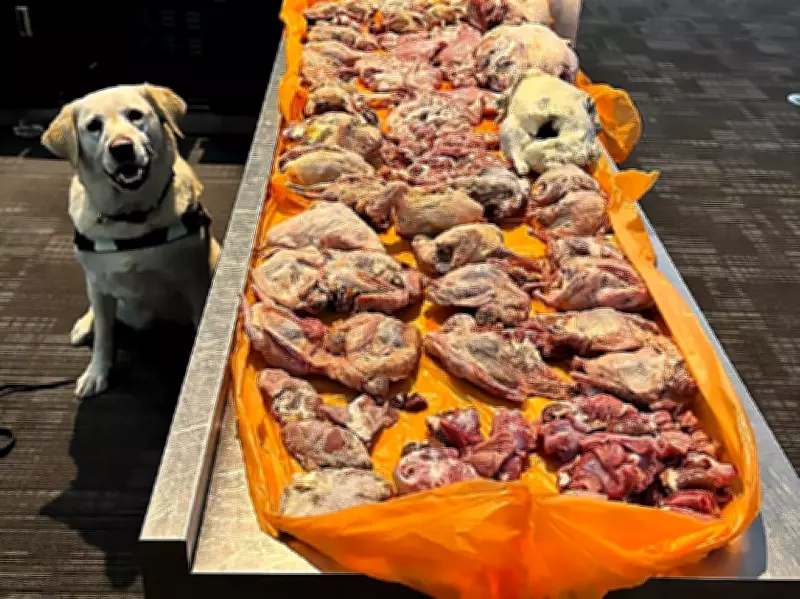
In a remarkable display of canine efficiency, detector dog Dharla recently assisted Canadian border officials in a significant seizure at Toronto's Pearson International Airport. The Labrador's keen nose led to the discovery and confiscation of more than 22 kilograms of raw meat from a traveler's luggage, highlighting the critical role of trained animals in border security operations.
The Discovery at Pearson Airport
According to the Canada Border Services Agency (CBSA), the incident occurred when Dharla flagged suspicious luggage during routine screening procedures. Upon inspection, border services officers discovered the luggage contained a substantial quantity of raw meat, including duck, pigeon, chicken, and rabbit. The traveler had arrived on a flight from Egypt, bringing these undeclared animal products into Canada.
Health Risks and Regulatory Requirements
The CBSA emphasized that raw meat frequently carries dangerous pathogens such as Salmonella bacteria, which can cause serious infections leading to diarrhea, fever, and abdominal cramps. This incident underscores why Canada maintains strict regulations regarding the importation of food, plant, and animal products.

All individuals entering Canada, regardless of citizenship status, are legally required to declare all food, plant, and animal products. This comprehensive list includes:
- Live animals and animal products
- Cooked or raw meats, hides, and skins
- Milk, fat, butter, cheese, and eggs
- Fish and seafood products
- Fruits, vegetables, seeds, and nuts
- Trees, houseplants, wood products, and firewood
- Roots, vines, herbs, flowers, and soil
Consequences of Non-Compliance
The CBSA has clear protocols for handling inadmissible goods. "Inadmissible goods may be confiscated and disposed of, or ordered removed from Canada," the agency states on its official food, plant and animal inspections page. "Travellers may also be held responsible for any costs related to the disposal, quarantine, treatment or removal of these items from Canada."
Penalties for failing to declare foreign products or provide required permits can be severe, including:
- Detention of the undeclared items
- Monetary penalties up to $1,300
- Potential prosecution under Canadian law
Commonly Misunderstood Items
"Travellers may not realize the hazards associated with food, plant and animal products," the CBSA explained. "These products may carry invasive species and diseases and may cause risks to Canada's food supply, economy, environment and our health."
The border agency noted that many travelers mistakenly fail to declare common items including:
- Processed or canned foods
- Homemade food items
- Cooked or cured meats
- Milk products and dairy items
- Fresh fruits and vegetables
- Plants used for homeopathic or medicinal purposes
- Bait for recreational fishing
- Handmade crafts containing organic materials
- Soil and firewood
The Importance of Border Security Dogs
This incident demonstrates the invaluable contribution of detector dogs like Dharla to Canada's border security framework. These specially trained canines can identify substances and materials that might escape human detection, providing an additional layer of protection against potential threats to public health, agriculture, and the environment.
The CBSA regularly employs detector dogs at major ports of entry across Canada, with these animals trained to identify various substances including narcotics, currency, firearms, and prohibited food items. Their work helps prevent the introduction of invasive species, plant diseases, and animal pathogens that could harm Canada's ecosystems and agricultural industries.
As international travel continues to increase, the role of detector dogs in maintaining border security becomes increasingly vital. The Dharla case serves as both a reminder of the importance of declaring all regulated items and a testament to the effectiveness of canine detection programs in protecting national interests.