High-level officials from Denmark and Greenland are set for a critical meeting at the White House on Wednesday with United States Vice President JD Vance, aiming to address escalating tensions over the Arctic island's defence and sovereignty.
Background of the Diplomatic Dispute
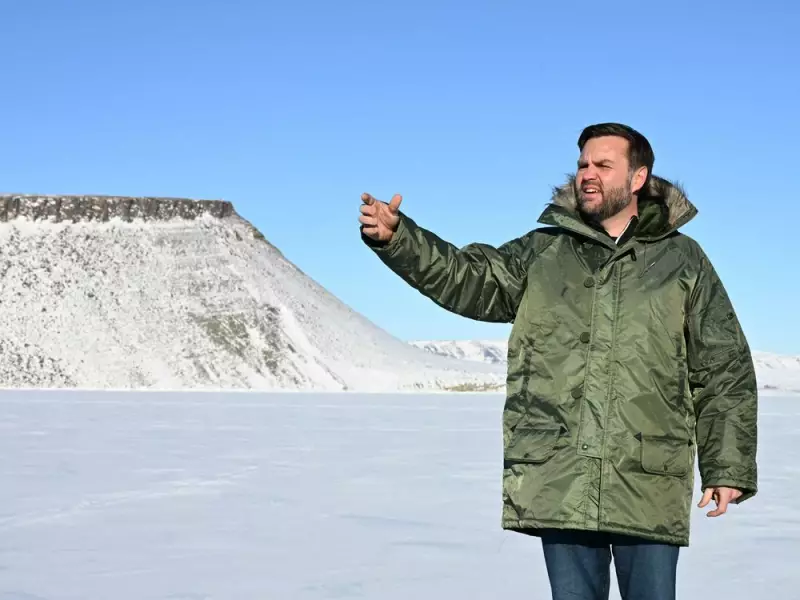
The talks come after a period of strained relations, fueled by repeated statements from former U.S. President Donald Trump about his desire to buy or annex Greenland. Tensions were further heightened this week when Trump stated the U.S. would take the territory "one way or the other." In early 2025, Vice President Vance announced an uninvited visit to Greenland, which he later limited to several hours at the U.S. Pituffik military base after causing an angry outcry in both Denmark and Greenland.
During that brief visit, Vance criticized Denmark, calling it a "bad ally" and accusing Copenhagen of neglecting its commitment to Greenland's security and the broader Arctic region. These remarks deeply offended Denmark, a nation that has been a steadfast trans-Atlantic partner, including sending troops to support U.S. efforts in Iraq and Afghanistan.

Key Issues on the Table
According to Danish Foreign Minister Lars Lokke Rasmussen, the meeting was initially requested with U.S. Secretary of State Marco Rubio, but Vice President Vance asked to participate and host it at the White House. Rasmussen will attend alongside his Greenlandic counterpart, Vivian Motzfeldt.
The primary goal for Nuuk and Copenhagen is to clear up what they term "misunderstandings." These centre on three main areas: Greenland's defence arrangements, the perceived threat of Chinese and Russian activity in the Arctic, and the nature of the relationship between Greenland and Denmark. Greenland is an autonomous territory within the Kingdom of Denmark, which also includes the Faroe Islands.
Washington has explicitly accused Copenhagen of failing to adequately protect Greenland from threats posed by China and Russia. Denmark firmly rejects this, recently highlighting a substantial investment of nearly 90 billion kroner (approximately US$14 billion) to strengthen its military footprint in the Arctic.
Clarifying Greenland's Political Status
Greenland expert Mikaela Engell noted that ongoing discussions about Greenland's future within the Kingdom might be misconstrued by some American observers as a sign of imminent secession. "To the uninformed American listener, the ongoing talks between Denmark and Greenland might have been construed as if Greenland’s secession from Denmark was imminent," Engell told AFP.
She emphasized that this dialogue has been continuous for years and does not indicate Greenland is preparing to leave. "I can understand that, in this situation, it would be better for the Americans to take hold of that strategic place," she said, explaining a potential U.S. perspective. However, she stressed that the discussion "has never meant that Greenland was on its way out the door."
Both Denmark and Greenland have consistently stated they rely on NATO for the island's ultimate defence, framing their security within the broader alliance framework rather than through bilateral arrangements that could undermine their sovereignty.
The outcome of these high-stakes White House talks will be closely watched, as they carry significant implications for Arctic geopolitics, trans-Atlantic alliances, and the future of Greenland's relationship with both Copenhagen and Washington.