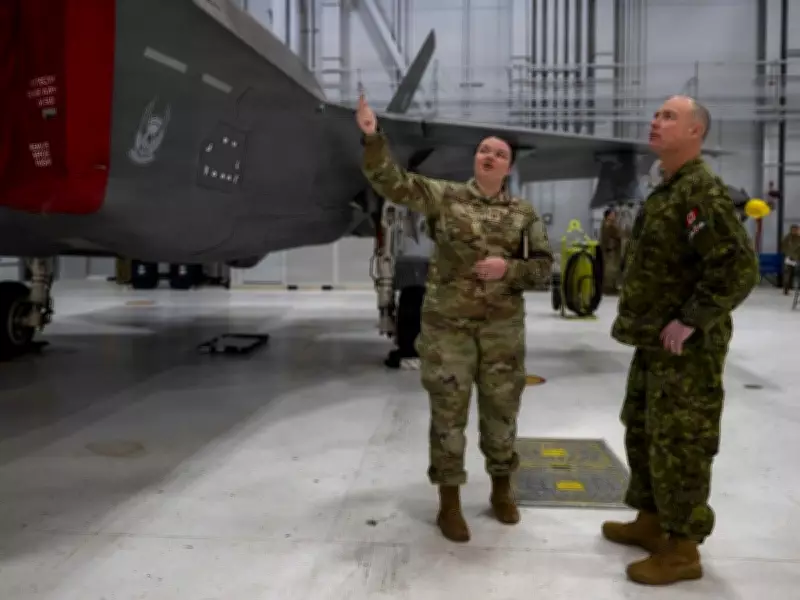
Defence Spending Increase Could Lead to Expanded Fighter Jet Fleet for Canada
A top Royal Canadian Air Force general has indicated that the Liberal government's substantial boost in defence spending could potentially fund the acquisition of more than the currently planned 88 fighter jets, along with additional search and rescue helicopters. This revelation comes as the RCAF prepares for a significant modernization of its aircraft fleet over the coming decade.
RCAF Modernization Plans Revealed
Maj. Gen. Jeff Smyth, chief of air and space force development, recently disclosed to Skies aviation magazine that approximately 80 percent of the Royal Canadian Air Force's aircraft will require replacement within the next five to ten years. This comprehensive fleet renewal represents one of the most substantial military modernization efforts in recent Canadian history.
Smyth emphasized that increased defence funding would enable the RCAF to move beyond purchasing "minimum viable fleet sizes" for various aircraft types. This shift in procurement strategy could have significant implications for Canada's military capabilities and industrial partnerships.

Search and Rescue Helicopter Expansion
The general specifically mentioned the potential for acquiring additional CH-149 search and rescue helicopters beyond the ongoing mid-life upgrade program that will bring the fleet to 16 aircraft. Smyth suggested taking advantage of the active production line at IMP Aerospace in Halifax, Nova Scotia, using the colorful analogy: "Let's press the photocopy button a few more times while the copier is running."
This approach reflects a strategic consideration of industrial capacity and timing in military procurement decisions, potentially maximizing value while production facilities remain operational.
Fighter Jet Fleet Considerations
Smyth extended this procurement logic to fighter aircraft, acknowledging to the aviation publication that "Eighty-eight jets are not a lot for a country the size of Canada." He further noted that "If the government decides to buy more in the future, that would be welcome for us and for our allies."
The current Liberal government commitment involves spending $19 billion to acquire 88 F-35 fighter jets from the United States government, though only 16 aircraft have been formally committed to date. Prime Minister Mark Carney ordered a review of the F-35 purchase in mid-March 2025, with the final decision pending on whether to proceed with the additional 72 American-made stealth fighters or instead purchase Gripen jets from Sweden.
Government Response and Strategic Context
When questioned about Smyth's comments, Department of National Defence spokesman Kened Sadiku stated that "Canada currently has, and will continue to have, a sufficient number of aircraft to meet its continental defence mandate." He added that as the RCAF advances toward fifth-generation and eventually sixth-generation capabilities, it continually assesses fleet size requirements to meet government tasks while ensuring operational advantage.
Defence Minister David McGuinty confirmed to journalists that RCAF pilots will begin F-35 training later this year in the United States, while noting that "The question of further acquisition of that fleet remains under review."
This procurement discussion occurs against a backdrop of strategic diversification in defence spending away from exclusive reliance on American equipment, particularly following sovereignty threats from former U.S. President Donald Trump. The geopolitical context adds complexity to procurement decisions that balance military capability, industrial policy, and international relations.
Broader Implications for Canadian Defence
The potential expansion of fighter jet procurement beyond the currently planned 88 aircraft represents a significant development in Canadian defence policy. Such a move would:

- Enhance Canada's air defence capabilities across its vast territory
- Strengthen interoperability with allied forces, particularly NATO partners
- Provide greater flexibility for international missions and continental defence
- Support domestic aerospace industry through maintenance and support contracts
- Address concerns about fleet size adequacy for a country with Canada's geographical expanse
As the Liberal government continues its defence spending review and modernization efforts, the balance between capability requirements, budgetary considerations, and strategic partnerships will remain central to procurement decisions affecting the Royal Canadian Air Force for years to come.