Danish Foreign Minister Cautions That U.S. Dispute Over Greenland Remains Unresolved
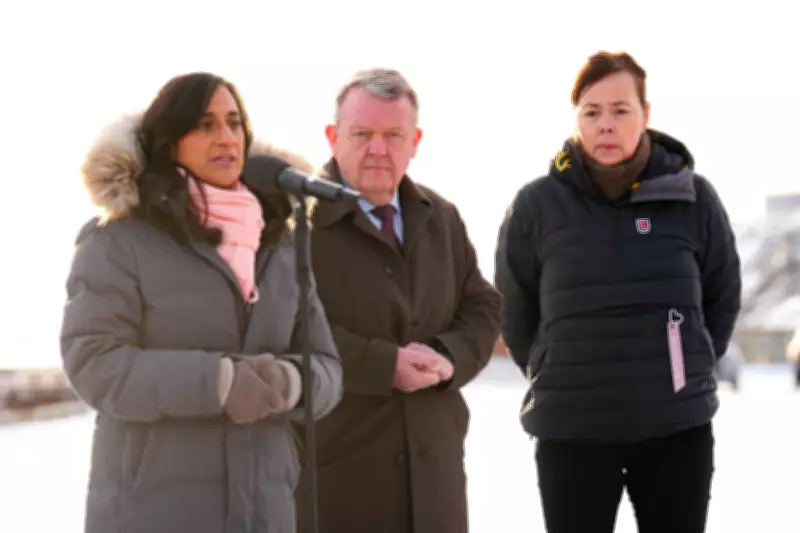
In a significant diplomatic statement from the Arctic, Danish Foreign Minister Lars Loekke Rasmussen has declared that tensions with the United States concerning Greenland are far from settled. "We are not out of the crisis," Rasmussen emphasized during a press conference in Nuuk, Greenland, on February 7, 2026. The remarks underscore ongoing geopolitical friction in a region of growing strategic importance.
Canada Announces New Consulate in Nuuk to Strengthen Arctic Security and Inuit Ties
The press conference, which also featured Canada's Foreign Minister Anita Anand and Greenland's Minister for Foreign Affairs Vivian Motzfeldt, served as the platform for a major Canadian policy announcement. Minister Anand revealed plans to establish a new consulate in Nuuk, Greenland's capital. This move is framed as a dual initiative to bolster Canada's Arctic security posture and deepen diplomatic and cultural connections with Inuit communities.
"This consulate represents a tangible commitment to our Arctic neighbors and to the security of Canada's North," Anand stated. The initiative signals Canada's intent to play a more active and collaborative role in Arctic affairs, particularly as international interest in the region's resources and shipping lanes intensifies.

Context of U.S.-Denmark Tensions and Canada's Strategic Pivot
The backdrop to these developments is a period of strained relations between Denmark and the United States regarding Greenland's status and future. While specific details of the current "crisis" were not fully elaborated, historical context includes U.S. expressions of interest in purchasing Greenland and debates over military and resource access. Rasmussen's candid assessment suggests these underlying issues continue to simmer.
Canada's decision to open a consulate in this climate is viewed as a strategic diplomatic and security measure. Analysts suggest it allows Canada to:
- Enhance its intelligence and situational awareness in the High Arctic.
- Foster stronger economic and cultural partnerships with Greenland and, by extension, Denmark.
- Assert its sovereignty and stewardship role in the Arctic region amidst great-power competition.
The presence of Greenland's Foreign Minister Vivian Motzfeldt at the announcement highlights the importance of direct engagement with Greenland's self-governing authorities, beyond relations with Copenhagen.
Broader Implications for Arctic Governance and International Relations
This confluence of events—a unresolved diplomatic dispute and a new Canadian diplomatic outpost—points to the Arctic's evolving geopolitical landscape. The region is no longer a peripheral zone but a focal point for climate change impacts, resource development, and strategic rivalry.
Canada's move, coupled with the Danish Foreign Minister's warning, suggests that Arctic nations are actively recalibrating their policies to address both cooperation and competition. The establishment of the Nuuk consulate is a concrete step in Canada's broader Arctic and Northern Policy Framework, aiming to ensure stability and promote Indigenous partnerships in the face of external pressures and environmental transformation.
As Minister Anand concluded, the focus remains on "peaceful dialogue, mutual respect, and shared stewardship of the Arctic." However, the unresolved tensions highlighted by Denmark serve as a reminder that achieving these goals in a region of increasing global interest will require sustained diplomatic effort and robust national strategies.