Chile's New President Initiates Northern Border Barrier Construction
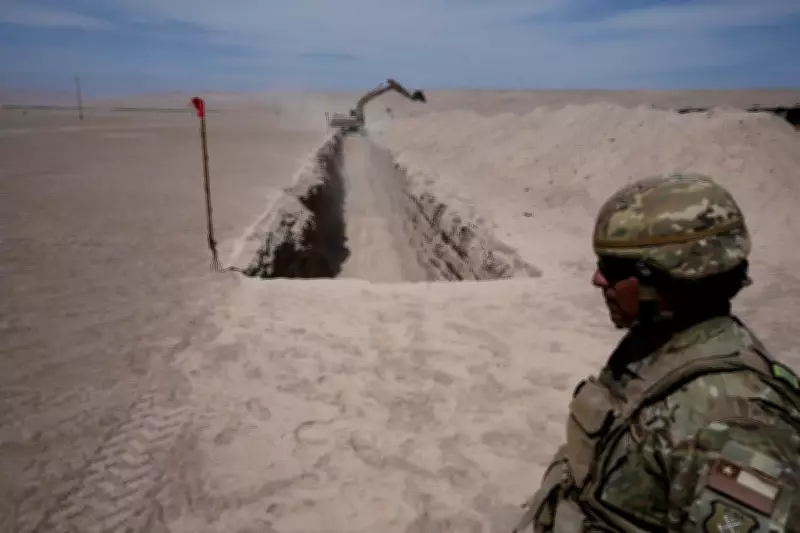
Chile's recently inaugurated far-right president has officially launched the construction of a significant border barrier along the nation's northern frontier. This ambitious project, aimed at deterring irregular migration, commenced on Monday, March 16, 2026, with military personnel overseeing initial groundwork at the Chacalluta border crossing in Arica.
Military Oversight and Strategic Implementation
Soldiers were observed stationed near heavy machinery actively digging along the border, signaling a robust governmental commitment to enhanced border security measures. The Chacalluta crossing, a critical entry point, has become the focal location for these initial construction activities, which are part of a broader strategy to control and manage migration flows into Chile.
The president's administration has emphasized that this barrier is a necessary response to increasing concerns over irregular migration patterns. Officials argue that the structure will help regulate border crossings, ensuring they occur through official channels and thereby improving national security and immigration oversight.

Political Context and Migration Policies
This move aligns with the campaign promises of the far-right leader, who advocated for stricter immigration controls during the election. The decision to construct a physical barrier has sparked debate domestically and internationally, with supporters viewing it as a pragmatic security measure and critics questioning its effectiveness and humanitarian implications.
Analysts note that this project represents a significant shift in Chile's immigration policy, traditionally more open compared to some regional neighbors. The timing of the launch, shortly after the president's inauguration, underscores the priority placed on this issue by the new government.
Regional and Global Implications
The construction of the border barrier occurs within a complex regional migration context, where many South American nations are grappling with increased movement of people due to economic and political instability in various countries. Chile's approach may influence migration policies across the continent, setting a precedent for physical border fortifications.
As work progresses, the government plans to deploy additional resources to ensure the project's completion, with ongoing assessments of its impact on local communities and cross-border relations. The international community will be closely monitoring the development, particularly regarding its adherence to human rights standards and bilateral agreements.