CBSA Detector Dog at Toronto Pearson Airport Leads to Major Raw Meat Seizure from Egyptian Passenger
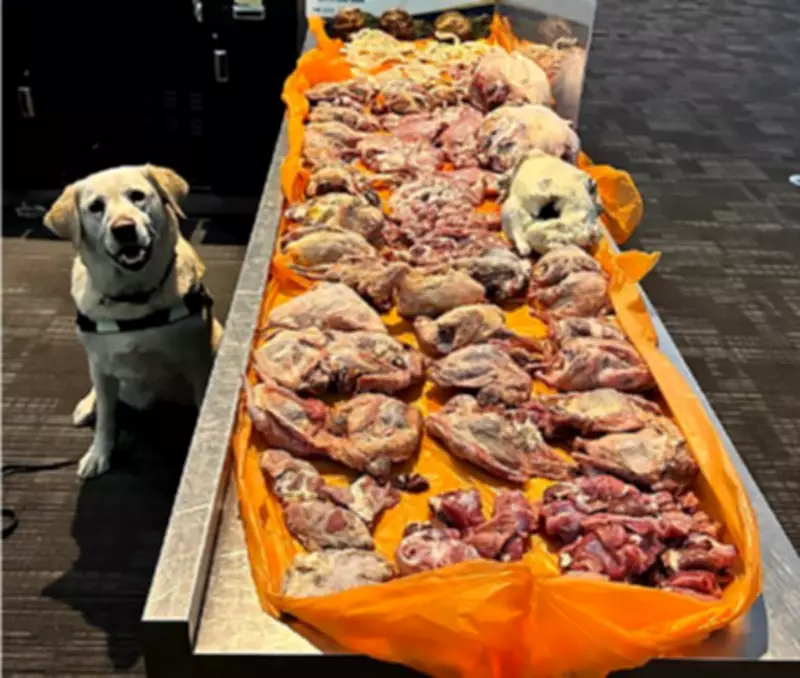
In a significant border security operation, a detector dog from the Canada Border Services Agency (CBSA) played a crucial role in intercepting a large quantity of raw meat at Toronto Pearson International Airport. The incident, which occurred on March 8, 2026, involved a passenger arriving from Egypt who was found to be in possession of 22.5 kilograms of raw animal products.
Dharla the Detector Dog Makes Key Indication
The seizure was initiated when Dharla, a highly trained CBSA detector dog, made a clear indication on the luggage of the Egyptian passenger. Upon inspection, CBSA officers discovered the raw meat, which included duck, pigeon, chicken, and rabbit. The total weight of the confiscated items amounted to 22.5 kilograms, highlighting the scale of the prohibited goods being transported.
This interception underscores the vital role that detector dogs play in safeguarding Canada's borders against the illegal importation of agricultural and food products. Raw meat poses significant risks, including the potential introduction of animal diseases and pathogens that could threaten public health and the country's agricultural industry.

Importance of Border Controls and Agricultural Protection
The CBSA has strict regulations regarding the importation of meat and animal products to prevent the spread of diseases such as avian influenza and foot-and-mouth disease. Passengers are required to declare all food items upon arrival, and failure to do so can result in penalties, including fines and seizure of the goods.
This incident serves as a reminder of the ongoing efforts by border agencies to enforce these regulations and protect national biosecurity. The use of detector dogs like Dharla enhances the CBSA's ability to identify undeclared or prohibited items quickly and efficiently, even when they are concealed within luggage.
Broader Context of Border Security Measures
While this seizure focused on raw meat, it is part of a broader strategy by the CBSA to monitor and control what enters Canada. Such measures are essential for maintaining the integrity of the country's food supply and preventing ecological disruptions. The agency employs a combination of technology, canine units, and officer inspections to achieve these goals.
The successful detection by Dharla not only prevented potential health risks but also demonstrated the effectiveness of integrated border security approaches. As international travel continues to increase, the role of detector dogs in identifying contraband remains a critical component of Canada's defense against illicit imports.