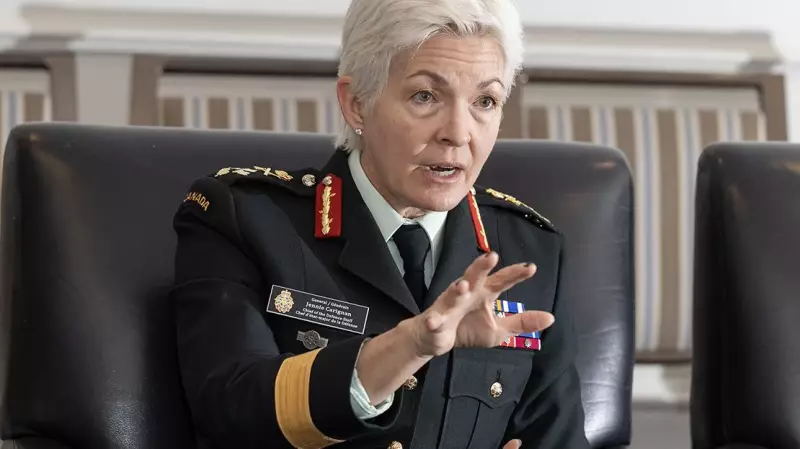
Canada's highest-ranking soldier has delivered a clear message about the nation's military preparedness in a volatile world. General Jennie Carignan, the Chief of the Defence Staff, states that if conflict were to break out, the Canadian Armed Forces (CAF) are ready to respond immediately with their current capabilities.
Readiness and a Fundamental Shift in Defence
In an exclusive interview with the National Post in early December 2025, Gen. Carignan addressed the pressing security challenges facing Canada. "We're always ready," Carignan stated, emphasizing that, like allied militaries, Canada can operate "as-is." However, she was unequivocal about the need for significant modernization to meet future threats.
Carignan explained that the post-Cold War era of expeditionary operations, like the mission in Afghanistan, required a different set of capabilities. For instance, air defence systems were divested in the year 2000 because air supremacy was assumed. "Now the situation has changed. The air is contested," she said, highlighting the urgent need to reacquire layered air defence systems. This shift, she argues, signifies a return to preparing for "near-peer" conflict, a fundamental change from the past 35 years.

Recruitment Success and Future Capabilities
Addressing persistent personnel shortages, Gen. Carignan pointed to recent recruiting successes. The CAF exceeded its target of 6,400 new members in the previous year, recruiting approximately 6,600 personnel. For the current fiscal year, the target is set at 7,600, and the military has already reached about 65 per cent of that goal, onboarding roughly 5,000 people so far.
"We're recruiting more people than we are losing, so we're going to be catching up to build back our strength," Carignan said. This recruitment drive is paired with plans to expand training infrastructure and modernize training systems to handle the influx and prepare for new technologies.
These new capabilities are a central part of the modernization plan. Carignan listed long-range precision strikes, integrated air and missile defence, and advanced drone (UAS) and counter-drone systems as key areas for investment. She also confirmed that the plan for acquiring new submarines remains active, with costing work to be completed as part of future defence spending envelopes.
Sovereignty, Alliances, and Culture
The General framed the government's commitment to increase defence spending to 3.5 per cent of GDP as a historic opportunity to bolster Canadian sovereignty. "What I see is a lot more resources dedicated to Canada, which historically we couldn't do," she said, noting the past focus on defending interests abroad. The new vision includes a larger force, strategic reserves for national crises, and enhanced capabilities to monitor and protect Canada's vast territory, particularly in the Arctic.
Carignan reaffirmed Canada's unwavering commitment to its NATO allies, specifically the battle group in Latvia, stating that posture would not be modified. She also detailed ongoing engagement in the Indo-Pacific through persistent naval deployments and partnerships with nations like Japan, South Korea, and the Philippines.
On the topic of mandatory service, Carignan was direct: "I'm not a big fan." She expressed a strong preference for the voluntary service model, believing it yields better results. Regarding organizational culture, she linked it directly to operational effectiveness, arguing that diverse teams that value trust and difference are better at solving complex problems. "Conformity, as part of team dynamics, can be absolutely deadly," she warned.
As Canada navigates what Carignan called one of the most dangerous periods since the Cold War, her leadership is focused on a dual track: maintaining immediate operational readiness while executing a generational transformation of the country's defence capabilities.