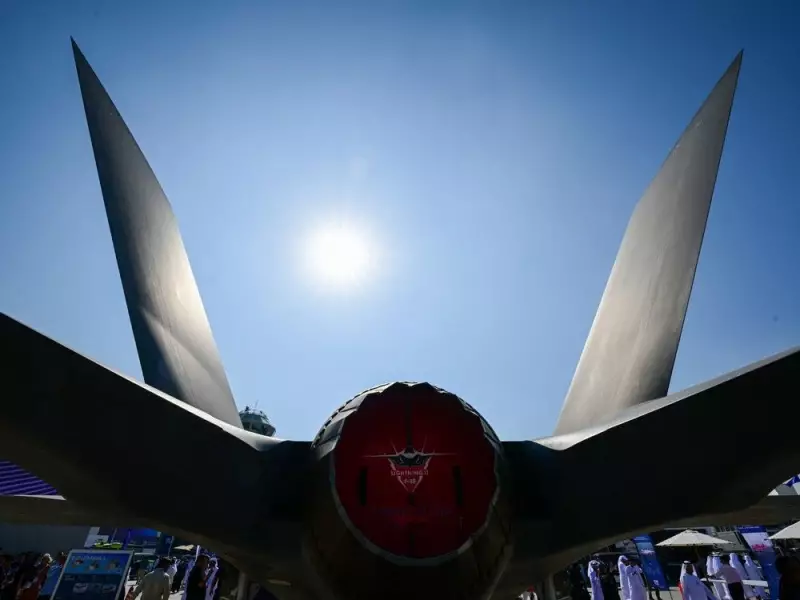
Canada's long-delayed, multi-billion dollar decision to replace its aging fighter jet fleet has become a high-stakes geopolitical quandary, pitting military necessity against industrial benefits and testing the nation's relationship with its closest ally. The choice between the American-made Lockheed Martin F-35 Lightning II and Sweden's Saab Gripen is more than a procurement; it's a strategic signal with potential repercussions from Washington.
A History of Pressure and Procrastination
For decades, successive American administrations have urged Canada to increase its defence spending and contributions to the North Atlantic Treaty Organization (NATO). The tone has varied from the diplomatic encouragement of former President Barack Obama to the blunt accusations of "freeloading" from former and current President Donald Trump. This bipartisan U.S. view forms the backdrop against which Ottawa's final decision will be judged.
In 2022, Canada announced its intent to purchase 88 F-35s. However, political reviews and debates have significantly slowed the process, with only 16 jets ordered to date. Earlier this year, Prime Minister Mark Carney ordered a review of the remaining 72-jet purchase, citing concerns over over-reliance on U.S. defence and escalating trade tensions.

The Stealth vs. Sovereignty Debate
The core of the technical debate hinges on fifth-generation stealth capabilities. Leaked 2021 Department of National Defence data scored the F-35 at 95 per cent versus the Gripen's 33 per cent in evaluations of stealth and advanced sensor fusion. RCAF Deputy Minister Stephanie Beck has emphasized these capabilities as non-negotiable for future air superiority and Arctic sovereignty missions.
Proponents of the Saab Gripen, however, highlight its advantages for operations in Canada's vast North, including shorter take-off requirements. The Swedish aerospace giant has also made a potent economic pitch, offering to create up to 10,000 Canadian jobs through a domestic assembly line, a point Industry Minister Mélanie Joly has called "very interesting."
Strategic Consequences and Expert Warnings
The decision carries weight far beyond unit cost or performance specs. U.S. Ambassador Pete Hoekstra has reportedly warned that a favourable trade deal could be contingent on Canada choosing the F-35. Defence analysts urge Canadian leaders to view the purchase as a fundamental strategic choice.
Michael O’Hanlon, director of foreign policy research at the Brookings Institution, cautioned that attempting to buy both aircraft types is "easily the worst idea," citing the logistical and financial nightmare of maintaining two distinct fleets. Procurement expert Philippe Lagassé of Carleton University noted Canada could opt for a mixed fleet to maximize economic benefits, but such a move would complicate operations.
As the Liberal government's review concludes amidst a tense trade climate, Canada's choice will be interpreted in Washington as a measure of its commitment to continental defence and NATO interoperability. Selecting the Gripen could be seen as an act of economic gamesmanship, while staying with the F-35 reaffirms a military partnership but may forgo significant domestic job creation. The jets Canada chooses will define its air power for a generation and could either soothe or inflame relations with its powerful southern neighbour.