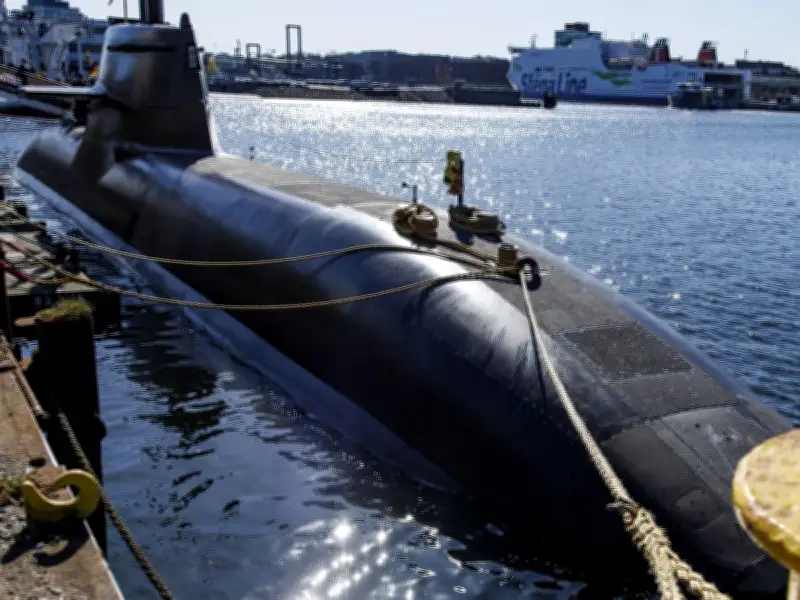
Canada has selected Germany's ThyssenKrupp Marine Systems (TKMS) as the preferred supplier for up to 12 new submarines, marking the largest defence purchase in Canadian history. Prime Minister Mark Carney made the announcement in Halifax on Monday, en route to the NATO Summit in Ankara, Turkey, emphasizing the deal's role in strengthening ties with European allies and bolstering Arctic protection.
Timeline and delivery
The federal government will now enter into exclusive negotiations with TKMS, with the goal of finalizing a contract by the end of 2027. If the deal proceeds, the first four submarines are expected to be delivered by 2034, with TKMS reallocating boats from German and Norwegian orders to expedite delivery. Carney noted that Canada retains the right to designate South Korea's Hanwha Ocean as an alternative if talks fail.
“This was a difficult, close decision between two highly qualified suppliers,” Carney said, adding that both bidders met the Royal Canadian Navy's requirements. He thanked both companies for their “extraordinarily thoughtful, comprehensive, and cooperative proposals.”

Economic and strategic impact
The TKMS proposal promises significant economic benefits, including over 100,000 well-paying jobs across Canada and an estimated $86 billion contribution to Canada's GDP, according to German Defence Minister Boris Pistorius. Carney highlighted that TKMS offered investments in the Port of Churchill for LNG exports and carbon-capture projects in Alberta, while Hanwha proposed using Canadian steel for submarine construction.
David Perry, president of the Global Affairs Institute of Canada, said the decision signals closer defence and economic ties with Europe, particularly with NATO members Norway and Germany. “This would obviously fit pretty closely into his discussions about a strengthening role with the Europeans,” Perry said. “This helps bolster the link with Europe.”
Arctic sovereignty and naval capability
Carney stressed the necessity of protecting Canada's Arctic waters, which he described as “integral” to North American security and NATO's western flank. “These new submarines, combined with the world's second-largest fleet of icebreakers, new aircraft, new radar, more missiles and drones, better cyber defences, and new ports and airbases, are allowing Canada to assert its full sovereignty in the Arctic,” he said.
Perry noted that the procurement will enable three submarines to be operational at any given time, enhancing the Royal Canadian Navy's ability to patrol the Arctic, Pacific, and Atlantic Oceans simultaneously. “It’s enhanced ability to understand what’s happening around the waters of this country and North America, and be able to deter people from doing things we don’t want them to do,” he said.
Cost and procurement process
Carney did not disclose the price tag, estimated at $80 billion, but confirmed it is accounted for in Canada's fiscal framework. “This process is commercially sensitive, and always, we will not negotiate in public so as to maintain the strongest possible position for Canada,” he said. The deal is expected to be the largest procurement in Canadian history, replacing the navy's aging fleet with NATO-interoperable submarines.