Canada and Nordic Nations Forge Stronger Arctic Security Partnership
In a significant move to bolster regional stability, Canada and the Nordic countries have committed to intensifying defense production and deepening security collaboration across the Arctic. This strategic initiative aims to counter Russian aggression while addressing persistent concerns over United States pressure on Greenland's sovereignty.
Joint Commitment Against Regional Threats
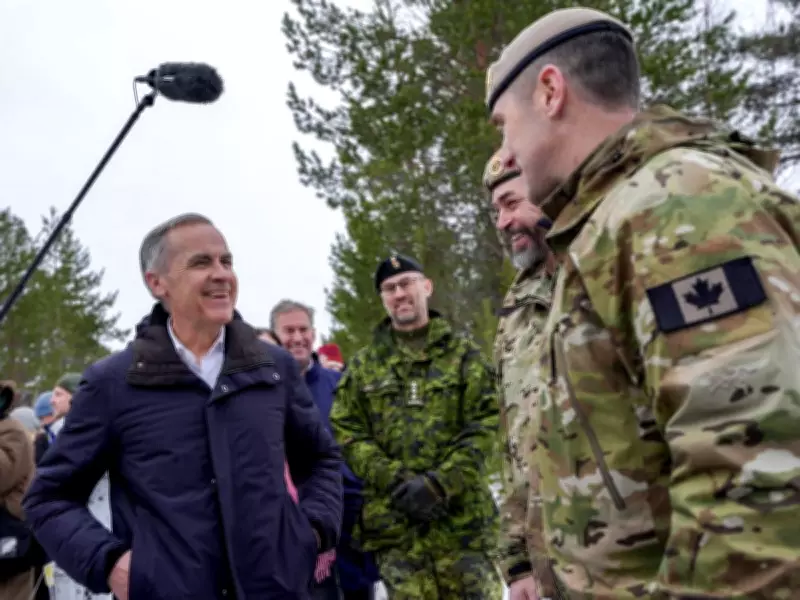
The agreement was formalized following a high-level meeting in Oslo on Sunday, where leaders from Canada and Nordic nations emphasized Russia as the primary security threat in the Arctic region. Canadian Prime Minister Mark Carney highlighted the importance of NATO's increased focus on the area, including the launch of the Arctic Sentry mission, describing it as a welcome but overdue development.
"The biggest physical security threat in the Arctic is Russia," Carney stated during a joint news conference. "It needs to be further developed, and what you're hearing from all of us is the commitment to do that."

Coordinated Defense Investments and Industrial Growth
The joint statement outlines plans for closer Arctic security coordination, including:
- Boosting defense industrial capacity across participating nations
- Developing inter-operable, dual-use technologies
- Creating specific opportunities for mutually beneficial development
- Expanding procurement partnerships beyond traditional allies
Carney warned that uncoordinated defense spending would dilute value for taxpayers and weaken collective security, noting that all countries involved are making substantial defense investments. He pointed to Canada's historical pattern of spending 70 percent of its military budget in the United States as having limited domestic industry growth.
"We will still do a lot of procurement with the United States," Carney explained, "but we're looking to procure much more in a partnership and with a much broader range of countries."
Middle Powers Taking Concrete Action
Norwegian Prime Minister Jonas Gahr Støre characterized the effort as "middle powers being concrete about what they can do together." The initiative doesn't seek to build new institutions but rather pursues what Carney calls "variable geometry"—deepening collaboration in different areas with various partners, including Australia, Japan, and South Korea.
Strong Support for Greenland's Sovereignty
The leaders expressed firm support for Greenland and Denmark's sovereignty, with Danish Prime Minister Mette Frederiksen condemning recent U.S. pressure as "totally unacceptable." Although U.S. President Donald Trump's interest in the island appears to have diminished in recent weeks, the issue remains a significant concern for regional stability.
When questioned about Trump's interest in natural resources across Greenland and Canada, Carney acknowledged the region's vast reserves, including critical minerals in Norway and Canada. He emphasized that the crucial question now involves how the region can develop these assets with partners efficiently and rapidly.
Nuclear Deterrence and European Security
The Nordic leaders clarified that cooperation with France regarding enhanced nuclear deterrence for Europe should not be viewed as a replacement for NATO's nuclear umbrella. This distinction maintains the alliance's established security framework while allowing for supplementary defensive measures.
This comprehensive security partnership represents a strategic shift toward greater regional autonomy and coordinated defense planning, marking a new chapter in Arctic security cooperation that balances traditional alliances with emerging geopolitical realities.