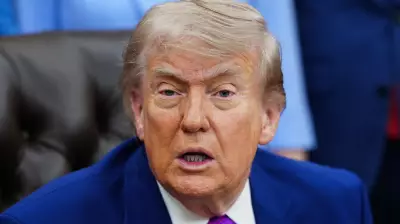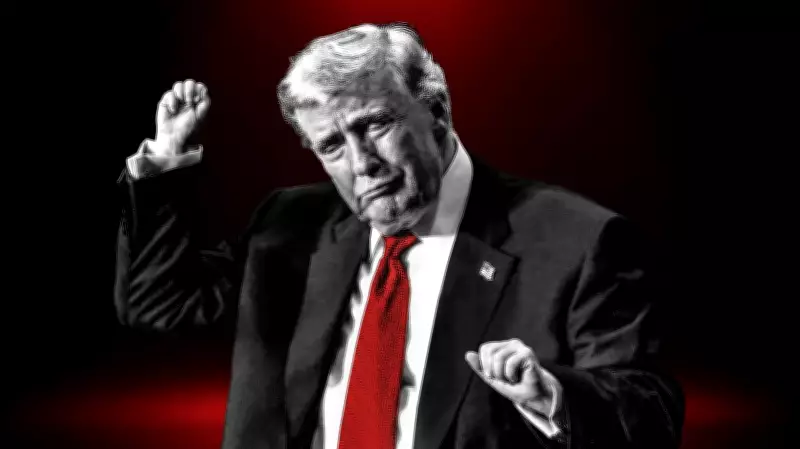
When the words "Trump" and "dance" appear together, a specific image likely comes to mind. For years, President Donald Trump has showcased a signature dance move at events and rallies, jerking his bent arms and clenched fists forward and backward, often to the Village People's "YMCA."
Signature Brand
This dance has become a regular feature onstage, so much so that it is now part of his brand, experts told HuffPost. Patti Wood, a body language expert and author of "Snap: Making the Most of First Impressions, Body Language, and Charisma," noted, "It's typically the same exact song and the same exact set of moves, and he's typically doing it when he's wearing the blue suit, the white shirt and the red tie, so it's part of his brand." She added, "One of the reasons it is so interesting to observe is that we know exactly what he's going to do, and yet we look at it every time to understand."
Denise Dudley, a clinical psychologist and behavioral expert, described the move as "very on brand for him" and even a "visual version" of his speech patterns. "If we think about it a certain way, he dances like he talks," Dudley said. "It's super repetitive, it's really simple. I mean, it's not complicated at all."

Clenched Fists: Dominance and Aggression
A key element of Trump's dance is his clenched fists. Experts say these fists are highly symbolic and intimidating. "When we see somebody with their hands in fists, it creates tension in our central nervous system," Wood explained. "Those balled-up fists ... the gestures are super dominance-oriented, they're aggressive," Dudley added. Wood noted that a fist instinctively signals a weapon, "and so we stay a little bit on edge." Metaphorically, the fists mean "fight," but also convey "I'm cool, alpha."
Tight fists contrast with the joy, spontaneity, and openness expected in dance. "You want your hands to be open so that they look inviting and relaxed, and so you can be emotionally expressive ... so even within his 'dance,' he's still communicating his force and his control and his power," Dudley said. "It's just a power move to have clenched fists like that, it's like a victory gesture rather than social dancing."
Crowd Signaling
The dance also functions as a form of "crowd signaling." Dudley explained that crowd signaling occurs when humans "want to mirror things ... we want to mirror gestures, we often mirror vocal patterns and posture and rhythms and movement and such." This is not exclusive to politicians; it happens at sporting events when people stand to cheer or do the wave. "That crowd signaling is a way that a leader can get people to start doing what it is they're doing," Dudley said. The "Trump dance," with its fists and simple arm movements, is easy to mimic. "All of his MAGA people, his constituents, they can all do that same thing. I just really see this as another way that he is signaling the crowds to 'do what I do,'" she noted.
Immobile Feet
Experts point out that Trump's feet do not move, which is unusual for dancing onstage. "The feet are the most honest part of the body, so that's what gives you the greatest revelation," Wood said. Typically, dancers move their feet back and forth or side to side. But Trump "might lean to the left or lean to the right, but he's not picking up his feet, he's not moving through space, he's not moving to the front of the stage or moving down to the side of the stage." Wood continued, "A performer would want to either look to different parts of the audience or move to the front of the stage or move side to side to get more of the energy, give more of their energy."
Facial Expressions: Grimaces and Smirks
Trump's facial expressions during the dance are also notable. While dancing, he often frowns or grimaces, with lips tightly held together. "He's often grimacing as if he's exerting enormous amounts of effort just to do this, as if he knows he has to," Wood said. Occasionally, he smirks, which may be an attempt to "look cool" or pretend he is not enjoying it. "So, that could be it, but because the brows go down more, the eyes go clenched in, it just appears that he's doing this with extreme effort and he doesn't feel joyful about it." Dudley added that squinting can be a victory gesture or dominant expression.

Emotional Insight Through Imitation
To understand the emotional feel of Trump's dance, Wood recommends trying it yourself. "Sometimes, when I'm trying to get people to understand somebody's non-verbal behavior, I say, 'Well, do that movement ... and see how you feel in your body to figure out that person or figure out how they're feeling,'" Wood said. Those who try the dance will feel negativity, unease, and effort, rather than the freed emotions typical of dance.
While one dance cannot fully reveal Trump's psyche, his repetitive movements offer a glimpse. "Our body language reflects our emotional state, but the opposite is also true," Wood explained. "We crave to understand him, to try to figure him out," she added.
This story was originally published on HuffPost.