In a striking statement on Sunday, U.S. Treasury Secretary Scott Bessent indicated that the United States might need to intensify its military actions against Iran as a strategic move to ultimately de-escalate the ongoing conflict. This comes after President Donald Trump delivered seemingly contradictory messages about the war's direction over the weekend.
Contradictory Signals from the White House
On Saturday, President Trump issued a stark threat to "obliterate" Iranian energy plants if Tehran fails to fully open the critical Strait of Hormuz. This aggressive stance followed his remarks just a day earlier, where he suggested U.S. objectives were "very close" and that he was considering "winding down" the military campaign. The mixed signals have created uncertainty about the administration's approach to the Iran conflict.
Bessent's 'Escalate to De-escalate' Philosophy
When questioned on NBC's "Meet the Press" about whether Trump was winding down or escalating the war, Bessent offered a nuanced perspective. "They're not mutually exclusive," he stated. "Sometimes you have to escalate to de-escalate." Bessent argued that this approach represents "the only language the Iranians understand," suggesting that increased military pressure might be necessary to achieve a peaceful resolution.

Economic Dimensions of the Conflict
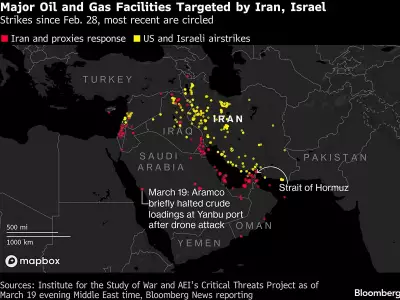
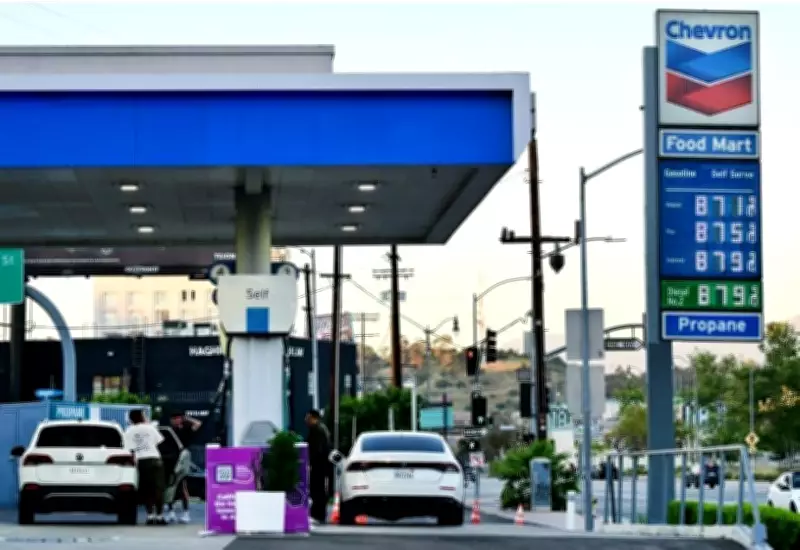
The geopolitical tensions have significant economic implications, particularly regarding global energy markets. Iran's threats against shipping through the Strait of Hormuz—a vital waterway through which approximately one-fifth of global gas and oil supplies flow—have caused energy prices to surge worldwide. This spike has translated to rapidly increasing costs at American gas pumps, creating potential political risks for the administration ahead of the midterm elections.
Temporary Sanctions Relief and Market Response
As part of efforts to mitigate market turmoil, Bessent has temporarily lifted U.S. sanctions on Iranian and Russian oil that had already been loaded onto ships. This move has generated some backlash, with critics arguing it could provide funding to Iran while the U.S.-Israeli conflict continues. Bessent defended the decision on NBC, explaining that it helps alleviate pressure on U.S. partners and reduces the price Iran can command for its oil.
"That Iranian oil was always going to be sold to the Chinese," Bessent noted. "It was going to be sold at a discount... So which is better? If oil prices spiked to $150 and they (Iran) were getting 70 percent of that, or oil prices below 100?"
Timeline Uncertainties and Long-term Goals
Bessent refused to provide a specific timeline for when Americans might expect energy prices to moderate, acknowledging the uncertainty of the situation. "I don't know whether it's going to be 30 days. I don't know whether it's going to be 50 days. I don't know whether it's going to be 100 days," he admitted.
However, he argued that the temporary economic costs would be justified by long-term strategic benefits. "But to have 50 years of peace in the Middle East and know that the Iranian regime is defanged," Bessent emphasized, "will be worth it."
Voices from the Iranian Diaspora
Meanwhile, Reza Pahlavi, the exiled son of Iran's last shah who holds influence among the diaspora, called on Trump and Israeli Prime Minister Benjamin Netanyahu to avoid targeting Iran's civilian infrastructure. In a social media post on Sunday, Pahlavi stated that such infrastructure "belongs to the Iranian people and to the future of a free Iran."
"Iran must be protected," Pahlavi asserted. "The regime must be dismantled." His comments highlight the complex dynamics within Iranian opposition circles and the broader considerations surrounding military strategy in the region.