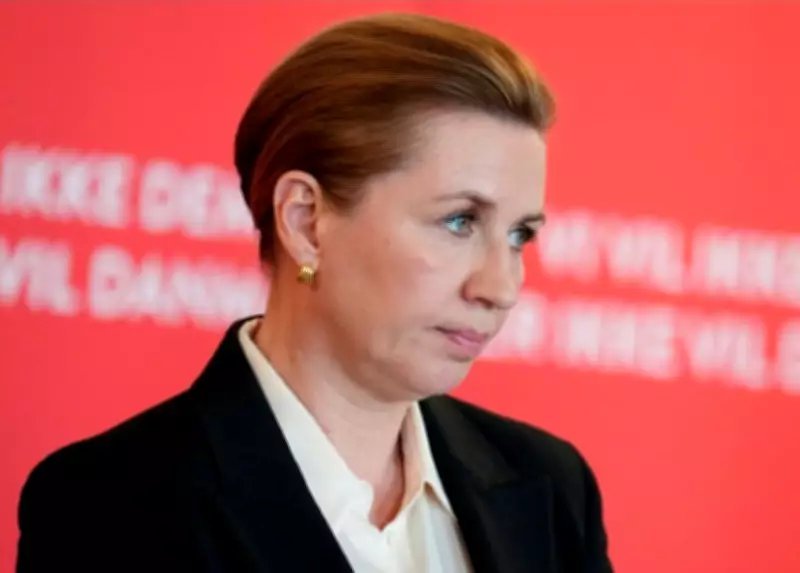
Danish Prime Minister Mette Frederiksen Seeks Third Term in Tight General Election
Denmark votes Tuesday in a closely contested general election, with Prime Minister Mette Frederiksen attempting to secure a third consecutive term in office. The campaign has been dominated by domestic policy debates while unfolding against the backdrop of diplomatic tensions with the United States concerning Greenland.
Multiple Parties Compete for Parliamentary Control
A total of twelve political parties are vying for the 179 seats in Denmark's parliament, known as the Folketing. Unlike many European systems, each party is running independently without forming pre-election coalitions or alliances. This fragmented landscape creates significant uncertainty about the eventual government formation.
Frederiksen, 48, has campaigned on her reputation as an experienced national leader, though support for her Social Democratic party has declined substantially in recent months. While the Social Democrats maintain a lead in opinion polls, they are projected to lose approximately six percentage points compared to their performance in the 2022 election.

Political Blocs and Potential Kingmakers
Danish political analysts traditionally categorize parties into two main blocs: the red bloc representing left-wing parties and the blue bloc representing right-wing parties. However, the Moderates party, founded by Foreign Minister Lars Lokke Rasmussen, operates outside both traditional blocs and could emerge as a decisive power broker during coalition negotiations.
"There's a tie in many opinion polls where the Moderates are the pivotal party, so they get to decide," explained University of Copenhagen political scientist Karina Kosiara-Pedersen. "In some opinion polls, the red bloc—the prime minister's bloc—has got the majority, so it's quite likely that the prime minister will be Social Democratic... but it is definitely not decided."
Overseas Territories Could Influence Outcome
Denmark's two autonomous territories—Greenland and the Faroe Islands—each hold two parliamentary seats that could prove decisive in a tight election. Given the far-right Danish People's Party's negative stance toward Greenland, "even a moderately right-wing Greenlandic MP would find it very hard to support a Danish government backed by DF," noted Ole Waever, professor of international relations at the University of Copenhagen.
Campaign Focuses on Domestic Policy Issues
The three-week election campaign has centered on several key domestic concerns:
- Drinking water quality amid high nitrate levels from agricultural runoff
- Retirement age and pension system sustainability
- A proposed wealth tax targeting personal assets above 25 million kroner (approximately $3.86 million)
Frederiksen's Social Democrats advocate for the wealth tax to help fund Denmark's welfare state, particularly education reforms. "That's the right way to go in order to have a socially responsible way of financing expenses," argued Damoun Ashournia, chief economist at the Danish Trade Union Confederation. "We need to invest more in our welfare state to be able to deliver the same level of service to the population."
Just before Frederiksen called the election in late February, the outgoing three-party coalition—comprising the Social Democrats, Moderates, and liberal Venstre party—successfully passed a "food cheque" proposal designed to assist Danes struggling with high living costs.
"Right now I don't feel I'm struggling that much but that's mostly because I have two jobs," commented 21-year-old voter Anders Hemrich, reflecting the economic concerns shaping voter sentiment.