The story of anthrax is a chilling narrative that weaves together medical history, scientific discovery, and humanity's darkest impulses. Known historically as "wool sorter's disease" or "hide-porter's disease," this affliction plagued workers handling animal products, sometimes leaving distinctive circular lesions with a coal-black centre—a visual that gave the disease its name from the Greek word for coal, 'anthrakis.' Even drummers beating animal-skin drums were not immune to its reach.
The Science Behind a Silent Killer
The culprit is Bacillus anthracis, a bacterium whose dormant, resilient spores can lie in wait in soil for decades. When ingested by grazing animals, these spores reactivate, transforming into live bacteria that produce deadly toxins. The route of infection—whether through inhalation, ingestion, or skin contact—dictates the horrific symptoms, with inhalation anthrax being the most fatal. A critical fact is that while anthrax does not spread from person to person, humans can contract it from infected animals or contaminated products.
The foundational understanding of anthrax began with Robert Koch in 1876. By cultivating the bacteria and fulfilling what became known as "Koch's postulates," he irrefutably proved the germ theory for this disease. His work, which later earned him a Nobel Prize for identifying the tuberculosis bacterium, paved the way for a monumental breakthrough. In 1881, Louis Pasteur successfully created the world's first anthrax vaccine, demonstrating its efficacy on a flock of sheep.

A History of Weaponization
Despite these medical advances, the formidable nature of anthrax spores has repeatedly attracted those seeking to weaponize disease. During the First World War, German agents attempted to infect Allied livestock. The atrocities escalated during Japan's occupation of Manchuria (1932–1945), where anthrax was tested on prisoners and sprayed over Chinese cities.
Allied forces also explored its potential. In 1942, the UK, in coordination with the US and Canada, launched Operation Vegetarian. The test on Gruinard Island off Scotland killed eighty sheep and left the island so contaminated it required a 45-year quarantine and a massive formaldehyde cleanup in 1986.
Later incidents were equally alarming. An accidental release from a Soviet military facility in Sverdlovsk in 1979 killed at least 68 people. More recently, the 2001 anthrax letter attacks in the United States following 9/11 resulted in 22 infections and five deaths, triggering a seven-year FBI investigation that concluded Army researcher Bruce Ivins was the sole perpetrator.
Unusual Outbreaks and an Enduring Threat
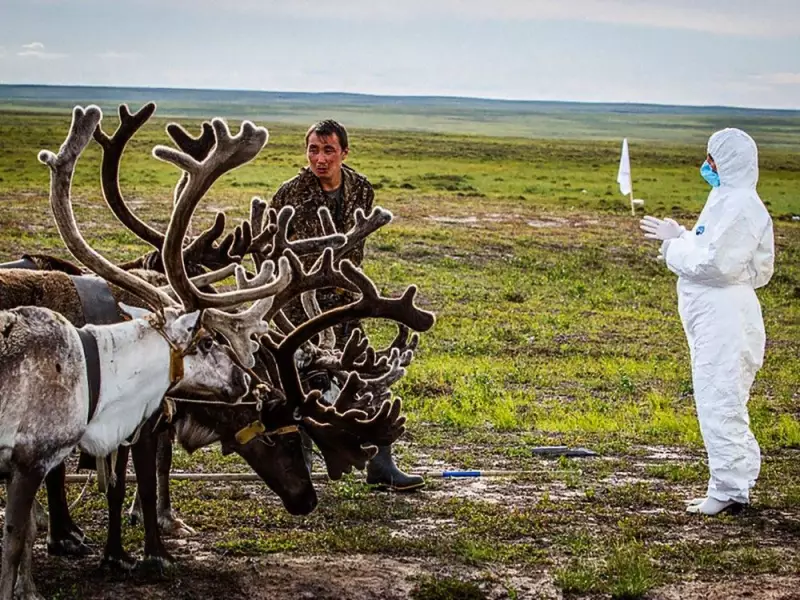
Anthrax has surfaced in unexpected ways throughout history. In the early 1900s, men developed infections from contaminated goat-hair shaving brushes. In 2009, heroin cut with contaminated bone meal caused outbreaks among users. A stark reminder of the spore's longevity came in 2016 on Russia's Yamal Peninsula, where a heatwave thawed a decades-old reindeer carcass, sparking an outbreak that killed a child and thousands of animals.
The persistence of anthrax spores in the environment is matched by the persistence of the threat. As history shows, where there is a fearsome bacterium, there will be those who seek to turn it into a weapon. The cleanup of the 2001 letters required a battery of powerful agents—hydrogen peroxide, chlorine dioxide, formaldehyde—a testament to the spore's toughness and the serious challenge it presents to public health and security experts in Canada and worldwide.