

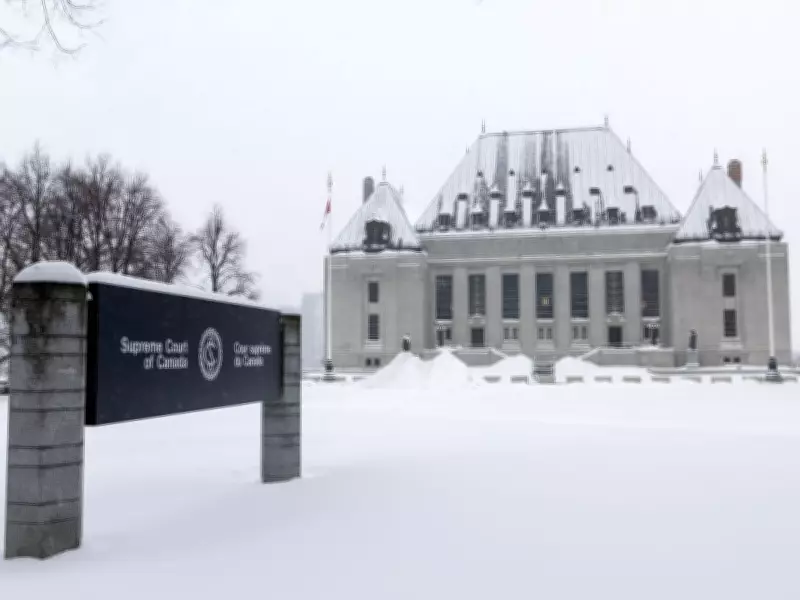
Quebec's Judicial Consultation Privilege Sparks Alberta's Constitutional Question
National Post columnist Colby Cosh has ignited a significant debate about federal-provincial relations in Canada's judicial system. In a recent analysis, Cosh examines why Quebec routinely receives consultation from Ottawa regarding court appointments while Alberta Premier Danielle Smith's similar request faces immediate constitutional criticism and rejection.
The Unequal Treatment in Federal Judicial Appointments
The controversy centers on Smith's open letter to the Prime Minister requesting greater provincial input in federal judicial appointments, particularly as a Prairie seat on the Supreme Court becomes available later this year. Smith's proposal includes relaxing bilingualism requirements for western judges, noting that the current framework severely limits the pool of qualified candidates for the upcoming Supreme Court vacancy.
What makes this situation particularly contentious is that Quebec already enjoys formal representation on the advisory board that recommends candidates for the province's three Supreme Court seats. This arrangement emerged because Quebec requested it, and the federation, as Cosh notes, was "mysteriously powerless to say no."

The Bilingualism Requirement Controversy
The Supreme Court operated under an exemption from bilingualism law until 2023, when amendments to the Official Languages Act removed this special status. This change has minimal practical impact in Quebec due to its existing consultation privileges but creates significant barriers for western provinces.
Cosh argues that imposing strict bilingualism requirements on the Supreme Court was "a gratuitous and destructive move" by a government that had already appointed a Governor General with limited French proficiency. He notes there was no popular demand for removing the exemption, even within Quebec, where voters might actually oppose changes that favor lifelong Liberal appointees from francophone communities in English Canada.
Political Dynamics and Judicial Independence Concerns
The columnist highlights what he describes as an elaborate "arm's-length" and "non-partisan" judicial appointment framework that has somehow produced a senior judiciary "absolutely dominated by former Liberal Party of Canada donors." Despite this political reality, Cosh observes that concerns about judicial independence only surface when Alberta makes requests similar to Quebec's longstanding privileges.
"The politics of the selection process don't impinge on the independence of the judges once they're appointed," Cosh contends. "There's nothing unconstitutional about a provincial premier making a political demand for consultation on appointments, especially a demand of the kind that is routinely met when Quebec makes it."
Questioning Alberta's Distinct Legal Traditions
While defending Smith's right to make the request, Cosh acknowledges skepticism about her reference to "Alberta's distinct legal traditions," admitting he cannot identify these any more than readers might. However, he maintains that her strongest argument lies in challenging the bilingualism requirements at the Supreme Court level.
The columnist questions the necessity of total bilingualism on an appellate court that never hears witness testimony, suggesting that bilingualism as a governing philosophy has lost some of its "utopian gleam" since the 1970s. He further notes that the court itself seems to treat its official language duties as suggestions to be disregarded for convenience.
The Bigger Concern: Political Influence on the Bench
Cosh concludes that the deeper issue isn't provincial consultation requests but rather the "deep intertwining of the bench with one federal political party." This reality, which he suggests receives little attention outside certain media circles, represents a more substantial threat to judicial integrity than Alberta's request for equal treatment.
The debate raises fundamental questions about fairness in federal-provincial relations, the practical implementation of bilingualism requirements, and whether different standards apply to Quebec versus other provinces in matters of judicial reform and consultation.






