

Quebec Language and Nationhood Debate Heats Up Between EMSB Chair and Justice Minister
A contentious exchange unfolded at National Assembly hearings this week, pitting Quebec's justice minister against the head of the province's largest English school board over fundamental questions of language, nationhood, and minority rights.
Testy Exchange Over Quebec's Identity
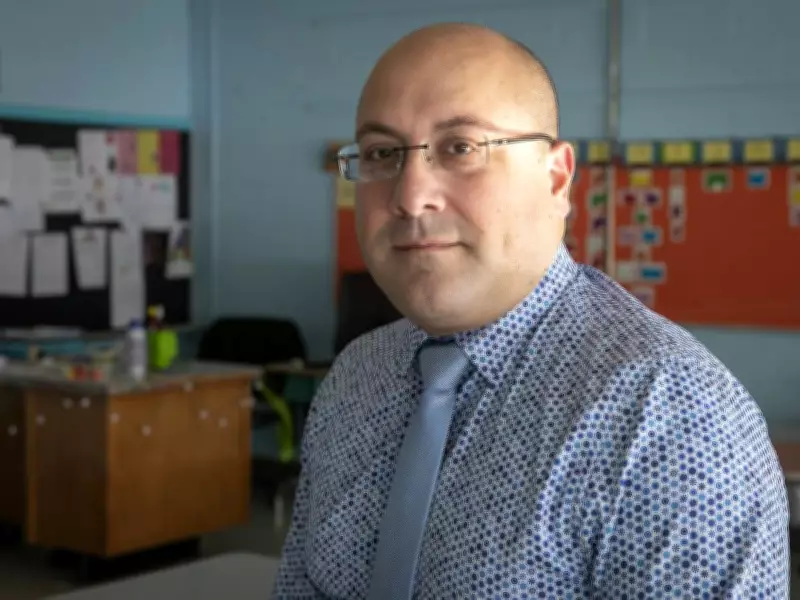
The proposed Quebec constitution drafted by the Coalition Avenir Québec government became the focal point of a heated discussion between Justice Minister Simon Jolin-Barrette and Joe Ortona, chair of the English Montreal School Board. Ortona told the hearings that the constitutional proposal undermines the education system, centralizes governmental power, threatens minority rights, and fails to adequately reflect the province's diversity.
Jolin-Barrette pressed Ortona on whether Quebec should be recognized as a nation, referencing a 2021 EMSB motion that described Quebec as a province rather than a nation. "I recognize that Quebec forms a nation within a country called Canada," Ortona responded, while noting that Indigenous nations also exist within Quebec's borders. He clarified that the EMSB later removed the reference to Quebec not being a nation from the motion, which primarily aimed to oppose Bill 96, legislation that tightened provincial language laws.

Anglophone Concerns About Inclusion
Ortona challenged the framing of the entire hearing, posing a pointed question to the justice minister: "How is it that so many anglophones don't feel represented in this nation — and why so many don't feel valued or included?" This statement highlighted growing concerns within Quebec's English-speaking community about their place in the province's political and social landscape.
The debate extended to language status when Jolin-Barrette asked whether French is "the only official and common language of Quebec." Ortona acknowledged French as the majority language but called it "legally false" to claim it as the only official language. He noted that under the Canadian Constitution, courts and the National Assembly operate in both French and English.
Constitutional Provisions and Legal Challenges
The proposed constitution, known as Bill 1, contains provisions that would prevent school boards and other public bodies from using public funds to challenge laws the provincial government deems necessary to "protect the Quebec nation." This has raised concerns about limiting legal recourse for minority groups.
The relationship between English school systems and the CAQ government has been consistently strained. Multiple lawsuits have targeted government attempts to abolish English school boards and legislation that strengthened language laws while prohibiting boards from hiring teachers who wear religious symbols at work. The EMSB's challenge to Bill 21, Quebec's secularism legislation, is scheduled to be heard by the Supreme Court of Canada in March.
Religious Freedom vs. Gender Equality
Jolin-Barrette's proposed constitution stipulates that when conflicts arise between the right to equality between women and men and freedom of religion, equality takes precedence. When asked whether he agreed with this hierarchy of rights, Ortona responded, "We don't have that conflict in our schools, so I don't know what conflict you're talking about." He noted that recent cases where religion caused conflicts, including at Bedford school, occurred within the French public system.
Ortona pointedly added, "The rare cases that have happened were in institutions where you abolished elected representation and community representation," referring to the CAQ government's abolition of French school boards. Quebec replaced French boards with government-controlled school service centers, while English boards remain operational only due to successful legal challenges, though this matter may ultimately reach the Supreme Court of Canada.
Financial and Political Implications
Jolin-Barrette questioned the board's spending on legal challenges to CAQ language and secularism laws. The last publicly available figure, $1.3 million covering only the secularism challenge, dates from 2024. Ortona committed to providing updated numbers to the committee.

Ortona, who also serves as president of the Quebec English School Boards Association representing nine boards serving 100,000 students across the province, criticized the minister's line of questioning. "I find it very revealing that, with the small number of anglophone groups speaking, government MNAs are not taking the opportunity to understand what their issues are, their concerns, what they are contesting in Bill 1," he stated.
Broader Opposition to Constitutional Proposal
While supported by groups promoting Quebec nationalism, French language preservation, and secularism, Jolin-Barrette's constitutional plan has faced broad opposition. Critics note it was drafted behind closed doors and warn it could concentrate excessive power in government hands.
In a brief submitted to the committee studying the proposal, the Quebec English School Boards Association called the constitutional plan an "attack on school boards." The association argued that since coming to power in 2018, the CAQ government has "favoured exclusion, conformity and restrictions on access to the detriment of its fundamental responsibility towards education."
The QESBA further complained that the proposed constitution would "allow the government to order school boards to reject alternative funding sources, such as federal funds for culture, and to prohibit school boards from participating in federal parliamentary processes." This exchange underscores the deepening divisions between Quebec's government and its English-speaking minority over fundamental questions of identity, rights, and governance.





