

Federal Nominee Declines to Commit to Quebec English School Board Court Challenge
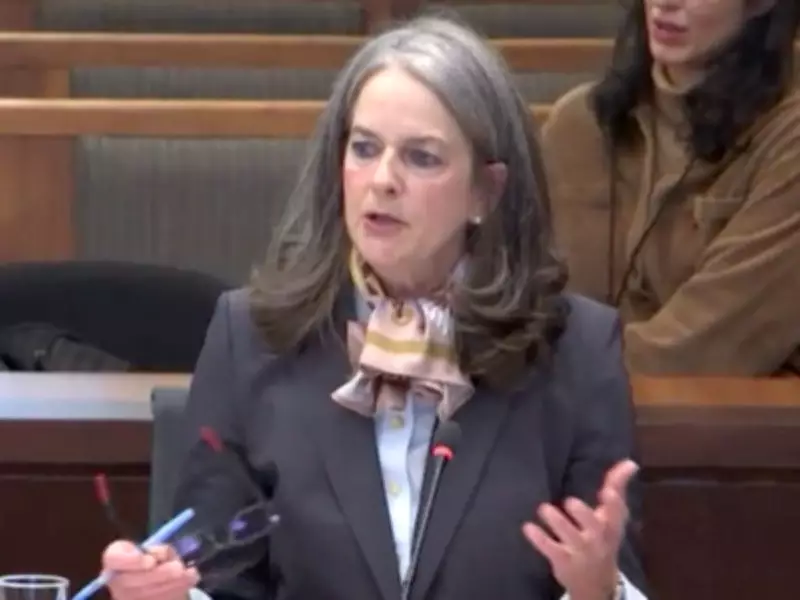
Kelly Burke, the federal government's nominee to become Canada's next Official Languages Commissioner, declined Tuesday to commit to supporting the Quebec anglophone community in its legal challenge against the Legault government's plan to abolish English school boards. During a House of Commons hearing into her nomination, Burke faced pointed questions about her stance on this contentious linguistic rights issue.
Parliamentary Questioning Reveals Cautious Approach
Liberal MP Anthony Housefather, representing the Mount Royal riding with significant anglophone constituents, directly asked Burke whether she shares the anglophone community's desire "to defend their school boards" in what could become a Supreme Court of Canada battle. Burke, a lawyer and former teacher, responded cautiously, stating she thinks "education is critical" for linguistic minorities but describing Housefather's question as "a very legal question" that she would need more time to address fully.
"With the benefit of more time in the position, I'd be happy to come back and contribute further to the conversation," Burke told the House of Commons Standing Committee on Official Languages. She acknowledged understanding the importance of Section 23 of the Canadian Charter of Rights and Freedoms, which grants parents belonging to a province's linguistic minority the right to have their children educated in their language, and stated she believes "that we have to uphold those rights."

Background of Constitutional Challenges
The controversy stems from the Quebec government's ongoing efforts to abolish elected English school boards, which anglophone organizations argue would remove their constitutional right to manage and control their schools. Both the Quebec Superior Court and the Court of Appeal have ruled that abolishing English boards would be unconstitutional, prompting the Legault government to seek an appeal at the Supreme Court of Canada.
Burke's predecessor, Raymond Théberge, took a much stronger position before leaving office last month. In September 2024, Théberge sharply criticized the Legault government's plans and vowed to assist in the court fight, telling a Montreal conference: "Yes, it will end up in front of the Supreme Court of Canada, and we will be there to defend Section 23 every time." He urged anglophones to fight the move, calling it unconstitutional.
Concerns About Breaking with Tradition
Housefather noted during the hearing that since the 1980s, the role of Official Languages Commissioner has alternated between anglophones and francophones. Burke's appointment breaks with this tradition, as she has described herself as a Franco-Ontarian and previously served as Ontario French Language Services Commissioner and assistant deputy minister for francophone affairs in Ontario.
This departure from tradition has raised concerns within the Quebec anglophone community. TALQ, a federally funded Quebec anglophone rights group representing about 40 organizations, expressed concern about whether Burke "truly understands the situation (the anglophone) community is going through here in Quebec." The organization stated it would wait for Burke to appear before the Senate Committee as well before forming a complete assessment.
Burke's Vision for Bilingualism and Minority Rights
In her opening statement to the committee, Burke outlined her vision for the commissioner role, stating she would "champion a modern, confident and inclusive bilingualism that strengthens our democracy, empowers every community and ensures Canada's linguistic future thrives." She emphasized that French and English "are at the heart of Canadian identity, of our cultural and economic sovereignty, as well as of the national unity that it is up to us to preserve."
Burke addressed concerns about her ability to represent Quebec anglophones by noting she identifies as both francophone and anglophone, having grown up in a bilingual family in Cornwall, Ontario, close to the Quebec border. She pledged to develop "a very close alliance and relationship" with Quebec's anglophone community, recognizing it as Canada's largest minority language community.

Broader Context of French Language Decline
The nominee also addressed broader linguistic concerns during her testimony, noting that the decline of French in Canada represents a "significant issue." She pointed to 2021 census data showing French declining not only across Canada generally but also within Quebec itself. Despite this concerning trend, Burke expressed some optimism, noting that "the bilingualism rate has remained (steady) at 18 per cent."
According to Statistics Canada data from 2021, approximately 1.6 million Quebecers (19 per cent of the population) spoke English at least regularly at home, highlighting the significant size of the anglophone community whose educational rights are now at the center of this constitutional debate.
The commissioner's role involves protecting minority language rights across Canada, making Burke's eventual position on the school board issue particularly significant for Quebec's anglophone community as their legal challenge progresses toward a potential Supreme Court hearing.





