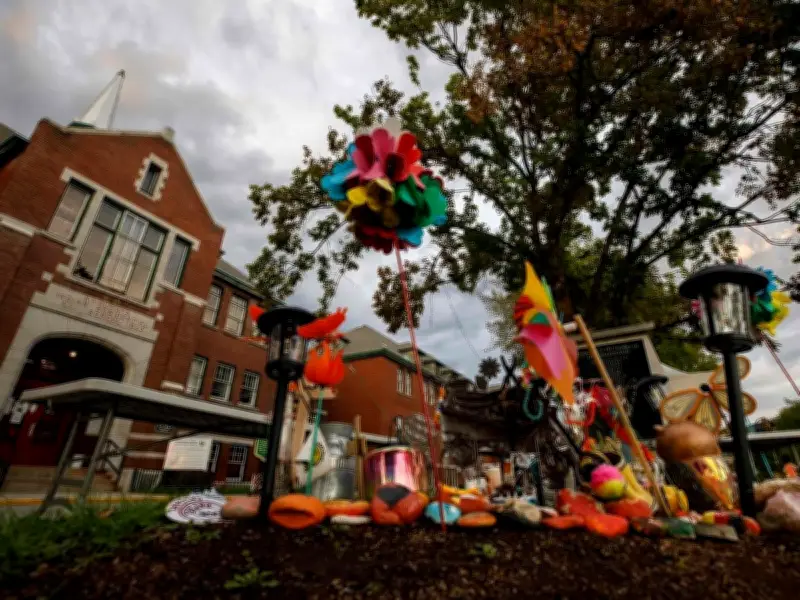
Canada should take residential schools seriously. That means taking both truth and reconciliation seriously. But the Senate's work on criminalizing 'residential school denialism' raises a difficult question: when a country faces a painful historical issue, should the criminal law become the instrument used to manage public discussion?
This is not an abstract issue for me. My grandmother attended St. Mary's Indian Residential School. Many Indigenous people have horrible stories to tell about their experiences at that school and ones across Canada. I know some of them personally. I have heard their experiences. No amount of civil discourse will erase their lived experience or convince me that their pain is not real.
That is precisely why this debate matters. If we are serious about truth, we must be serious about the tools we use to defend it.

In recent years, phrases such as 'healthy democracy' and 'freedom of speech' have often been invoked across the political spectrum, sometimes sincerely and sometimes selectively. At the same time, many public policies have been advanced in the name of respect, kindness, empathy and protection for vulnerable communities. These are worthy instincts. No decent society should be indifferent to hatred, cruelty or the denial of real suffering.
But government, for better or worse, is a blunt tool. So is the law. As a law graduate, I understand why people reach for legislation when faced with conduct they find harmful. The law carries authority. It sends a message. It appears decisive. Yet the law is rarely capable of detecting all the nuance of a complicated social issue, particularly one involving history, trauma, contested facts, political rhetoric and public trust.
That is why Canadians need to ask a more careful question before expanding the Criminal Code: what is the right tool for the problem we are trying to solve? Sometimes the answer is law. Sometimes it is education. Sometimes it is cultural change, public debate, better journalism, archival research or institutional accountability. A mature society must be able to distinguish between conduct that should be criminalized and speech that should be challenged, debated, corrected or rejected.
Before reaching for the criminal law, we should ask a more basic question: is this a problem at all? Is it a problem that Canadians are asking questions, debating rigorously and trying to understand one of the most painful chapters in this country's history? Is it a problem that people are discussing difficult issues such as the lived experiences of former Indian residential school students, the role of churches and governments, the meaning of reconciliation and the evidence behind major public claims?
Surely that is not something a democracy should fear. In fact, it may be exactly what reconciliation requires. A public that asks hard questions is not necessarily a hostile public. A citizen who wants clarity is not necessarily a denialist. A Canadian who struggles with complexity is not necessarily acting in bad faith. If the goal is to bring people along, then discussion, even uncomfortable discussion, should be welcomed rather than criminalized.
The concern with criminalizing residential school denialism is not that residential schools were harmless. They were not. Nor is it that anti-Indigenous hatred is imaginary. It is not. The concern is that when governments are repeatedly asked to ban, restrict or control language and discussion in the name of compassion, the state's power expands while the space for nuance shrinks.